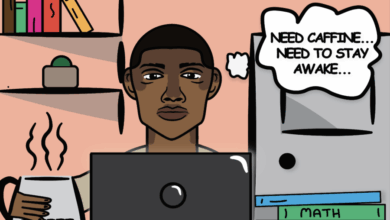
A WhatsApp notification from your class group pops up. You’re badly hoping it’s your course rep announcing that tomorrow’s 7 am Pharmacology lecture has been postponed. You swipe. Instead, Dr Rashel Vitamin C serum, Estelin Niacinamide face wash, Simple Face toner − accompanied by promises of glass skin and brightening − dance across your screen.“Mttcheww. All these class vendors sef,” you mutter in frustration.
Advert lines like “Glowing skin is just a mask away,” “Brighten up on a budget,” and “Get that glass skin today” have become the currency of conversation among Nigerian students. But beneath the glossy promises and aesthetic routines lies a more complex reality. Through a medical lens, this article delves skin-deep into the campus skincare craze, separating the genuine glow from the impending breakdown.
Skin-deep: Understanding the skin
Brightening, toning, glowing and exfoliating all have one target– the skin. What needs to be understood, however, is that the skin goes beyond being a surface. It is an organ just like the heart or the brain and needs to be treated as such.
The skin, being the largest organ in the body, is divided into three layers: the subcutaneous layer, the dermis, and the epidermis. The epidermis, which is the outermost layer we see and interact with, is divided into five specialized layers namely, the stratum corneum, stratum lucidum, stratum granulosum, stratum spinosum, and stratum basale (from outermost to innermost). Its functions go far beyond aesthetics, spanning protection, sensation, temperature regulation, and immune defence. Treating the skin like a social experiment can cause a significant breakdown of this complex structure.

The stratum corneum especially is a wall of defence that is best understood using the “brick and mortar” model. The bricks are layers of dead, flattened cells that have lost their nuclei. They are packed with a tough protein called keratin, which provides structural strength and keeps the skin resilient. The mortar, on the other hand, is a lipid bilayer that surrounds and binds the dead cells together. This stratum matters because it performs two critical jobs: preventing dehydration, and blocking infections and irritants. This shows that while skincare aims to enhance overall skin health, misuse, overuse, or use of poorly formulated products can compromise this wall of defence. When this happens, the consequences—dryness, sensitivity, inflammation, and even worsening breakouts — become inevitable. But the story doesn’t end here. For we Nigerians, two additional factors make this even more critical: our melanin-rich skin responds differently to injury, and our climate constant shifts. Therefore, understanding these layers of complexity is the first step toward skincare.
Beyond the stratum corneum, melanin complicates skincare for the Nigerian skin. Melanin is the pigment that gives the skin it’s colour. In Nigerians and other Black populations, melanosomes (melanin-containing subunits) are larger, more numerous, and more reactive than those in people with lighter skin tones. This reactivity offers natural protection from harmful ultraviolet radiation. Interestingly, this explains why sun-related cancers are less common in dark-skinned populations. On the flip side, this same reactivity increase the risk of post-inflammatory hyperpigmentation (PIH). PIH occurs when inflammation—from acne, injury, burn, allergy, or even cosmetic procedures like laser treatment — triggers a cascade of inflammatory responses. This involves the release of chemicals that stimulate the melanocytes into overdrive, increasing melanin synthesis and deposition. What this means is simple but frustrating: what starts as a tiny pimple can transform into a dark spot that outlasts the original problem. Research reveals that PIH occurs in up to 65% of Black patients with acne, compared to only 25% of Caucasian patients.
This biological reality has direct implications for the skincare craze. Unregulated use of harsh exfoliants, aggressive “brightening” products, and high-concentration actives can trigger inflammation—which, for melanin-rich skin, often results in more pigmentation, not less. Here lies the irony. A student seeking to clear dark spots may use a product that causes irritation, which promotes further hyperpigmentation, prompting the use of even more products. The skincare craze continues in a never-ending cycle, causing a cascade of skin harm and mounting frustration.
The lesson? There is no one-size-fits-all rule in skincare. A routine designed for non-Black skin cannot be directly translated to Black skin without thoughtful modification.
Living in a tropical region adds a layer of complexity to the use of skincare. The Nigerian climate rotates between dry season and the rainy season. The dry season, particularly the Harmattan, is characterized by a significant drop in humidity often resulting in water loss, leaving the skin dry. During this season, moisturizers and barrier-rich products are essential in preventing conditions such as eczema, which is more prevalent during the dry season.
On the other hand, there is the rainy season which comes with increased humidity, sweat production and excessive sebum production. This shift in season should be accompanied by a shift in skincare routine. Gentle cleansers should be applied more to get rid of grime build up that accompanies excessive sweat and sebum. Also, regularly exfoliate to prevent the clogging up of pores. Regardless of whatever season, sunscreen is necessary to prevent exposure to UV radiation.
The Negative Side of the Craze
Before we discuss the enormous negative impact of the skincare craze, it is important to note the trend has brought with it an increasing consciousness about our skin and more importantly the fact that just like any other organ of the body it deserves care. Notably, this awareness has broken the stigma around conditions like acne and hyperpigmentation, encouraging open conversations instead of silent suffering. Yet, none of the positives erases the immense dangers ahead.
Undoubtedly, the skincare craze has brought with it a sense of awareness, but beyond awareness, it has ushered in a wave of negatives. These range from risky practices, skinfluencers, the unregulated market, and unrealistic expectations—all of which form an unending cascade of breakdown in skin health.
Risky practices remain one of the biggest negative impacts of the skincare. In the pursuit of the coveted “glass skin,” many students venture into unsafe practices that pose significant risks to their health. The most prevalent practice is the reckless use of unprescribed products. For example, tretinoin (Retin-A), a prescription-only medication for acne and photo-aging, has become a staple in many student routines, often obtained from vendors or friends without a prescription. When used without proper guidance, tretinoin can cause damage to the skin barrier, the infamous “tretinoin burn,” severe purging, and intense irritation. For melanin-rich skin, it also poses the risk of rebound hyperpigmentation that can take months to resolve.
Similarly, hydroquinone, a topical skin-lightening agent, is commonly misused among students. Side effects associated with unprescribed use include skin irritation, dryness, redness, stinging, and in prolonged cases, exogenous ochronosis—a rare, often permanent disfiguring darkening of the skin. There is also the problem of DIY skincare, where students combine potent active ingredients like glycolic acid, salicylic acid, and retinoids without understanding their mechanisms or concentrations. The result is often chemical burns, barrier disruption, and worsened pigmentation.
The existence of skinfluencers is another negative impact of the skincare craze. They are social media content creators who give skincare advice. A 2020 study found that healthcare professionals comprise only 38% of Instagram accounts with popular dermatology content, and board-certified dermatologists account for just 4%. Of these healthcare professionals, credentials were missing for 27%. Thus, many self-proclaimed “skincare experts” lack qualifications, and most dermatologic advice on social media is provided by non-dermatologists. Most of these skinfluencers provide advice based on brand sponsorship deals, not scientific evidence. Yet many students still rely on them for skincare guidance. The “one-size-fits-all” routine is a myth, but it is constantly peddled by influencers who fail to account for differences in skin type, melanin content, and climate.
Unregulated market is perhaps the greatest danger of the skincare craze. Student vendors, supermarkets, and Instagram retailers all operate in an uncontrolled manner, allowing anyone to access products that would require a prescription in properly regulated markets. This easy access comes with hidden costs. Products may be degraded, expired, or substandard. Often, they contain undisclosed active ingredients, including potent steroids and hydroquinone that are not listed on labels. Steroids can cause skin thinning, steroid-induced acne, and dependency, while hidden hydroquinone increases the risk of ochronosis. Additionally, products stored in Nigerian heat before sale may degrade, losing efficacy or becoming harmful.
Another major problem is the psychological toll due to unrealistic Expectations. Filters, editing apps, and carefully curated “before and after” photos create standards that are often impossible to achieve naturally. When a student’s skin does not transform like the images they see online, the result can be frustration, diminished self-esteem, and a deepening sense of inadequacy. This psychological pressure fuels the cycle of product-chasing: trying one product, being disappointed, moving to the next, spending more money, and risking more skin damage.
A Guide to a Healthier Approach
After exploring the science behind the skin, the positives and the dangers, one question remains: what now? Here is an evidence-based guide to navigate skincare as a Nigerian student.
Know Your Skin
As mentioned earlier, there’s no one-size-fits-all rule in skincare. It is very important to understand your skin type before dabbling into any skincare routine. Skin types are divided into normal, oily, dry, combination and sensitive. One of the quick at-home skin type test methods is the bare-faced method. This method involves waiting for about 30 minutes after gently cleansing your face, after which you observe for your skin type.
· Normal: Feels comfortable, not too oily or dry
· Oily: Looks shiny and feels greasy
· Dry: Feels tight, appears flaky and rough
· Combination: Oily T-zone (i.e. forehead, nose or chin) with normal to dry cheeks
· Sensitive: Feels itchy, red or irritated
Your skin type determines what will work for you, not a skinfluencer’s advice.
The Basics First
You don’t necessarily need to follow a ten-step routine. In fact, less is often safer. An effective skincare routine basically lies on three pillars:
1. Gentle cleanser: Use a gentle pH-balanced cleanser to prevent stripping the skin of its natural barrier.
2. Moisturizer: Even oily skin needs adequate moisture. Lightweight non-comedogenic moisturizers work well in our tropical climate.
3. Sunscreen: This is non-negotiable in ensuring protection from UV rays. Sunscreens with SPF 30 or higher, broad spectrum, are effective in guarding against UVA and UVB.
When to See a Professional
Not every skin concern requires a dermatologist, but some situations demand professional input. See a doctor if:
· Your acne is severe, painful, or scarring
· Hyperpigmentation persists despite consistent routine
· You experience burning, peeling, or allergic reactions
· You have been using a product long-term and cannot stop without withdrawal
Red Flags to Watch For
Be your own advocate. Avoid any product that:
· Comes in unmarked or tampered packaging
· Lacks a full ingredient list
· Promises instant results in an unreasonably short amount of time
· Is sold primarily through unverified vendors
· Contains undisclosed steroids or hydroquinone (often labelled vaguely as “brightening complex”)
If a product feels too good to be true, it probably is.
The skincare craze on Nigerian campuses is here to stay. Students are more conscious of their skin than ever before, and that awareness, when channelled correctly, is a good thing. But consciousness without knowledge is dangerous. The pursuit of healthy skin is valid. It is natural to desire to look nice and feel confident but the process should not involve unregulated products, hidden steroids, or the advice of unqualified people. We have a unique responsibility to care for our own skin. In a world of sponsored and algorithm-driven content, evidence-based knowledge is a form of advocacy. So, the next time your WhatsApp buzzes with another skincare ad, pause. Ask yourself: Is this product safe? Does it suit my skin type? Am I heading towards a glow up or impending breakdown? Because at the end of the day, the most beautiful skin is a healthy skin, and a healthy skin starts with informed choices.