Milk or Fat-Filled Substitute? Understanding FFMP and What Nigerians Are Really Consuming

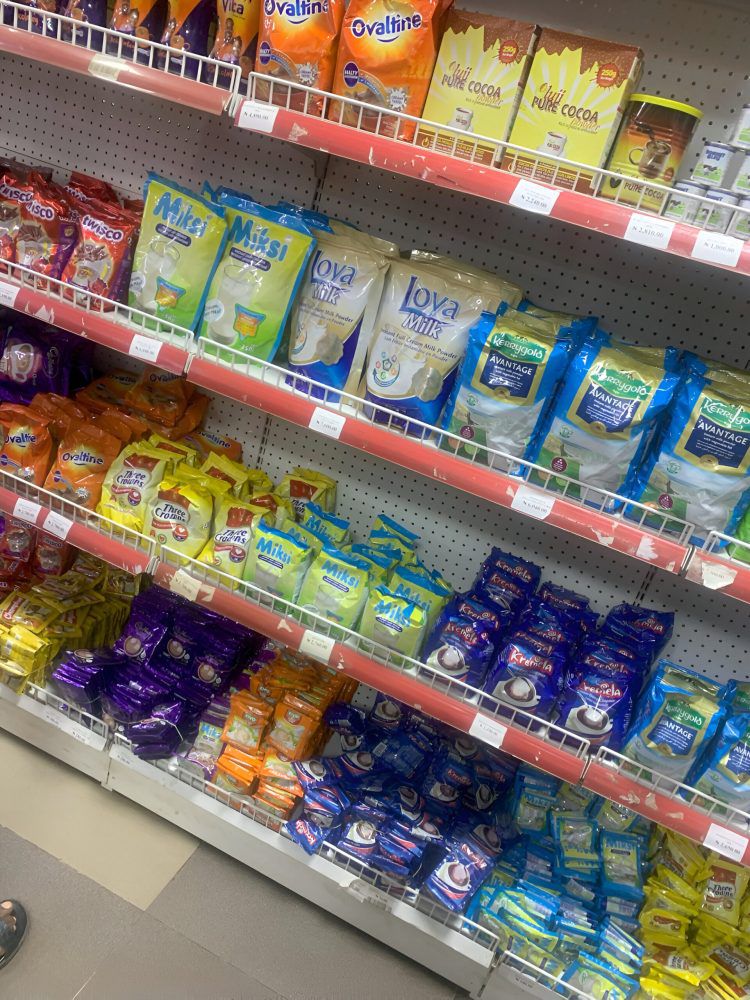
It is 8:14 am. This writer is making tea—the kind that needs milk. She reaches for the familiar tin on the shelf, the one that has always been there and spoons the white powder into her cup without a second thought. Many Nigerians do the same. Hardly anyone stops to question what exactly is inside the tin. It’s milk, right?
The answer, it turns out, depends on what exactly we mean by milk. A recent online debate has drawn attention to a distinction many Nigerians have never had to consider—what milk actually is and what it is not. So, what exactly is milk?
Milk, as most of us understand it, is simple. It comes from a cow. It is a biological product largely unchanged from what the animal produces—whole, natural, with its fat content intact. In its composition is water, proteins, lactose (milk sugar), minerals such as calcium and phosphorus, and fat. That fat is central to what milk is. It plays a key role in energy supply, enables the absorption of fat-soluble vitamins such as A and D, and gives milk its characteristic texture, flavour and the nutritional density that has made it a dietary staple across centuries and cultures. When a label says “full cream” or “whole milk”, this is the expectation: nothing has been removed, nothing has been substituted.
Yet, Fat-Filled Milk Powder (FFMP) begins with exactly that subtraction. Real milk is taken and skimmed, its natural fat extracted and removed. What remains is a fat-free milk base, still containing proteins, lactose and minerals. Into this base, vegetable oil is introduced as a replacement, most commonly palm oil in the Nigerian market. The mixture is then processed and dried into powder. The end product is a product that looks like milk powder, dissolves like milk powder and has been sold as milk powder for decades. But compositionally, it is not the same. That fat in your cup is not dairy fat, and that substitution is no small technicality. Fat-soluble vitamins—A, D, E, K—do not float freely in milk. They are carried within the milk fat, and when that fat is removed and replaced with palm oil, those vitamins leave with it. Without fortification, the product that reaches your cup simply carries the name, milk, without all of its nutritional value.
If the difference is this fundamental, why is it only now becoming a conversation? Much of the attention can be traced to posts by gst (@weargst on X). gst is a social-first civic media platform known for translating complex national issues into accessible public discourse. Since 2022, the platform has built a reputation for framing policy and public health concerns in ways that travel quickly across Nigerian timelines.
This discourse did not emerge in isolation. On April 10, 2026, gst published a post about Nigerian Milo—the beloved chocolate drink marketed under the banner of energy and nutrition. The post argued that behind the ‘Activ- Go’ branding was a product with a sugar content that would raise serious concern anywhere standards were rigorously enforced.

It was not the first time gst had raised a food safety concern, and it would not be the last. Four days later, on April 14, a new post appeared. It was about milk.

The post stated that most Nigerians believe they are drinking milk and that what many of them are actually consuming is Fat-Filled Milk Powder, a product that cannot legally be sold or labelled as milk in the European Union. It closed with a line that would travel further than the post itself: ‘Nigerians are eating what others aren’t allowed to call food’.
Part of what made the message resonate was its urgency, but also its imprecision. The first part of the post is accurate and well-documented, but a statement saying that Nigerians were consuming products others aren’t allowed to call food blurred an important line. Fat-filled milk is not prohibited; it merely is regulated, particularly in how it is labelled and presented. This distinction matters. What is restricted in foreign markets is not the product itself but the way it is described to consumers.
The response to this post was immediate. Nigerians who had grown up with these products found themselves questioning something they had never thought to question. Some were outraged. Some were sceptical. Some pushed back hard.
The institutional response to the debate was not new either. As far back as August 2024, following Premium Times’ investigative report titled “Milk or Mimic: Nigeria’s Dairy Market Flooded with Inferior Product”, NAFDAC had issued a statement confirming that FFMP is recognized and listed in Nigeria’s 2021 Milk and Dairy Product Regulations. The agency assured the public of its commitment to regulatory diligence. What it did not address then and has not addressed since is the question at the centre of the debate: is marketing FFMP as milk to consumers who don’t know the difference acceptable?
gst’s post and argument were both necessary and imperfect. Necessary, because it forced a closer look at products many consumers had long taken for granted. Imperfect, because in translating a complex nutritional issue into viral content, some nuance has inevitably been lost. But the nuance that was lost in the noise of the debate points to a fact that existed long before gst posted to X. Most Nigerians were simply not informed enough about what they were consuming to even participate in the conversation.
You walk into any supermarket, minimart or shop and right there on the shelf is a sachet of milk. On its front, in clear print are the words: ‘Instant Filled Milk Powder’. The information is there; it has always been there. And yet, for most Nigerians who have reached for that milk sachet over the years, it registered as nothing more than a product name; background noise on familiar packaging.
This is the heart of the information gap, and it is important to be precise about what that gap actually is. It is not that Nigerians cannot read or that the labels were hidden or the text invisible. It is that the entire architecture of how these products were presented—the branding, the advertising, the cultural familiarity, the absence of any public conversation about the difference created a context in which reading the label carefully simply did not feel necessary. For many consumers, the front of the pack does the heavy lifting: a cow, a glass of milk, the word “milk” in large, confident type.
Nobody told Mummy Precious, reaching for the familiar sachet on her way home from the market, that she needed to read it twice. Nobody told Ayo, sent to the corner shop for milk, that he should check what kind of milk he was actually buying. So, they didn’t.
The consequences of that gap run deeper than the tin on the shelf. Premium Times’ investigation into Nigeria’s dairy market found widespread misinformation among traders across Abuja, Enugu, Kano and Lagos. Traders who had sold these products for years believed FFMP was better for weight loss, that it was originally designed for children, and that the difference between it and whole milk was simply one of taste and preference.
This is what an information gap looks like in practice. Consumers and traders alike trusted that what was on the shelf was what it claimed to be, that a product called milk, sold as milk, and used as milk was, in fact, milk. A closer look at how these products have been marketed over the years reveals a consistent pattern in which the language of advertising communicated something significantly different from what the product actually was.
Take, for example, Kerrygold Avantage, an FFMP product presented in imagery of lush green pastures and a grazing cow with a glass of milk in front, evoking the natural dairy origin that the product, by composition, does not reflect. Miksi features a glass of fresh white milk on the front, which dominates the packaging.
Perhaps no product illustrates this more clearly than Dano Cool Cow. Its packaging features a cartoon superhero cow, a glass of fresh, white milk being poured and green grass. The product is called ‘Cool Cow’ typed out in bright, red letters. Beneath that name, in considerably smaller type, are the words: ‘Instant Filled Milk Powder’.


The disclosure exists, but the design ensures it will rarely be the first thing a consumer notices.
The pattern extends into active advertising. A joint analysis of hundreds of social media posts by leading FFMP brands between 2022 and 2024, conducted by DeSmog and Premium Times, found that manufacturers frequently overstated the health benefits of their products. In some cases, brands were promoted simply as ‘milk’ without distinction between whole milk and filled milk.
What makes this significant is not merely that it occurred, but that it occurred with documented awareness. Freedom of Information documents obtained from Bord Bia confirmed that the industry’s own market research showed most Nigerian consumers could not distinguish between FFMP and whole milk powder. Consumers, the research noted, “are brand loyal above all.” The industry was not operating in ignorance of that gap. It was operating within it.
Regulation 3(5) of NAFDAC’s 2021 Milk and Dairy Product Regulations states that any modification to milk must be disclosed in close proximity to the product name. A dominant ‘milk’ identity on the front with qualifying details less prominent does not satisfy that requirement.
However, if Nigerians had been better informed, would they have chosen differently?
Information alone does not change behaviour. It only expands the choices available, granted that those choices are realistic. And for a significant portion of the people who grab those milk sachets off the shelves, the question of what is in them may matter considerably less than the question of whether they can afford an alternative.
FFMP is cheaper than whole milk powder. It has a longer shelf life and is widely available. For millions of Nigerian households managing within tight economic constraints, these are not trivial considerations. A user on X, formerly Twitter, had this response: “They aren’t fake, they’re just alternative sources of milk for low-income earners like us, they provide sufficient nutrition and cover a nutritional gap. If you can afford the full cream variant, go for it; if you can’t, then filled milk is okay too”.
This is not dismissive of the nutrition argument but merely describes a reality that this debate does not resolve. A population relying heavily on a milk substitute is not receiving the complete nutritional protection it believes it is receiving. The families least able to afford whole milk are, by extension, the families most exposed to the nutritional gap.
This is the dilemma that the twitter debate for all its heat and reach did not resolve and could not resolve. Awareness is not the same as access. Knowing what is in the tin does not change what is on the shelf or what it costs. The question the debate implicitly posed—‘Should Nigerians be consuming FFMP?’—has a nutritional answer that is relatively straightforward, yet the economic answer is considerably more complicated.
Now, back to the question, even if Nigerians were fully informed, could they afford to choose differently? It is not a question with a clean answer, and that is precisely the point. It is not a failure of consumer knowledge anymore. It is a failure of the conditions in which the consumer’s choice was made.
However, if consumers are to make informed choices, the responsibility does not rest with them alone. It rests, in part, with the regulator. In Nigeria, that role belongs to the National Agency for Food and Drug Administration and Control (NAFDAC), tasked with approving, monitoring, and enforcing standards for food products in the public interest.
The FFMP response was not an isolated case. In 2024, laboratory tests conducted in Belgium revealed that Nestlé’s Cerelac, sold to Nigerian infants as a nutritious infant cereal, contained 6.8 grams of added sugar per serving. The European version of this same product contained zero. The recommended daily added sugar intake for infants, according to the WHO, is also zero. Yet, this added sugar content was not even declared on Nigerian packaging.
According to a 2024 investigation by Public Eye and IBFAN, the two organisations whose laboratory tests surfaced this finding, this disparity was not unique to Nigeria but was consistent across lower-income country markets. NAFDAC’s response was to note that Nigerian standards, guided by the Codex Alimentarius Commission, permit the addition of sugar to cereal-based infant foods. Reporting also revealed that Coca-Cola products sold in Nigeria contained benzoic acid levels that would fail UK safety standards. And still, NAFDAC certified them safe.
The debate that erupted in April 2026 was not just about milk. It was about who gets to define what Nigerians know about what they consume and whose interests that knowledge serves.
gst’s role in this conversation deserves honest assessment. The platform has built a substantial following precisely because it does something Nigerian media has historically struggled with. It makes complex, technical issues feel urgent and personal to ordinary people. On that measure, the milk conversation was a success. As one user put it: “If gst didn’t educate, how many laymen would know the difference between FFMP and full cream milk?” That question answers itself. Before April 14, many Nigerians had never heard of FFMP. After, the question of what was in their tin had entered the national conversation in a way that two years of investigative journalism by Premium Times had not managed to achieve at scale. That is no small feat.
But success at spreading awareness is not the same as success at spreading accurate awareness. The same post that introduced millions of Nigerians to FFMP also told them they were consuming what others were not allowed to call food—a framing that, as this article has noted, overstated the case. FFMP is not banned in Europe. It is classified differently. That distinction matters because in an information environment where most people cannot easily interrogate the claims they encounter, the line between education and alarm is one that those with platforms have a particular responsibility to maintain.
The response reflected that tension. While some saw the post as long-overdue public education, others pushed back. “There’s a difference between education and fear mongering,” one user wrote. “FFMP is not unfit for consumption; it is just not as good as milk.”
Both of these assertions are partially right. And that partial rightness is itself the problem. When the structure of a message makes it harder to distinguish what is accurate from what is overstated, it risks eroding the trust it is trying to build. Outlets that spread food and nutrition misinformation, even well-intentioned misinformation, risk following a predictable path. Public trust in food science, once shaken by alarmism, does not confine itself to food. The same rhetorical patterns that produce panic about milk powder have historically preceded scepticism about vaccines, medications and public health guidance. The risk is not automatic but it is not so abstract either.
It is also worth noting, in a conversation about transparency, that gst is the media arm of Gatefield, a public strategy and advocacy organisation whose funding has included grants from the National Endowment for Democracy, a body funded by the United States Congress. None of this invalidates the issues gst has raised. The concerns around FFMP are real, documented, and predate gst’s involvement. But in a discussion centred on transparency and the right of consumers to know what they are consuming, the source of the message is a part of that transparency.
Elsewhere, this tension is addressed structurally. In the European Union, labelling rules limit how products like FFMP can be presented to consumers. The difference is not cultural vigilance, but regulatory design. The system reduces the room for ambiguity. None of what this article has documented is entirely new. In his 1980 book Capitalism, Competition and Economic Crisis, Dutch economist Y.S. Brenner wrote of a world in which, in the pursuit of profit, “African children fed unsuitable milk powder” had become an acceptable cost of doing business. That was over four decades ago.
It is 8:20 am. Tea is downed, ‘milk’ and all. The familiar tin still sits on the shelf—the one that has always been there, the one nobody ever thought to question.
The issue is not only about what is in our food. It is whether we can trust what we are told about it and whether we have the means to act on that knowledge.
Jolamade Adetoro






A nice and informative read✨
Welldone Jolamade ????