Nigeria has one of the largest populations of persons with disabilities (PWDs) in Africa. According to the National Commission for Persons with Disabilities, an estimated 35.2 million Nigerians live with disabilities, roughly 16% of the population. Ranging across mobility, vision, hearing, communication, cognitive, and mental impairments, each impairment presents unique challenges, but share one reality: they increase a person’s need for regular, quality healthcare.
But this is where Nigeria’s healthcare system fails: it is reported that 28% of health facilities lack basic accessibility features, including ramps, handrails, wide doors, accessible toilets, or clear signage. A wheelchair user may be unable to enter a clinic, while a visually impaired person struggles to navigate a hospital without proper signage. Inclusive education policies remain inadequately supported and inconsistently implemented, and health programs frequently fail to address disability-specific vulnerabilities.
Rehabilitation services such as physiotherapy, occupational therapy, and the provision of assistive devices are scarce and underfunded. Mental health services, critical for those with cognitive or psychological impairments, are largely unavailable or concentrated in urban centers. Preventive care campaigns, from vaccination drives to health education workshops, rarely consider accessibility: materials are seldom produced in Braille or sign language, outreach often excludes those with mobility challenges, and screening services can require physical or cognitive abilities that some individuals cannot safely meet. The services that are available tend to be concentrated in urban centers, and travel to these facilities is often long, costly, and physically challenging for rural inhabitants.
Now, disability itself does not cause poor health outcomes—systemic neglect does. Without reform, millions of Nigerians will continue to face safety risks and heightened dependence simply because the system was not built with them in mind.
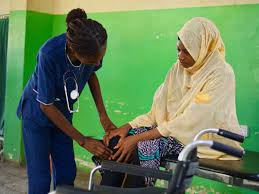
A report by the Premium Times shows how multiple Primary Health-care Centres across villages in Bichi LGA, Kano are unable to attend to persons with disabilities. Rabi living in Farin Masallaci, born with multiple disabilities, unable to walk or speak, has never set foot in a hospital, because local primary health‑care centres (PHCs) make “no provisions” for persons with disabilities in their community. Hadiza is a 30‑year‑old woman living in Kwamarawa. As a wheelchair user, she sought antenatal care at her local PHC. But because the PHC had no ramp, no accessible entrance, and lacked basic maternal health staff, it was impossible for her to access services. According to her testimony, when labour started, she was forced to deliver at home with help from a neighbor, because the clinic simply “was not built for people like me.”
Legislative and Policy Gaps
The Discrimination Against Persons with Disabilities (Prohibition) Act 2019, often referred to as the national disability law, was passed in 2018 to guarantee access to public building, inclusive education, employment quotas, and health services for PWDs. It was designed to ensure that persons with disabilities could live independently and participate fully in society. The Act imposes sanctions, including fines and imprisonment, for those who default. The Act also established the National Commission for Persons with Disabilities (NCPWD) to oversee the prevention of discrimination against persons with disabilities and to ensure inclusivity for persons with disabilities across all sectors. However, its effectiveness of this law is severely limited by uneven adoption and weak enforcement. Only 23 of Nigeria’s 36 states have domesticated the law, and only 15 of these states have functional agencies to monitor compliance, investigate complaints and enforce the legislation.
The consequences are obvious: not only do public health facilities lack ramps, accessible toilets, or wide corridors despite legal mandates, without proper law enforcement the disabled are further left with little recourse if their rights are violated.
Awareness and Education Gaps
Many healthcare providers, policy-makers, and members of the public hold limited understanding of the diverse needs of individuals with disabilities, resulting in neglect, discrimination, and substandard service delivery. While infrastructure gaps are visible, the human component of care remains inadequate.Studies and reports show that most healthcare providers in Nigeria receive little to no formal instruction on disability-inclusive care during medical or nursing training. Many are unaware of how to communicate with patients with hearing or speech impairments, how to handle wheelchair users safely, or how to accommodate cognitive or intellectual disabilities.
The situation is worsened by the absence of coordinated national reporting or oversight mechanisms. There is no systematic way to monitor compliance with accessibility standards in public facilities, no centralized process to document violations, and limited accountability for service providers. As a result, breaches of accessibility rights go largely unreported, and enforcement is sporadic at best. Many individuals must rely on NGOs, advocacy groups, or community organizations to champion their needs — but this raises another question: do they even know such support exists, or that they are entitled to demand it? They often do not, and are unaware of their rights or the avenues available to seek redress when these rights are violated, accepting substandard treatment as unavoidable.
Economic and Social Realities
And then, because PWDs often face barriers to formal employment and income generation, in part due to discrimination, lack of accommodation or limited education/training, many already live under economic strain. When access to health care depends heavily on out-of-pocket payment, this leads to a vicious cycle: inaccessibility of health services leads to poor health; poor health reduces capacity to work or care for oneself; inability to earn undermines ability to afford treatment; untreated health issues worsen, leading to deeper economic exclusion.
And then, social issues are seen in how even well-meaning actors fail to grasp the gravity of disability inclusion. During the just-concluded UISU Press Night, we hear presidential aspirant Olawoye Emmanuel state that: “We do not need to bring people with special needs down to the SRC, but we can represent them by celebrating them on people with special needs day and other ways.” A remark striking for its dismissiveness, it reduces the complex realities of persons with disabilities to a single symbolic gesture, as if recognition once a year can replace real access, representation, and systemic change.
This dismissive approach treats disability as a symbolic or social concern, rather than a health condition that intersects with rights, accessibility, and participation. Suggesting that persons with health-related disabilities should be excluded from decision-making spaces like the SRC ignores the reality that their lived experiences directly inform policies affecting their health and lives.
Statements like this reveal a troubling mindset: that inclusion can be achieved without confronting the daily barriers PWDs face in education, healthcare, and governance. It exemplifies the sort of superficial “solutions” that fail to challenge structural inequities and leave persons with disabilities marginalized. Such attitudes reinforce exclusion rather than dismantle it, demonstrating the urgent need for practical, enforceable, and comprehensive interventions.
Solutions
Recently, a social media post by content creator Hauwa Lawal has renewed attention on how fragile the status quo is for so many Nigerians: one accident on Nigeria’s notoriously unsafe roads can abruptly render someone reliant on a wheelchair and thrust them into a world that was never built for them. One realises how much of a priority inclusion should be upon reflection on a painful reality: Disability is not a lifelong condition only, it can occur suddenly, as a result of or other misfortunes and while one is forced to readjust, society’s infrastructure and health system are ill-prepared to.
But then, asides the obvious upgrading of healthcare infrastructure and use of assistive devices, mobile health units and outreach programs should also be designed to reach rural communities, where distance and poor transport networks amplify exclusion. Equally important is the training of healthcare personnel. By integrating disability-awareness modules into medical curricula and providing mandatory in-service training, staff can learn how to communicate effectively with patients who have hearing, speech, cognitive, or visual impairments, and how to conduct examinations safely for those with mobility limitations. Because, without skilled human resources, even the most accessible facilities will fail to deliver meaningful care. Public awareness and community engagement are also critical. Many PWDs do not know their rights, and families and caregivers are often unprepared to advocate effectively for them. Advocacy organizations play a key role in bridging gaps, guiding families on how to access services and navigate legal channels.
Supporting employment opportunities, providing workplace accommodations, and offering targeted livelihood programs can reduce economic dependence, enabling individuals to afford treatment and assistive devices. Expanding health insurance coverage and subsidized care as seen in a recent partnership between the Down Syndrome Foundation Nigeria, DSFN, and Lagos State Health Management Agency (LASHMA), can alleviate these financial burdens. The DSFN successfully registered persons with Down syndrome and intellectual disabilities under the state’s health‑insurance scheme (Ilera Eko), enabling beneficiaries to access hospitals across Lagos without out-of-pocket payment for treatment and consultation.
But then, policy and legislation must reinforce these practical changes. Full implementation of the Discrimination Against Persons with Disabilities (Prohibition) Act in all states, combined with functional monitoring agencies, is essential. These agencies should be empowered to investigate complaints, enforce standards, and maintain national oversight to track progress.
Ultimately, creating a truly inclusive health system in Nigeria requires coordinated action across infrastructure, training, legislation, public awareness, economic support, and education. Disability should not be a barrier to care, nor should sudden impairments consign someone to exclusion. With these reforms, the health system can begin to serve all Nigerians, ensuring dignity, independence, and safety for those whose needs have long been neglected.