
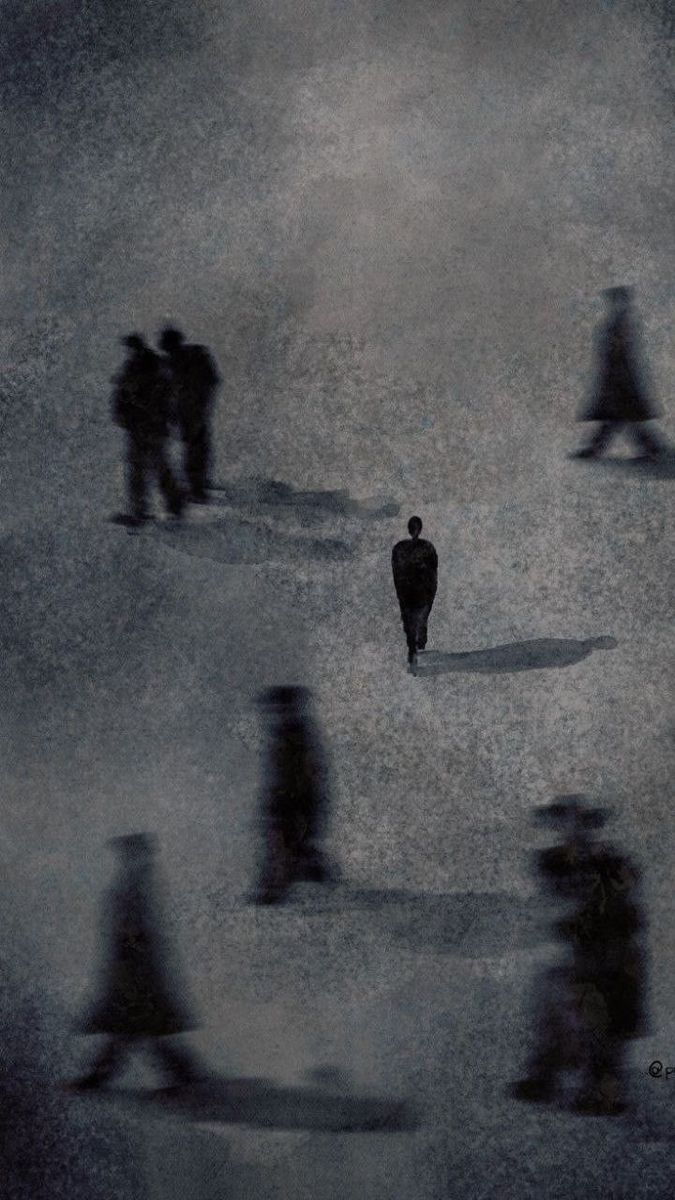
It’s almost 2pm. I’m taking a midday nap on my designated mat in the mosque extension when I vaguely hear my classmate say that we’ve been instructed to move again the next day. My eyes shoot open. I ask if that’s what I heard. She says yes, to Idia. I hiss and close my eyes again. We did move. It’s how it has always been done, after all.
Move yourself and your belongings four times within one week. Get sent out of temporary accommodation after 11 days, even though you paid for 16 days. Watching your mates prepare to resume school after a well-deserved break while you wonder where you’ll sleep for the next few weeks.
Because even after resumption, accommodation isn’t guaranteed, that’s how it happens here. Then open your mouth in amazement when your association president says he wasn’t informed about the accommodation issue, not to mention liaising with the school authorities on your behalf. You were being chased out of your hostels while still in a session you didn’t ask to be in, and your leaders were ignorant. And perhaps that’s exactly how the cycle continues.
A few days later, the UIMSA Central group came alive with a drama of its own, sliding out of its slumberous state characterised by numerous fliers and little actual human interaction. A handful of males secured accommodation within an entire class, while the rest were left to fend for themselves, all while preparing for mind-bending and back-breaking end-of-posting tests.
When they complain about their time being wasted by what was essentially a sham balloting session, a failed attempt at masquerading a terribly biased process as a free and fair one, they were met with a wall.
Their own seniors, people who should understand their pain more than anyone else, having been in those same shoes not quite long ago, told them to take it as it is, simply because that’s how it has always been. “That’s how it was for us. That’s how it is for you. That’s how it will always be.”
A classmate of mine complained to our lecturers about how rushed our curriculum is — how we are running after a moving target without even understanding why we are running anymore. And a class of burnt-out medical students was told that nothing could be done. The eighteen-month curriculum, which has already been admitted to be inefficient and sub-optimal, must still be followed to the letter. Because, again, that’s how it has always been done.
We Nigerians are often described as resilient, as people who can survive under any condition. But I wonder; do we actually survive, or have we simply been conditioned to believe that as long as a struggle is universal, as long as it has existed for years, all we can do is endure it and find a way around it?
Yes, gold must pass through fire to become lustrous. But must the fire burn the handler’s hands too, simply because that is the method he inherited? Can the goldsmith not use their own intellect to make the process better, or must they maintain the alchemy the way their forebears left it to them?
I can’t discount the pertinent role struggle plays in success. From keeping late nights to study to running a business on the side, there are too many things that can be categorized as ‘struggling’, but it’s time we begin to admit that there’s a stark difference between the struggles that make us, and the ones that just burn us out without making us better people. If there’s an easier way out, why choose the long and arduous path when the results won’t be any different?
What is even more unsettling is how deeply this mindset seems to have been programmed into us. A classmate once asked me why I was spending hours discussing issues that seem to haunt every moment in this college, when there was nothing I could do about them. And I realized that, in itself, is part of the problem. Even if one person decides to take a stand, to write to the department, to appeal for a shift in a test because students quite literally do not have a roof over their heads, the voices that would drown that person out would not come from the authorities, but from fellow students.
Maybe it is fear of a system that punishes outliers. Maybe it is privilege, or a disconnect from struggles that are not personally experienced. Or maybe it is simply comfort within a system that quietly cages us. But one thing is clear: if someone takes a stand today, the strongest resistance will come from us. And they know it. They know we will not stand together. They didn’t when they were in our shoes. And because they – medical elders alike – survived it, they somehow expect us to do the same. So how do we convince them to change the status quo now that they are in positions of authority?
I understand that medical school is not meant to be easy. There is a reason for its reputation. But it is not meant to be this difficult. A medical student living in a hostel with only two hours of power supply daily. An eighteen-month syllabus compressed into ten. More than half a class locked out of a test for thirty minutes because of one unattended class. These are not normal conditions. They are not rites of passage. They are not character-building exercises. They are simply excuses for an already demanding programme to become unnecessarily overbearing. And they do not produce better doctors, only more tired and more frustrated ones.
Even if this is how it has always been done, even if it is the same system our lecturers passed through and our seniors endured, what is abnormal is abnormal, and a persistence of an anomaly does not suddenly confer normality on it. There is no other side to it. And until we stop seeing it as something we have to endure because that’s just how things are, nothing will change.




One Comment