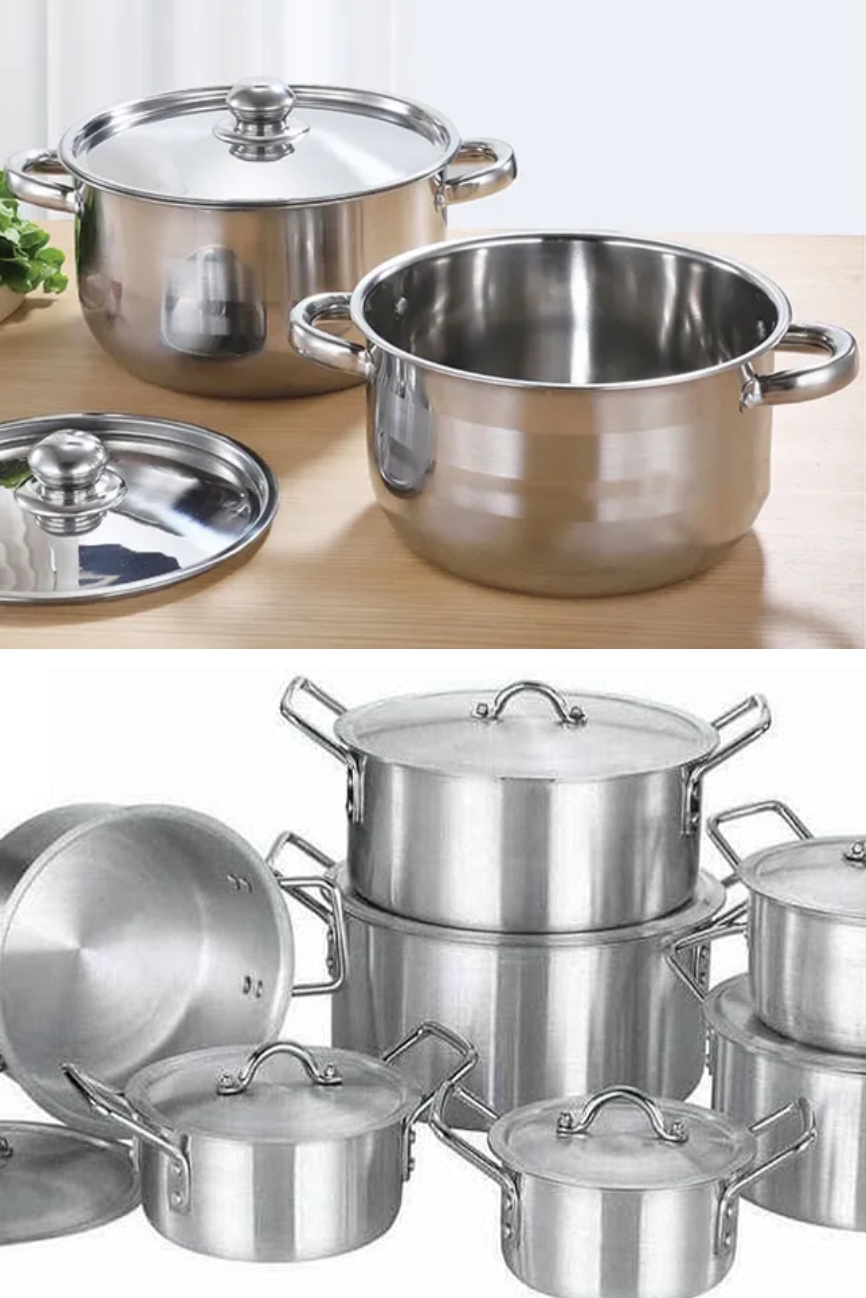
If there were anything invaluable yet overlooked in campus life, it would be cooking pots. It is high time we realized that it is not just the food inside the pot that matters to our health but also the pot itself. This is because the safety and quality of food can be significantly influenced by the utensils with which the food is prepared and served.
Aluminium pots are the most widely used pots in Nigeria, so it shouldn’t come as a surprise if you currently use or have used them before. This writer certainly uses them. The goal of this article is to inform our choice of pots between aluminium and stainless steel by revealing the benefits and drawbacks associated with using either of them. Of course, there are other materials used to make pots aside from aluminium and stainless steel – ceramic and glass, for instance – but these would be cost-prohibitive and difficult to manage for most undergraduates. Nevertheless, you can go for ceramic and glass if you have the means and time.
Cast aluminium pots (often called kòkò irin in Yoruba) are the most widely used aluminium pots in Nigeria. They are thick, heavy, and uncoated. The large ones are popularly used to cook for large events (you should be familiar with those three-legged pots). Aluminium pots are made from a mixture of aluminium, magnesium, and manganese. Locally cast aluminium pots contain impurities, such as lead, cadmium, arsenic, and nickel. Pressed aluminium pots are lighter, and some have a protective coating, anodized coating being the safest and hardest. The major benefits of aluminium pots include rapid heat conductivity, portability, durability, and cost-effectiveness.
On the downside, aluminium pots can corrode or wear off easily, causing metals to leach into foods – especially acidic ones like tomatoes – with negative health implications such as the increased risk of Alzheimer’s disease, heart disease, kidney disease, and cancer. Practices such as pot scraping, food burning, and the use of iron sponges promote the corrosion of aluminium pots. It is, therefore, advisable to use a wooden spoon or stick to stir food to avoid scraping the pot and to minimize food burning and the use of iron sponges.
Compared to aluminium pots, stainless steel pots are safer, more durable, and longer lasting, but less conductive and costlier by about 20-30%. However, to increase heat conductivity, some stainless steel pots have an aluminium-core base, where a disc of aluminium is sandwiched between layers of stainless steel at the bottom of the pot. Unlike alumninium pots, stainless steel pots do not require coating because they are resistant to corrosion. They are also easier to wash. Stainless steel is an alloy of iron, carbon, chromium, and sometimes nickel. It is the chromium metal – which must make up at least 10.5% of food grade stainless steel – that helps prevent corrosion.
From the foregoing, we can conclude that stainless steel pots are indeed a safer but costlier alternative to aluminium pots. The pertinent question becomes: which, between health and cost, will you prioritize? You may as well continue using aluminium pots; however, carefully avoid practices that promote corrosion, and make a healthy choice when buying your next pot just as I would.