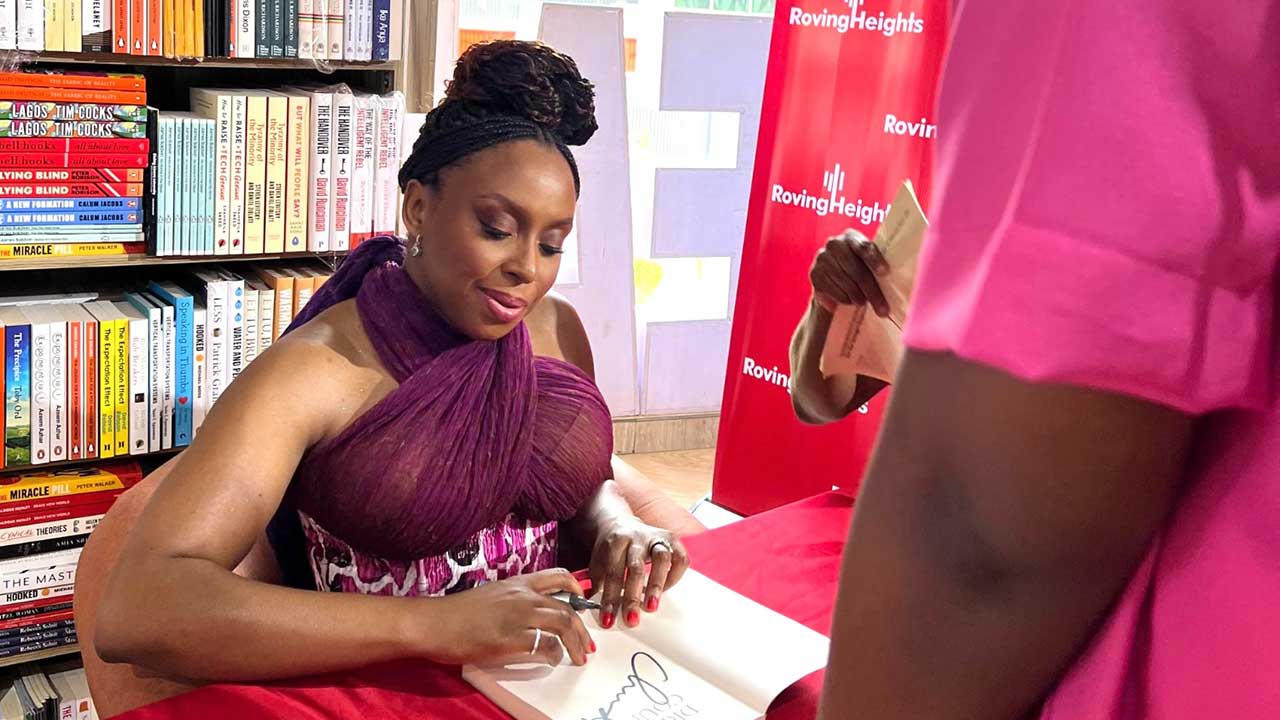
The first line of Chimamanda Ngozi Adichie’s Dream Count lands with the quiet weight of a confession; “I’ve always wanted to be known, truly known, by another human being.” It is a sentence almost embarrassingly universal, and yet, in Adichie’s hands, it becomes the organizing thread of an entire novel. This novel, published 12 years after her last novel, Americanah, wasn’t what most people expected it to be. This author wonders what we all really expected, considering the fact that her previous publications weren’t exactly alike but yes, people are surprised, and so was I.
It is quite evident that the Chimamanda Adichie of now is much more mature than the Chimamanda who wrote Purple Hibiscus or Americanah. The outlook at the world is different, there is less fierce forward moving-hope and more resignation to the issues of the world. The characters each struggle within with different issues, identity, womanhood, migration, family issues, love and grief, which is a strong emotion throughout the book as Chimamanda herself had lost both parents within the period of writing this book, making the writing much more raw and honest than her previous publications. The world she renders here is one where hope has curdled, not into despair exactly, but into something more difficult; a clear-eyed resignation.
The book is centered on four African women: Chiamaka, Zikora, Kadiatou, and Omelogor whose lives intersect through friendship and the particular solidarity that comes from having similar struggles.
Chiamaka, a nepo baby and a travel blogger from a loving home who, despite her privileges, cannot stop chasing the feeling of being truly seen. Racism is explored in her part of the story, as she tries to work as a travel blogger and was unsuccessful because magazines preferred she write about struggles rather than her enjoying her stay in specific areas as a non-conventional black woman. She eventually spends a lot of time in regrets and what-ifs during COVID-19 and decides to abandon the sentiment of being known by the end of the book.
Zikora is a typical staunch religious Nigerian woman who had a careful blueprint for life, which comes undone by a man who leaves her pregnant and alone. She is the apt representation of women who see issues in the society or around them and turn a blind eye to it because questioning it would cause all the pillars she held onto in her mind to collapse, and she was too afraid of that. This led to her disliking the women who dared to ask questions, especially Omelogor. A key part of her story was the building of the bond between her and her mother which was reinforced by the birth of her son.
Kadiatou (based on a real woman, Naffisatou Diallo), a woman burdened by so much grief in her lifetime, was uninterested in dreaming big but dreamed regardless. A Fulani woman from Guinea, she was content with her quiet immigrant life with her daughter until she is sexually assaulted by an influential Frenchman. This throws her life into disarray and shows the reality of women who dare to tell their stories of assault and to not be perfect victims. Her relationship with her daughter is also beautifully told which was another attempt by Adichie to yearn for that which she had lost. Eventually, the assault case is called off due to lack of proof despite enough biological evidence, and interestingly, Kadiatou is joyful, which is a shock because the normal demand is for justice, but this is Chimamanda’s twist to the real-life story. She created a world where Kadiatou (or Naffisatou) was happy to be set free from the public eye.
Omelogor, the force, a woman who was called a man. Not surprising that a lot of people online called her their favourite character though, she really embodied that strong, independent persona. She was self-made, engaging in political fraud and helping people until she was told, “Don’t pretend to like the life you’re living.“ and then her identity crises began. She was unable to feel truly known by the men she slept with, but felt that with Hauwa, her friend. Omelogor was written for the unconventional Nigerian woman who dared to be different. Different women, different textures of suffering. And yet at their core, the same hunger: to be known, to be held, to matter.
Dream Count is a feminist literature in a way that is beautifully told. It didn’t seek to tell you what to believe in but showed you why people believe in what they believe. It explored misogyny, abuse of power and masculinity in a subtle way, sending a strong message you couldn’t help but agree with. This is also the most unromantic of her novels, unlike Americanah, Purple Hibiscus, and Half of a Yellow Sun which is a deliberate and interesting choice. While Americanah placed romantic love at the centre and let it redeem the story, Dream Count refuses that resolution. Romantic love is shown in its darker registers as disappointment, as rejection, as absence, and the reader is nudged, insistently, toward other forms: friendship, motherhood, the quiet female solidarity that holds a life together when everything else is uncertain. The immigrant experience, which was experienced by Kadiatou, was used to show tensions between black immigrants and black Americans. African practices which are damaging to women were also shown through Kadiatou’s story, as well as evident in the death of her sister who had fibroids but was coerced into marriage for cultural reasons. It was also predominantly female friendship and mother-daughter relationship coded, it sought to show the world that there is so much more than romantic love.
Good things aside, Adichie’s personal sentiments echoed throughout the book. This was highlighted in her description of academics and women she referred to as academic feminists, as souless, joyless people who couldn’t love but could understand the theories behind love and this is drawn with a sharpness that reads less like character work and more like score-settling, a possible echo of her public conflict with Akwaeke Emezi in 2017. What is particularly striking is how grief – real, biographical grief has shaped the texture of the writing. Adichie lost both parents during the period in which this book was written, and it seeps through, especially in the mother-daughter relationships that recur with almost yearning insistence and it was quite obvious that she was a different person from when she began. It is also worthy of mention that this is the first of her books to not end with a major unanswered question. The open ending has always been part of her signature. Here, she appears to have chosen something quieter; most of the women end the novel still alone, still reaching, but no longer quite sure that being found is the answer, which this author believes is very realistic, yes we say we’re alone and bask in the thought, but there come moments where we want people around us for different reasons.
A bulk of readers claimed it was underwhelming and they found it harder to read. This author believes we should remember that this book is about characters who are Igbo women in their late thirties and still very much bound by the holds of society mentally and physically, therefore the book should be read from a realistic perspective not an ideological one. Adichie did promise a book different in style to her previous publications.