


Since the beginning of the 21st century, healthcare has been advancing at an increasingly rapid rate, with each year bringing new, ground-breaking discoveries. The year 2025 witnessed a surge in healthcare advancements that can be described as a decade’s worth of progress in a single year. From artificial intelligence (AI) to gene editing, the medical breakthroughs of this year continue to send thrills down the spine of humanity. Yet, we are only scratching the surface, as the years ahead promise even more. So sit back, relax, and stay curious, as we journey through 2025.
Breakthroughs in the Global Landscape
Gene Therapy
Gene therapies, Lyfgenia and Casgevy, had previously been approved by the FDA as treatment for sickle cell in December 2024. While Casgevy uses CRISPR-Cas9 gene editing (a technique that precisely alters DNA sequences), Lyfgenia uses a lentivirus vector to deliver a functional copy of a modified gene into the patient’s cells, hence does not alter the DNA sequence. Both therapies are in vitro such that genes are modified externally before being transferred into the patient, however, CRISPR gene editing is that which proves immense therapeutic potential.
One of the breakthroughs of gene therapy in 2025 is the first successful personalized CRISPR gene editing therapy for baby KJ Muldoon at the Children’s Hospital of Philadelphia. After his birth, KJ was diagnosed with a rare, life-threatening genetic disorder (incidence of one in 1.3 million babies) called CPS1 deficiency, which affects the urea cycle, leading to toxic ammonia build up in the blood that damages the brain and liver. Before now, the best treatment was a liver transplant but only about half the babies with the condition live long enough to receive one. At six months old, KJ began receiving the new treatment, and after three infusions 10 months later, he was discharged. Remarkably, baby KJ is thriving and even features as the “Trailblazing baby” in Nature’s 10 – a list of people who shaped science in 2025!

Another breakthrough gene therapy in 2025 is the slowing down of Huntington’s disease using AMT-130 developed by uniQure biotechnology company in Amsterdam. Huntington’s disease is a hereditary, progressive neurodegenerative disorder that affects movement, cognition, and behavior. One striking feature of the disease is severe dementia. Before now, approved treatments for the disease managed its symptoms but did not slow it down. But, the AMT-130 therapy uses a harmless virus to deliver strands of genetic material into affected brain regions. After three years of follow-ups, 17 patients given a high dose of AMT-130 had 75% less disease progression compared to standard treatment. Dr Sarah Tabrizi, the lead scientific advisor on the trial, is listed on Nature’s 10 as the “Huntington’s hero.”

Lenacapavir for HIV Prevention
In early June this year, the media buzzed with the news of a newly approved vaccine for HIV. In reality, however, Lenacapavir is not a vaccine but a long-acting antiretroviral drug and treatment for pre-exposure prophylaxis (PrEP). Nevertheless, the drug is groundbreaking. Lenacapavir is to be injected twice yearly (that is, every six months). Unlike previous antiretroviral drugs, it reduces the burden of frequent pills and clinic visits, as well as stigma associated with HIV. Shortly after FDA approval, the WHO recommended Lenacapvir for global use. As of November, Eswatini and Zambia each received 500 doses of the drug, with 2 million doses expected to be rolled out by 2028.

Cancer Immunotherapy
Cancer has remained one of the deadliest monsters of healthcare globally, not only destroying lives in thousands but also wasting enormous time and resources. It is a leading cause of death worldwide, accounting for over 10 million deaths as of 2020. So notorious is this disease that its field of study, oncology, is one one of the busiest and fastest-developing. For decades, cancer management stood on three legs: surgery, chemotherapy, and radiotherapy. Surgery physically removes tumors, chemotherapy employs drugs, and radiotherapy uses radiation. Unfortunately, all three techniques are invasive, killing both cancer cells and normal cells in varying degrees of cases. By 2025 though, a new kind of treatment – immunotherapy – reached milestones.
One of the biggest discoveries is that mRNA vaccines – originally developed for COVID-19 – can boost immune response in cancer patients. This was revealed in a study led by researchers at the University of Texas, in which patients with advanced lung or skin cancer, upon receiving mRNA-based COVID vaccines within 100 days, were estimated to have a 50% reduction in mortality after three years of treatment. The study has now entered the phase 3 randomized controlled trial, implying that a redefining bridge is about to be crossed.

HPV Vaccination
Human Papilloma Virus (HPV) is a sexually transmitted infection, with over 200 variants. Some of them cause cancers, with cervical cancer being the most common (>95%). Women are 10 times more likely to develop HPV-related cancers than men but cervical cancers are exclusive to women. Cervical cancer is the fourth most common cancer in women globally. In 2022, over 660,000 new cases and about 350,000 deaths occurred, with 94% of the deaths attributed to low-and middle-income countries (LMICs). Fortunately, HPV is vaccine-preventable; however, vaccination efforts have progressed slowly for years until the turning point arrived in 2025.
Through the support of Gavi, the Vaccine Alliance – a global partnership dedicated to expanding vaccine coverage in LMICs – over 86 million girls were vaccinated, of which 14 million are from Nigeria. In October 2025, the Federal Ministry of Health of Nigeria launched the country’s largest-ever vaccination campaign aimed at reaching an estimated 109 million children aged 9-14 with vaccines against measles, rubella, HPV, polio, and other routine immunisations. Gavi supported the initiative with $103 million.

Antimicrobial Resistance (AMR)
Antimicrobial resistance (AMR), one of the most pressing global health challenges, is responsible for millions of deaths each year due to infections that no longer respond to existing antibiotics. The fight against AMR is because new antibiotics face the almost inevitable danger of being resisted by microbes. Yet, the increasing resistance to already existing antibiotics compels the need to develop new ones – a huge challenge due to stringent regulations and enormous costs. In 2025, however, the FDA approved two new antibiotics – Bujepa and Nuzolvence – for treating gonorrhea.
Vaccines are also crucial in combatting AMR by reducing the risks of infections, thereby reducing the need for antibiotics. The WHO is adopting vaccines, including, but not limited to, pneumococcal, typhoid, influenza, and rotavirus vaccines. It is estimated that global implementation of vaccines could reduce antibiotic doses by 2.5 billion annually. Vaccines, combined with new antibiotics, are innovative strategies towards AMR mitigation.
Genetically Modified Pig Kidney Transplant
On March 16, 2024, the first pig-to-human kidney transplant took place at the Massachusetts General Hospital in Boston. It was performed on a 62-year-old Richard Slayman, who had been diagnosed with end-stage kidney disease. The pig kidney was genetically modified to suppress immune rejection and increase compatibility with the recipient. Although Slayman died two months later, clinical trials continued. On April 12, 2024, 54-year-old Lisa Pisano became the second person to receive the transplant at Langone’s Transplant Institute. She died 47 days later from both kidney and heart failure because she had received the kidney just eight days after a mechanical heart pump transplant. Insufficient blood circulation to the kidney forced surgeons to remove it. Later, on November 25, 2024, at the same Institute, a third transplant was performed on 53-year-old Towana Looney. The kidney was removed after 130 days due to organ rejection. Finally, on January 25 this year, 66-year-old Tim Andrews became the fourth person to receive the transplant, living with it for a record-breaking 271 days before returning to dialysis following the removal of the kidney due to functional decline. This unrelenting quest for a xenotransplant is justified by the sobering reality that tens of thousands of people globally die every year while awaiting donor organs that never came.

Reversing Alzheimer’s Disease
Alzheimer’s disease, the most common form of dementia (contributing 60-70% of cases), has long been viewed as an inexorable neurodegenerative disease without a cure. Dementia is currently the seventh leading cause of death and one of the major causes of dependency among the elderly populace globally. In 2019, it cost the global economy $1.3 trillion to manage dementia. 2025 brought breakthroughs that could change the narrative.
One of the most striking discoveries came from a collaborative research effort involving the University Hospitals Cleveland Medical Center and other institutions. In a study published in Cell Reports Medicine, the scientists found out that an imbalance in NAD+ is a primary driver of Alzheimer’s disease. Maintaining a proper NAD+ balance could, therefore, potentially prevent and even reverse the disease. This they did, of course. After NAD+ levels were balanced in mice, they regained normal memory and cognition, suggesting that Alzheimer’s disease could be reversed rather than merely slowed.
Another major breakthrough was the emergence of nanotechnology-based therapy developed by researchers at the Institute of Bioengineering of Catalonia. These engineered nanoparticles target the repair of the blood-brain barrier (BBB), enhancing the clearance of toxic levels of beta-amyloids, a key pathological driver of Alzheimer’s disease. Restoration of the BBB in mice with advanced Alzheimer’s symptoms led to recovery of memory and cognition, demonstrating remarkable progress in Alzheimer’s disease management.
Artificial Intelligence (AI)
Artificial Intelligence (AI) has become central to modern healthcare. In fact, AI is at the forefront of healthcare innovation. This ubiquitous field has gained massive ground in healthcare and is advancing at a rapid pace. One major breakthrough of AI in healthcare in 2025 is the widespread use of AI diagnostics (a part of advanced diagnostics) that outperform traditional diagnostic methods in both speed and accuracy, leading to more efficient treatment. With the aid of computer vision, through deep learning algorithms, some AI diagnostics now exceed human capabilities in analyzing medical images with greater speed and accuracy, from detecting cancers and eye diseases to interpreting CT scans, MRIs, X-ray images, ECGs, EEGs, skin images, ultrasounds, mammographs, and more. In this way, AI diagnostics has opened up many possibilities in medicine.
Furthermore, AI is now widely used in 2025 to automate workflow through Large Language Models (LLMs), including generative AI models like ChatGPT. These LLMs capture clinician-patient interaction in real time, transcribe consultations, support clinical decision-making, and generate structured clinical notes. Because this automated process is highly time-saving and cost-effective, it improves productivity by reducing workload, thereby enhancing healthcare delivery, particularly in areas facing healthcare worker shortages. In addition, LLMs are being used to support medical research by extracting key findings from numerous studies and analyzing large amounts of data. In public health, LLMs are integrated into digital disease surveillance systems to scan and analyze vast amounts of information across the media, thereby enhancing the detection of outbreaks.
Implants & 3D Bioprinting
Implants are devices placed inside the body to replace, support, or enhance biological structures or functions. In 2025, one of the biggest breakthroughs was the first successful human implantation of a 3D-bio-printed corneal implant (PB-001) developed by Precise Bio. The implant was grown from cultured corneal cells collected from a deceased donor. On October 29 at Rambam Medical Center in Israel, the first blind patient to receive the implant regained sight. Still in its Phase 1 clinical trial, the implant offers hope to the over 13 million people affected by corneal blindness globally.
3D bioprinting uses biological materials to build three-dimensional structures that mimic tissues and organs, including skin, blood vessels, cartilage, bone, and even entire organs, like the heart and kidneys. Interestingly, the corneal implant earlier discussed was 3D bioprinted! It is important to note that not all implants are 3D bioprinted, and 3D printing differs from 3D bioprinting.

The 2025 Nobel Prize in Physiology or Medicine
The Nobel Prize is an award given to persons whose work has conferred the most benefit to mankind in the preceding year. It is unarguably the most prestigious award globally. This year’s prize in Physiology or Medicine went to Mary E. Brunkow, Fred Ramsdell, and Shimon Sakaguchi “for their discoveries concerning peripheral immune tolerance.”
Every day, our immune system protects us from thousands of different microbes trying to invade our bodies. All of them have different appearances, and many mimic human cells as a form of camouflage. How does our immune system determine what to attack and what to defend? This puzzling question was answered by the laureates’ work.
It was thought that immune tolerance only developed when potentially harmful immune cells were eliminated in the thymus, through a process called central tolerance. In 1995, Sakaguchi showed that the immune system is more complex and discovered a previously unknown class of immune cells that protect the body from autoimmune diseases.
Later on, in 2001, Mary Brunkow and Fred Ramsdell made the other key discovery, explaining why a specific mouse strain was particularly vulnerable to autoimmune diseases. They had discovered that the mice have a mutation in a gene that they named Foxp3. They also showed that mutations in the human equivalent of this gene cause a serious autoimmune disease, IPEX.
Two years later, Shimon Sakaguchi was able to confirm their discoveries by proving that the Foxp3 gene governs the development of the cells he identified in 1995. These cells, now known as regulatory T cells, monitor other immune cells to ensure that our immune system protects our own tissues. The laureates’ discoveries launched the field of peripheral tolerance, leading to the development of medical treatments for cancer and autoimmune diseases. This may also lead to more successful transplantations. Several of these treatments are now undergoing clinical trials.
Healthcare Advancements in Nigeria
It is no doubt that Nigeria’s healthcare system is a bitter pill to swallow. What, with the deteriorating infrastructure, inadequate funding, persistent strike actions, beggarly remunerations, brain drain, shortage of health workers, rampant corruption, low health insurance coverage, wobbly policies, and much more. Notwithstanding these challenges, there are several notable healthcare advancements in 2025, reaffirming the adage that every cloud has a silver lining. Nigeria’s silver lining could be bigger than we think.
At the Joint Annual Review on November 14, the Coordinating Minister of Health and Social Welfare, Muhammad Ali Pate, reported that Nigeria recorded a 17% reduction in maternal deaths and a 12% decline in newborn deaths across 172 high-burden LGAs. Over 60,000 health workers were trained nationwide. Family planning increased by 10%, and nearly half of women of reproductive age now use modern contraceptives. Primary Healthcare Center (PHC) visits grew from 37 million in the first quarter of 2025 to 45 million in the second quarter. Additionally, 4,000 free caesarean sections were conducted under the National Health Insurance Benefits, as Health Insurance Coverage increased from 3% to over 11%, representing 21.1 million Nigerians who enrolled through Basic Health Care Provision Fund channels.
Another remarkable achievement is the National Health Fellows Program launched in March, with a first batch of 774 fellows from across the country. The programme is aimed at equipping young Nigerians with skills to improve service delivery at PHCs. Spurred by the resident doctor’s action in November, the Federal Government approved over ₦50 billion to address health worker arrears, allowances, and other professional needs. Under the Presidential Initiative for Unlocking the Healthcare Value Chain (PVAC), Nigeria secured $1 billion in guarantor-investment from Afreximbank, while the European Investment Bank’s Human Development Accelerator is pooling €1 billion for investment in the health sector. So far, Nigeria has secured more than $250 million in new investment in the health sector from the Americas and the Asia-Pacific. The recent signing of a five-year $5.1 billion bilateral health cooperation with the US Is the latest in this long list of investments.
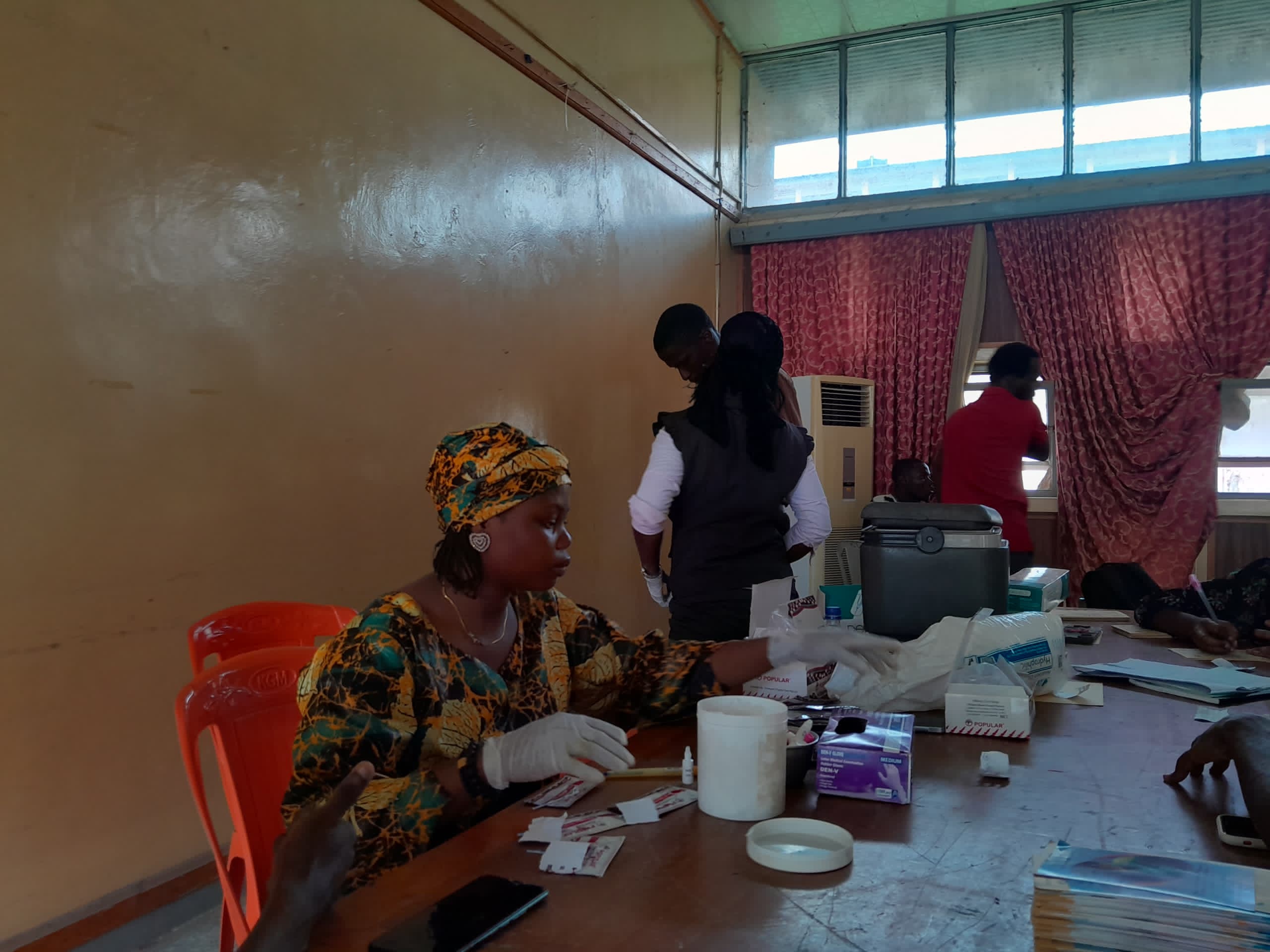
This year, Nigeria achieved a record-breaking vaccination performance. Earlier this month, the Federal Government released ₦68 billion for co-financing vaccination with Gavi Vaccine Alliance (recall that Gavi supported Nigeria with $103 million in October). Executive Director of the National Primary Healthcare Development Agency (NPHCDA), Dr Muyi Aina, disclosed that 378,677 zero-dose children received routine immunization. He further reported that the agency conducted a massive awareness campaign in high-burden states targeting 106 million Nigerians aged 14 years and below for different categories of vaccination, including measles, rubella, polio, HPV, and malaria.
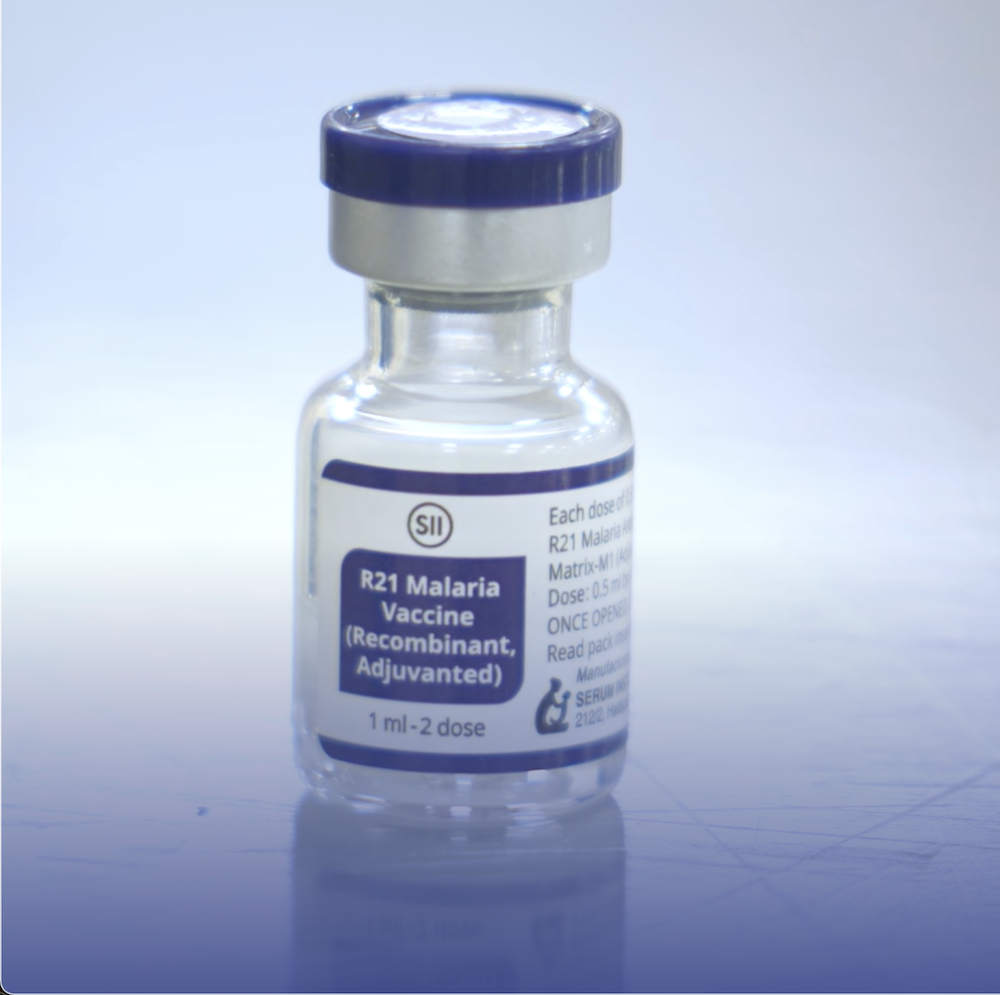
Aina also reported that the first phase of the vaccination campaign took place in 21 states, comprising 19 northern states, Oyo State, and the FCT. The vaccination team reached about 39 million children with the polio vaccine, 677,789 adolescent girls with HPV vaccine, 949,401 children with malaria vaccine, and 59,395,912 children with measles-rubella vaccine. He also added that the vaccination campaign addressed some Neglected Tropical Diseases ravaging many communities. In this regard, 1,422,673 persons were treated for onchocerciasis, 659,978 persons for lymphatic filariasis, and 353,232 persons for trachoma, among others. He announced that the second phase of the campaign will take place between January and February 2026, targeting the rest of the states.
Nigeria has also begun to promote local pharmaceutical manufacturing to reduce over reliance on imports and strengthen local industries. Nigeria witnessed the grim realities of import dependence when countries withdrew to cater solely for themselves during the COVID-19 pandemic. To change this narrative, a Memorandum of Understanding was signed on October 22 between PVAC and Health Federation Nigeria (HFN) to ensure that Nigeria produces at least 70% of its essential healthcare products locally. According to the National Coordinator of PVAC, Dr Abdu Mukhtar, the collaboration with HFN will accelerate progress by mobilising the private sector’s innovation, investment, and expertise. In this way, the partnership would help Nigeria address drug shortages, create jobs, shape policies, and boost industrial growth within the health sector.

Finally, Nigeria’s health sector has recorded remarkable feats in health products and services in some hospitals and clinics across the country. One of the biggest feats was the first robotic-assisted prostate cancer surgery in Sub-Saharan Africa, which took place in March and was led by Prof. Kingsley Ekwueme, a consultant Urological/Robotic Surgeon at the Prostatic Clinic in Lagos. It was carried out using the Da Vinci surgical robot, which was previously only available in South Africa within the continent. On November 27, Nigeria launched its first robotic platform called “Toumai” at Nisa Premier Hospital in Abuja.

Another remarkable feat is the bone marrow transplant programme established by Lagos University Teaching Hospital (LUTH) in partnership with the Sickle Cell Foundation Nigeria (SCFN). The programme performed its first successful transplant in September 2024. It is important to note that bone marrow transplant is not a novel treatment and has nothing to do with CRISPR gene editing. The procedure has existed for over 30 years, with improvement over the years. It involves the collection of healthy bone marrow from a donor, which is then transferred into the recipient.
Challenges with Medical Breakthroughs
While there are immense benefits that come with medical breakthroughs, there are enormous challenges too. These challenges often go unnoticed with the initial eureka moment. As such, a critical evaluation is required to understand them.
One major challenge is the huge cost of accessing or utilizing these breakthrough products and services. CRISPR gene editing therapy, for example, is estimated to cost between $400,000 to $2 million per treatment. How many of the over 8 million people affected globally can afford such an expensive treatment? Surely, we will need a microscope to know that. Even if we were to factor insurance into the equation, what becomes of countries—and there are a lot of them—with low or zero health insurance? Who is to blame for this huge cost, you may ask. Well, it is difficult to blame the pharmaceutical companies because they spend enormous amounts of resources into developing new treatments, so the high cost is often intended to recover years of research and development expenses.
Another challenge is the potential risks. Usually, medical breakthroughs come with such excitement that we sometimes swallow the bait, hook and all. The implication is that the dangers ahead may catch us unprepared. One thing to be concerned about is that the dangers unfold in the long-term—after the damage has been caused. The thalidomide lesson is one to reckon with. The thalidomide was a breakthrough drug prescribed in the late early 1960s to pregnant women as treatment for morning sickness and insomnia. Years later, its devastating consequences became apparent when thousands of children were born without limbs. The drug was identified to be responsible and immediately withdrawn. But the damage had been done.
Ethical consideration is another major challenge. As medicine advances at an unprecedented pace, we are faced with complex moral dilemmas about what should or should not be done. It is here that we become more cautious about issues such as gene editing, xenotransplantation, robot-assisted surgeries, artificial intelligence, and clinical trial participants of last resort. Indeed, ethical boundaries are very thin, but the sooner ethical dilemmas are resolved, the safer we preserve mankind from destroying itself—and the environment too.
Recommendations
Medical breakthroughs aren’t a scientific showcase but solutions to severe global health challenges. As such, there is a need to ensure that every breakthrough achieves as much social good as possible.
To this end, medical breakthrough products and services should be adopted and integrated, especially when proven to be safe. Artificial intelligence, for example, is invaluable for healthcare development, particularly for developing countries and LMICs. Research should also be promoted and adequately funded. You will observe that very little discovery comes from Africa; this isn’t mysterious, but a result of the chronic underfunding of health research. That’s what happens when researchers are left to the mercy of foreign grants and scholarships! The problem is not that we lack resources. The resources are plentiful. But we simply cannot manage it. This must change. Research remains the backbone of medical breakthroughs, hence it must be promoted and adequately funded. The Nigerian government should pay attention to the remarkable feats erupting from different healthcare facilities across the country. Special care should be given to University Teaching Hospitals, as they are not only the bedrock of innovation but also refineries for healthcare workers of the future.
Conclusion
The History of Medical breakthroughs is like a long, exciting story, stretching from the discovery of the microscope by Antonie Van Leeuwenhoek in the 17th century to small pox vaccine by Edward Jenner in 1796, anesthesia by William Morton in 1846, X-ray by Wilhelm Röntgen in 1895, and Alexander Fleming’s penicillin in 1928. Today, breakthroughs in gene therapy, AI, robot-assisted surgery, advanced diagnostics, and organ transplantation, have revolutionized healthcare. Even developing countries like Nigeria are making their own mark on the global stage.
Looking ahead, 2026 promises even more exciting breakthroughs. We can expect wider adoption of AI, gene therapies, personalized medicine, vaccination, locally led innovations in Africa, step-ups for ongoing clinical trials, and more investments in research. The long, exciting story of medical breakthroughs is bound to continue.




This is really insightful, educating and so detailed. Thank you so much to the most excellent student press organization I know of.