Academic Stories (04): An Interview with Dr Inioluwa Joshua, Best Graduating Student and Provost Awardee MBBS

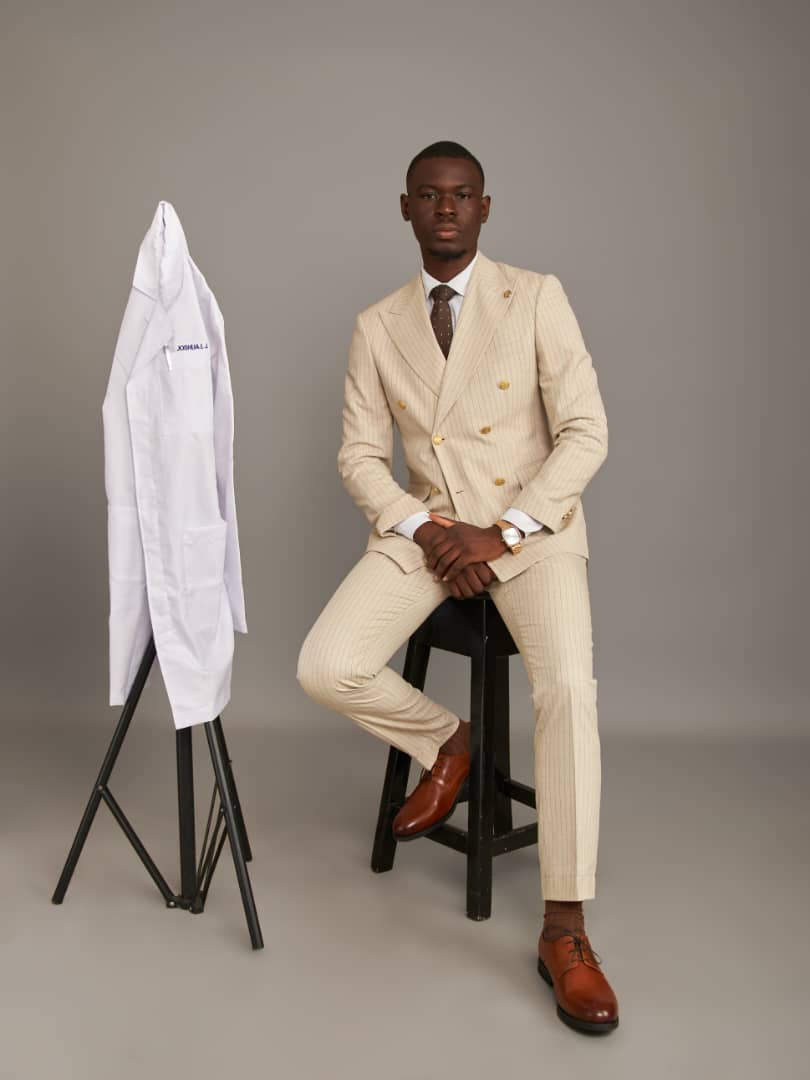
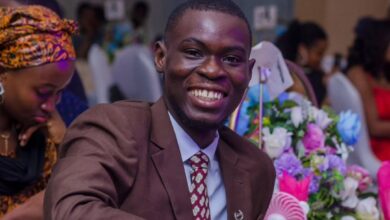
Gifted. Erudite. Rare intellect. These words describe our interviewee for the 4th piece of the academic stories series. At the recent induction of doctors into the medical profession, the College of Medicine, University of Ibadan recognised one of the most intellectually luminous individuals we have ever witnessed. Dr Inioluwa John Joshua graduated as the best graduating student and the provost awardee. Dr Joshua’s excellence is not strange to medical students at the University of Ibadan. We have seen him win countless quizzes for the University of Ibadan Medical Students’ Association (UIMSA). In his final year, he was the president of the UIMSA and also doubled as the president of the Royal Quiz Club (RQC). He was also a two-time primus in the UIMSA Primus List, won countless essay competitions, won the Rising Star Award at the 2021 FAME Global Leadership Program, was a fellow of The Bridge Program, African Students for Liberty and Millennium Campus Network, volunteered for many organisations, had multiple research publications, held positions in the Asido Campus Network, Junior Chamber International, Project Better Life Initiative and was once the Health Minister of the Nnamdi Azikiwe Hall.
Dr Joshua graduated as the best student in Anatomy, Physiology, Pathology, Pharmacology & Therapeutics, Surgery and Preventive & Social Medicine, and the second best student in Medicine. In our chat with him, he spoke about the rigour his goals demanded, the impact of his extracurricular activities and his relationship with the woman he described as ‘the best girlfriend a man could ask for’. Take a seat and enjoy!
Q: Congratulations, Dr. Joshua, on your induction and remarkable achievements! How does it feel?
Dr Joshua: It feels surreal and I’m elated. I would say it’s been a long time coming, a culmination of years of hard work, surmounting challenges and support from my family and friends. I’m grateful to be here and thankful that I was able to succeed despite the odds.
Q: A lot of work must have definitely gone into that. Congratulations again. At what point did you realize you were going to be the BGS and Provost Awardee?
Dr Joshua: I had been working towards being the best since I resumed in 100L. When I got a Distinction in Anatomy, it became clearer that I had a shot at becoming BGS. I did not plan for the Provost Award. It came as a byproduct of my extensive extracurricular activities. I enjoyed doing many other things beyond school work, joined a couple of organizations and had a great time in school.
Q: Can you take us through your journey in med school?
Dr Joshua: Preclinical school was interesting. It was a bit difficult getting through the entirety of the new material. It was a lot and almost overwhelming, but I just had to find a way. Then, we had MB1. I know people say that MB1 is the second hardest exam or maybe it is the third hardest, but when you are writing it at that point, it feels like the biggest thing you’ve ever done. Then, we crossed over to clinical school. Clinical school was a very different ballgame; we went from just classes and practicals to actually interacting with the patients. It was also interesting and I had a great time with the postings. There were postings that were very intensive and those that were pretty chill. I think it’s been a really great experience. I learnt a lot and experienced some good things and not-so-good things, but at least, we are where we are today.
Q: We heard a rumour (that motivated many of us) that you made a major comeback for the distinction in Anatomy. Is that true? If yes, what were the circumstances surrounding it?
Dr Joshua: I know you must have heard the stories. I’ve also heard variations of them so here’s what actually happened. When I checked my score for Anatomy CA1, I saw a 67 but eventually, we found out that there was a mistake in the scoring system. My score was eventually changed. I think I had a 74 or 76. There was an addition issue, so they didn’t add one part. I also had a 66 in my steeplechase test which was the final Anatomy CA before the exam. My steeplechase test went very badly. I got to the histology stations and when I looked into the microscope, I could not see anything. It was so, so bad. And then, there was the entire rush of moving from one station to the other. I couldn’t coordinate myself very well so I didn’t have a very good score. You know, chasing a distinction and getting a 60 was a bit discomforting at that point in time. But I took lessons from it, and my steeplechase in the MB was way better.
Q: The rumour was that your CA aggregate was around 28.
Dr Joshua: No. It was more than that. I can’t remember the exact figure but it was 30 or so.It may be hard. It may take a lot from you but it can work out.
Q: What was your biggest realization along the journey?
Dr Joshua: That’s an interesting question. It’s a bit difficult to answer because I had several realizations.
Q: You can state some of them.
Dr Joshua: I think the biggest realization would be that anything is possible. Also, life doesn’t always make sense looking ahead. The dots usually connect backwards and that’s when it makes sense. For instance, there are many things I enjoyed and am still enjoying that I would not have gotten if I didn’t do things like join some committees and run for UIMSA President. When I was putting in the work then, I had no idea it would come in handy the way it eventually did. Lastly, the more you know, the more you realize you don’t know.
Q: I’m sure many students have experienced the last one you mentioned. You said that the biggest was that anything is possible. Is there any scenario that fits that?
Dr Joshua: Yeah. When I started fundraising for 63rd UIMSA Health Week, I was daunted by how much we had to raise. But I knew I had to make it work. I did not have a choice. I bent my back, put in the work and I raised millions of naira for the events.
Q: That’s great. We’ll move to the next question now. Aside from academics, you were one of the best quiz participants the Association has witnessed in recent years, participated in many extracurricular activities, were the president of the Association and even maintained a relationship. How did you manage it all?
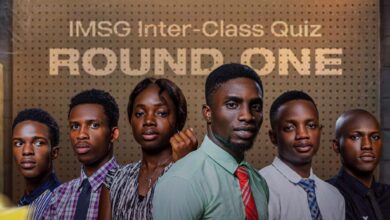
Dr Joshua: It was tough, I won’t lie. It’s hard to explain how I managed it. I think that one thing is: when there is a will, there is a way and a lot of times, you make time for things that you consider important to you. Another thing I will say is that you don’t have to devote the same amount of time to every activity. For instance, I was a medical student and I also had to attend quizzes, representing the RQC [Royal Quiz Club]. Quizzes don’t occur every month—they usually occur within specific times. We have RQC meetings every fortnight, so the work we do is the cumulative of the long-term preparations. And when the quizzes come, we have more intense preparations. That’s the way it worked for me. I didn’t devote the same amount of time to all activities—I just picked what was important at that time. Sometimes, I had to drop things that I knew were not important at that period, and other times, I had to delegate to other people. Also, I had a lot of support from my family, friends and my partner. It wasn’t easy to do all those things but priority is very important alongside time management.

Q: What about your relationship? How did you manage?
Dr Joshua: I have the best girlfriend that a man could ask for. A relationship is a two-way thing, so we communicate constantly, talk about what we want to achieve together, discuss goals and follow-up on the completion of tasks. She was (is) a very important support to me. Being in a relationship does not preclude you from achieving your goals. It really did help me in medical school because I had a supportive partner I could always talk to. It was a positive for me with regards to my goals of being BGS and a provost awardee. You know sometimes you have to make sacrifices when writing exams. At that point, you have to limit the amount of time you spend on your phone, and she was very understanding. I also did the same thing when she was writing exams. So yeah, being in a relationship is a good thing. You just have to communicate well on how much time you have and what you need to do. You guys will always find a way around it.
Q: Single people are triggered.
Dr Joshua: My very insincere apologies [laughs].
Q: You regularly showed up for your class’s football team and I know you’re a Chelsea fan. What does football mean to you? And who’s your favourite player of all time?
Dr Joshua: I like football. I think it is the greatest game. I don’t watch so many Premier League matches, but I showed up for my class’s matches and occasionally I watch Chelsea play. Football brings out emotions in you that I doubt many other things can induce. It’s just so exciting to watch. My greatest player of all time is Cristiano Ronaldo. He’s the GOAT.
Q: We both know Messi is the GOAT but I won’t probe that.
Dr Joshua: You don’t know ball [laughs].
Q: Sure, I do [laughs]. Now, let’s talk about leadership. Your tenure as UIMSA President was a very peculiar one. You fought light issues, accommodation issues, to be in class and then wrapped it up with the best health week ever. What was the tenure like from your point of view and how did you manage being at the forefront of so many battles?
Dr Joshua: It was a rollercoaster. I think that’s the best word to describe the tenure because there were so many highs and lows. When we started, we had the accommodation issue. 2K24 crossed [to UCH] and then, 2K23 didn’t have space. They [2K23] were about a month to their exams, so we had to find them a place to stay – the CARTA Block. Next, we moved on to the 109-day blackout and the MDCAN strike that lasted 4 months. It was very tough to be honest. I had great guys who worked with me. I worked with a very wonderful team of the UIMSA Executive Council, the former SU President, Samson Tobiloba, the UADS President, Kehinde Omotosho and the ABH [Alexander Brown Hall] Chairman, Ayotunde Oni. We worked together and were very particular about the light issue. I think it was a rewarding experience because I learnt a lot and despite the fact that we had so many challenges, we were able to do a lot of very important things. For example, 3 blocks in ABH have solar powering them, and that’s a byproduct of the advocacy that we did to bring attention to the fact that students often don’t have power supply in ABH. There were so many wonderful initiatives that we started. About being at the forefront of battles, I’m just very grateful to God. We also had very wonderful leadership in COMUI that wanted to attend to our grievances. We made sure to be as tactful as possible while expressing our grievances. Overall, I’m grateful for the experience.
Q: That’s impressive! Who is that classmate you can never forget?
Dr Joshua: That’s hard. I can’t forget anyone but I have wonderful people who I worked with, and were my friends.
Q: What’s one experience that changed your perception about something in medical school?
Dr Joshua: One of the things we often come in with as new students coming into medical school is that, “They say medical school is hard, but really, how hard can it be?”, and then you see how it can be. There is also the aspect of how much stress and strain medical school puts on people’s physical and mental health. The concept of breaking down was a bit foreign to me. In secondary school and 100-level, I didn’t really see people break down. But then, in late 200-level and 300-level, I began to see people who had to leave the program, people who fell sick and people with mental health crises, so I became more concerned about mental health. I eventually joined Asido for a couple of years and organized events there. Medical school opened my eyes to the reality that stress and breakdowns occur pretty frequently. Moving forward, I think that we should try to do things that will make medical school more conducive because the current model really puts strain on students, which is not appropriate.
Q: It’s quite true that mental health issues in medical school are not spoken about enough. Moving to the next question, who or what was your biggest motivation?
Dr Joshua: I have dreams, man. There’s so much one can do and achieve. I’m crafting my path towards creating a life that I would love.
Q: If you had the chance to do this over again, what would you do differently?
Dr Joshua: There would be a lot of things to say but I think I would have explored a few more things [extracurriculars] in medical school. There are things I didn’t try that I think I would if I had to do medical school again.
Q: What’s next for you?
Dr Joshua: A lot. I’m still trying to figure out some things. I will begin my house job next year and hopefully my Masters Degree by the Fall 2026. Next will be residency in the US and I’ll go on from there.
Q: Any final words for medical students aspiring to do well like you did?
Dr Joshua: Anything worth doing is worth doing well. If you really want something, you can get it as long as you are ready to put in the work it requires. Success does not happen overnight; some things come easily but most times, it takes days, months and years. Medical school is hard but everybody has what it takes to succeed. You must be very intentional about what you do, how you manage your time and set your priorities right.
Q: Thank you very much for your time. We wish you great success in the future!
Dr Joshua: Thank you too.


Congratulations Dr. Joshua. Thank you very much for the words I sincerely appreciate it. Like you said anything worth doing then it worth doing well.
Medical school hear we come ????. Congratulations once more sirr.