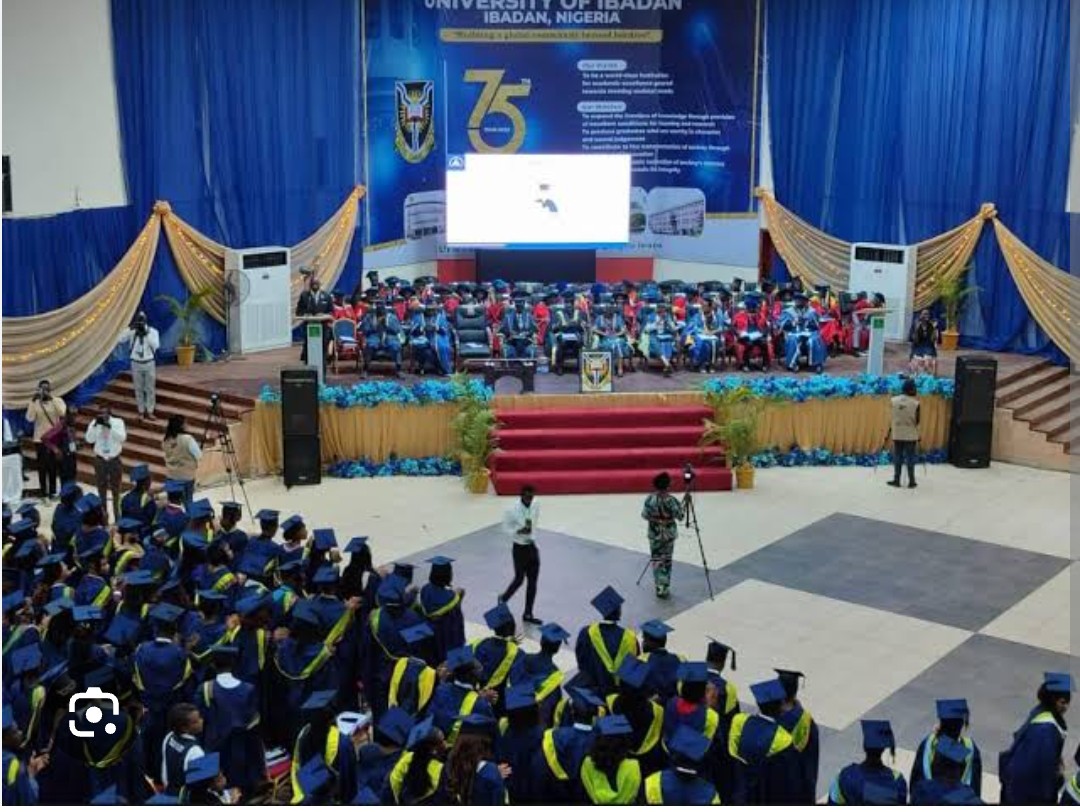
On the 7th of February, 2026, the UIMSA Press held her awards and handover ceremony to reflect, recognise and celebrate pressmen worthy of laurels in that tenure, and pass on the torch to the board that would oversee the Press in her fourth year as a unified press body and third since integration with the Union of Campus Journalists, UI. The UIMSA Press didn’t get here between the timeframe of dusk and dawn, but through weeks and months of hard work, even in the face of little to no substantive rewards. And with a new board steering the wheel, we must turn to our focus as journalists, as the ones that dare to write what many read, as ones who are not scared to reveal their identities in audacious pieces, as ones who have recognised the power the fourth estate wields in arresting injustice and have not shied away from the call. In this, it is imperative that we refer to the progress we’ve made as a body since our first editorial some 22 months ago, through to the numerous articles that followed, highlighting the issues in our union, varsity, and motherland.
Talking about progress, since the press became unified, we’ve published north of 800 articles with year-on-year increasing traffic, highlighting the shine and sham in equal parts, not sparing the truth despite how bitter it sometimes tastes in the mouths of those who care to listen or read. Through our editorials, we’ve called out the preposterousness in NEFLUND and the rot in the unionism that supports that, more so in actions. We’ve touched on the ripple effects of the MDCAN strike, and all other strikes that continue to affect students, especially on this side of the divide, with the seven MBBS UI classes enrolled at the moment as opposed to the usual six. We’ve touched on the cost of making new doctors in today’s Nigeria, where students no longer pay with just cash, but with time, health, and even their lives. In more UI-centric editorials, we’ve discussed transportation crises, the current obtainable quality of public speaking, and even the luxury that electricity has now become – tending to the extent of national jeopardy. Most importantly, we’ve penned long paragraphs documenting the classic nature of victimisation in the university – our most read editorial till date – and what the future looks like for a toothless union. That the things we talked about months ago in these editorials stare us in our faces now isn’t happenstance. It is not that we may be called prophets of doom, or the Nostradamus of our time, but that when certain things happen, the thinker may see the jeopardy that beckons.
Through our political pieces, we’ve reviewed office holders in the association, holding them to their words from press/manifesto night at various points. We’ve called out the bureaucracy that eats into administration and, in particular, welfarism, to the point that innocent students are now bearing the brunt. We’ve also criticised the godfatherism and interest/agenda-driven endorsement that we so much call out at the national level, happening right under our noses in campus politics. In our criticism, we’ve not let the debacle at the Nigerian Medical Students’ Association (NiMSA) and UCH Students Association (USA) pass without incident. They’ve had their fair share of the pen. Through our features, we’ve sat down with individuals who dare to dream and documented the stories of our outfits in sports competitions. We’ve shared most significantly, the troughs of studentship battling electricity and water scarcity. Through our health articles, we’ve not only highlighted neglected diseases, pursuant to the SDGs in a calendar year, but we’ve also corrected misconceptions about popular health conditions and challenged the status quo of health reportage on campus. We’ve kept our immediate – and distant – audience abreast with timely news reports about the good, bad, and ugly. We fully recognize that credibility demands not only speed in reporting, but an unwavering commitment to presenting only verified facts.
Through sports journalism, we’ve done our best possible in covering local tournaments in their entirety across sessions while also calling out the negligent state of sports infrastructure in the university. In doing so, we have set standards that we hope the university community can maintain and pass on to the next generations. Through entertainment journalism, we’ve covered the culture, the industry, the nitty-gritty of music, movies, plays, shows, some of which have earned mainstream recognition. We’ve also channelled creativity in writing, proving that you’d find some of the best creative writers in journalism—and in UIMSA Press specifically. In our interviews and opinions column, we’ve documented the stories of the academically exceptional individuals, the plights of students who take up leadership positions, the rants of students who have newsworthy experiences, and many more. In executing all these, we’ve learnt how journalism can be made better in digital print and visuals, the latter coming to the fore in our recent win as the Most Innovative Press Organization in the 2024/2025 academic session. And we take the most pride not even in the laurels that have come since the unification or in the pedestal that we’ve been placed on by the student community, but in the recognition of how much better we’ve gotten in writing and reporting. And as the Press’ note to self, we have chosen to strive to keep doing better, following our titular motto.
Amidst all the accomplishments to note, the Press is also not ignorant of the hiccups faced in successive press years – most notably, fatigue from academic demands, noncommitment, lethargy, low recruitment numbers, and underfunding leading to website hosting downtime. It is in the midst of these that we tirelessly push out articles, heeding the call to public service even when evidently knackered. More importantly, these recurring problems are an indicator of the current state of journalism within UI. There’s a stemming deficiency from the marked gap in transition between the hands that wielded the pen from four or five sessions ago and the present. The solution goes beyond routine webinars and workshops. It goes beyond maintaining mediocrity under the guise of consistency. The Press is now at a juncture where we need to recalibrate, bend our output to fit our numbers while looking to increase the said numbers, and bring back heavy editing and feedback mechanisms. This is not to say training sessions aren’t as important, but what really moves the needle is what is made of the numerous sessions we anchor. If recalibration means a full year of not getting eligible for recognition, it’s worth the sacrifice. If it means months of probation to get the best possible of our members, then so be it. The hard truth is not to dismiss the efforts of those who dare, but to refine the efforts such that their quality is objective regardless of the lenses through which they are viewed. Constructive criticism should start from inside so that we can, in good conscience, call out the deficiencies of the first, second, and third estates.
As stated in our critically acclaimed editorial, victimisation isn’t new, it’s classic. And if anything, we’ve realised that repetitive call-outs by the Press have done little, thus far, in stopping the perpetrators in their tracks. It is in the understanding of this that we must become bolder in challenging the status quo, and that can only be achieved with a laudable quality of work. Editorials cannot address heavyweight issues affecting the average student in 4 paragraphs of 600 words in total. That needs to be scrapped and re-written. Also, neutrality should be weaned off our writing. As highlighted in the last press year’s opening editorial in commemoration of the World Press Freedom Day 2025, lukewarmness doesn’t equate objectivity, and analyses don’t have to be neutral to be balanced. Neutrality can be cowardice in guise, and the press does herself a great disservice in tackling weighty issues with a spineless mindset. The result is that student leaders get to throw diplomacy at every Tom, Dick, and Harry in a bid to sound/appear intellectual. It is in doing and maintaining great work that is worthy of laurels that the Press acknowledges accomplishment.
While we endeavour to do better by the day, the Press doesn’t disregard the achievements of her members. Seven members from the previous press year snagged double-digit nominations in total, with the Press herself winning in three of four categories she was nominated for – a significant improvement from the tenure before that boasted of six wins (five individual awards and one LPO award). In showing ourselves capable, the Press has been able to present herself as a custodian of marked quality of work, when it is rosy and otherwise. In sustaining and elevating this said quality, we ask that our readers hold us to our standards, whether it is the creative masterpiece that earns us cheery praise, or it is the long-form analysis that infuriates the average political reader.