“The Father Foley laboratory was built for about 120 students, and the number of practicals done per week is always known. For a 15-week semester, you are expected to do about 12 practicals, but that is not the case today. It is a blessing that Nigerian students are very rugged and intelligent, which is why we are still making waves worldwide. The idea is to provide adequate facilities for teaching. The classes, labs, and hostels are nothing to write home about.”
– Senior Professor, Department of Chemistry, UI. (2022)
“This lab cannot take more than 60. We have 9 tables here and each table should take 6 students, maximum of 8. So the maximum capacity that this lab was intended for is 60. The 60 was based on the number of admitted students per year during that time.
Presently, per group we have an average of 100. We have two groups per day. We run the practical three days in a week, that makes it 6 times a week. We run the same practical for two weeks. This implies that one practical is done twelve times to cover the number of students we have. Now, a lab that should cater to just 60 students is catering to 1200 students. Then, students used to do up to 12 zoology practicals in a semester. Now, they are doing half or even lower. We have not been able to cover enough experiments per semester. We have only been able to do the number that time and resources allow us.”
– Senior Technologist, Department of Zoology, UI (2022)
“The current strength is between 250-300 students. We are dealing with physiotherapy, nursing, and dentistry students and not just MB;BS majors. Altogether, from these departments, we have about six hundred students.
Our histology lab originally accommodates about a hundred and fifty students at once, but most of the time, we have over two hundred and fifty students and we try to manage the surplus. The neuroanatomy laboratory can take up to a hundred and twenty students but we usually have more than that.
The facilities that we have are not enough to take care of the total number of students that we have. So we divide the students into several practical batches. Right now, 200-level Basic Medical Sciences students have an anatomy practical thrice a week; Wednesday, Thursday, and Friday.
If we have a lesser number of students in a practical class, it makes the class more engaging. For instance, in the human dissection laboratory, we have ten students per cadaver (dead body intended for dissection), but outside the country in saner climes, there is the possibility of having two students for one cadaver.”
– Senior Laboratory Technologist, Anatomy, UI (2022).
The quotes above are from a seven-volume series of articles by UIMSA Preliminary Press from 2022, in the aftermath of that year’s eight-month ASUU strike – dubbed the second longest academic strike in Nigeria, yet. Concerned with protecting their employment status, interviewed persons prayed anonymity at the time, leading UIMSA Press to publish these responses without their names. These articles exhaustively addressed the effect of strikes on students, lecturers, blue-collar workers on the university campus, and even the eventual upshot on the overall quality of education in Nigeria. Long before now, academic strikes have never just been about salary payments; our learning conditions are – and have been – very archaic and it reflects on our exposure in outings against international students. It took conversations with some university staff to see how insufficient the infrastructure has always been, even as the curtains drew on the last decade.
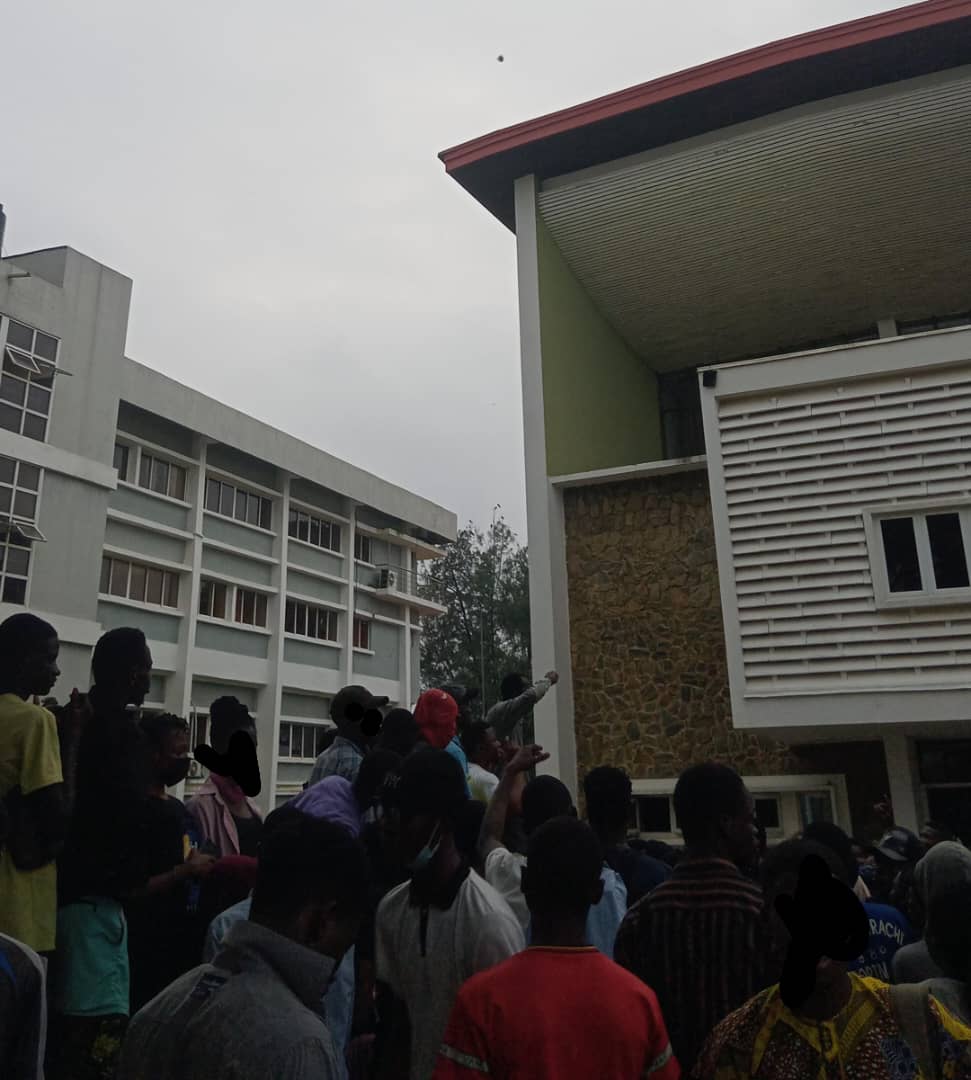
In the last six academic sessions, UI has admitted 4,243; 4,261; 3,983; 3,749; 4,633, 4,430, in that order from 2020/2021 to 2025/2026. A considerable percentage of these freshmen matriculate into the Faculties of Clinical Sciences, Nursing, Dentistry, Public Health, Basic Medical Sciences, Science, Technology, and receive lectures in the famed approximately 1200-seater CBN lecture theatre in their first year. A stroll to that lecture hall on a regular lecture day tells you how small the space is for the number of students expected to take lectures there. Over the years, there has been no alternative. It’s either you show up, sit through indescribable heat and noise, or you stay back at the hostel, hoping to read and catch up with your mates who showed up. The faculties that they take lectures from recognise this uncomfortable situation and know better to split examination venues across that hall, the nearby FLT, and the Faculty of Science laboratories some metres away. It is however saddening to realise that the condition has not changed over the years. Every set comes in to take their share of the uncomfortable learning conditions in CBN and move to their sophomore year.
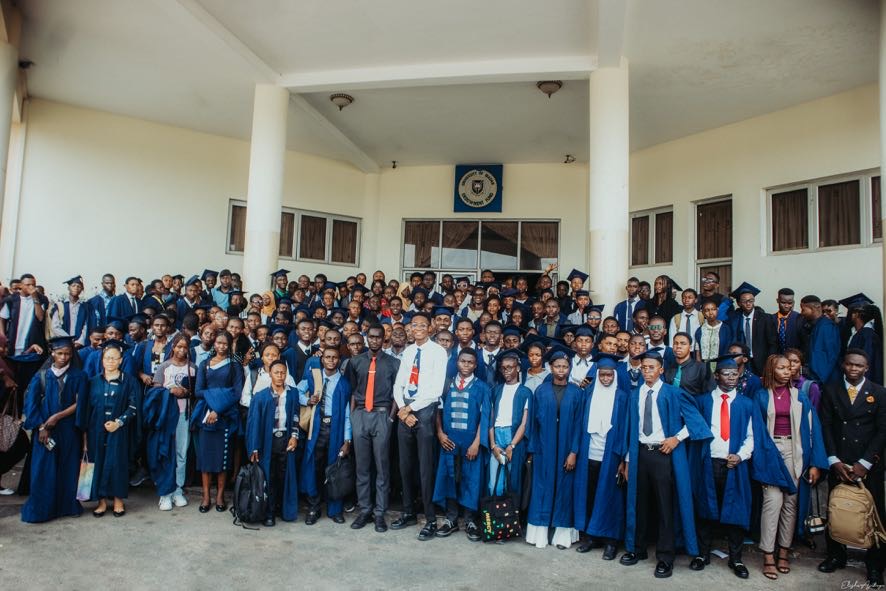
The numbers that have used these lecture theatres in recent years are well above the hall’s capacity and even while the total numbers of matriculants has been fluctuating around 4,000, there have been recent significant increments in certain departments, owing to the update in NUC’s quota of admission. For a long time, UI’s quota of admission into her MBBS and BDS program has been pegged at 180 and 30, respectively. Not until the recent increment that has seen the former increase by 100% to a new 350 and the latter, double the previous quota. For clarity, the current MBBS 2026 clinical intake are 162 and their BDS counterparts, 26. The current 300 level students are 186 and 33, respectively. The 200 level has 222 and 36, respectively, and the 100 level has 315 and 60, respectively. Simple maths show the upward progression of numbers from 400 level to 100 level; numbers are increasing, lecture theatres aren’t getting bigger. Picking it up from what this means as a freshman, more medical students expected to take lectures at CBN on a regular Monday from 8am till about 4pm, depending on the day’s schedule. In the cases where the majority consider it wiser to attend these classes, they would have to put up with the unbearable heat and even unavoidable body odour from that heat and it’s even more perplexing that the university management has not considered the use of air conditioners to mitigate this, in the event that an expansion is a far reaching solution.
If this is what it looks like in lecture theatres, what does it look like in practical labs? The first quote at the beginning of this article explains what was obtainable at the Father Foley lab, popularly known as chemistry lab, decades ago. What was originally built for 120 students in 1958 now has to accommodate more than 500. The Chemistry department has adapted to these over-the-top numbers by splitting departments offering chemistry into different days of the week and even alternative weeks. Just like reality has drifted far away from normalcy numerically, it has drifted qualitatively. There are more students to a set of apparatus per practical and there are also less practicals done in a semester. If students are expected to do 12 practicals in a 15-week semester, then it means they should do about 9 practicals in an 11-week semester. As at 2023, 100 level students did only 5 in a full session. As expected, the bright side is that ‘Nigerian students are rugged and intelligent’ and that’s how we hustle our way into the same rooms with international students despite such average-level infrastructure back home.
As it is in Chemistry, so it is in Zoology. The University of Ibadan’s Zoology department uses a 60-person capacity laboratory for practicals to serve over 1000 students and they now have to conduct the same practical twice in a day, thrice in a week, across two weeks. These divisions, however complicated and exhausting they might seem for the laboratory technologists, are employed to avoid congestion on each displayed specimen and in the lab generally. Again, this improvisation not only plummets the quality of, but reduces the number of practicals done in an academic session. And with what the numbers are saying now for MBBS and BDS intakes, there might need to be a review of schedules to optimize numbers per practical. If these departments are able to work with these already pitiful conditions for their first year, it gets scarier for these medical and dental students in their preclinical program.
After a year of walks to the Faculty of Science lecture theatres and labs, 200L students’ routine shifts to departments of Anatomy, Physiology, and Biochemistry. Physiology Lecture Theatre (PLT) has approximately 240 seats. This same lecture hall is expected to contain the current 200L MBBS and BDS students whose numbers amount to 258 (including the addition from Direct Entry). Worse is that in the 2026/2027 session when the current 100L students become the sophomores, this same 240-seat lecture hall is expected to accommodate 375 (not adding the prospective numbers of students joining through DE) students – a 36% increase compared to the hall’s capacity. Ironically, attendance becomes a vital part of the continuous assessment for these medical and dental students. How would the school management expect 375 students to fit into a 240-seat capacity hall to fulfill attendance requirement – before we even get to bigger fishes like attention span, ventilation? Same goes for Anatomy’s ALT that can comfortably contain 200 students, that number will be a little above half of the next 200L set in the 2026/2027 academic session.
The last set of paragraphs from the opening quotation explained the strain on practical apparatuses at the Anatomy department. The Histology and Neuroanatomy labs can accommodate about 120-150 students comfortably but over the years, classes have averaged about 200 and above and it’s about to even double by the next academic session. The dissection lab maintains a 10-students per cadaver rule in a class of 200. What the ratio will be like in a class of 375 remains to be seen. And that’s even somewhat the best ratio in Nigeria as some other schools average 50 students to a cadaver.
The only accommodating lecture theatre in Basic Medical Sciences is the more recently built 500-seater Abdullahi Ganduje Hall, adjacent to the IMSG library. One that is a last resort when PLT is occupied by another class or the option when it’s time to space students for semester – and Medical Board – exams. Time will only tell if Ganduje Hall will become the primary lecture hall for medical students at the start of next session.
As is obtainable in preclinical school, so it is in clinical school, more so in accommodation as we’ve now overflogged in past articles and one of our most recent politics pieces, analysing what more numbers mean for the limited spaces we have in UCH. Currently, an average MBBDS class is between 180-200 so when CoMUI divides the class into four, that leaves a clinical group to be about 45-50. In a posting like Internal Medicine where there are seven units, a sub-group will have seven or eight members. That sounds fair for the numbers seen on the ward during rounds or consulting rooms during clinic days, or even theatres for surgery postings. When the current 100 Level crosses over to clinical school and the college maintains the quarterly divisions, a group will contain about 94 students and an average surgery unit will have about 13 students. On the broader perspective, half of that class will do their Medicine 1 posting together while the other half, Surgery 1. On Tuesdays, Medicine holds an activity called Chart Review, where the Head of Department, Consultants, Senior Registrars, Registrars, House Physicians, and medical students are expected to be present. In a 104-seater room, 187 medical students are expected to be present, bar the number of doctors in the department – who, by hierarchy, take precedence in sitting arrangement from front to back. Also, these calculations are just based on the possibility of one clinical intake in a particular posting at a time. When seniors are also in Medicine 2 or Medicine 3 at the same time with Medicine 1 students, the numbers at these activities become even higher. This article can go on and on about what it will look like in Surgery activities, Radiology, Infectious Diseases, Otorhinolaryngiology, Anaesthesia, Dentistry, Paediatrics, Community Medicine, and even the famed block postings.
The only way these projected calculations will be wrong is if the College reverts to the six clinical groupings as it was back in the 2000s before the 2010 (current) curriculum was introduced or if they indeed effect the supposed new curriculum in 2028. And even that would require heavy deliberation from the faculty officers on how not to make things clash in a catastrophic manner. Away from school work, what does accommodation look like in a year like 2029? The only way accommodation won’t be a problem is if the new hostel blocks are all completed and in use before then. Again, time will be the judge.
Regardless of the already obvious subpar learning conditions that students will be subjected to, students of Ibadan Medicine should probably consider themselves lucky for being in a school that doesn’t admit beyond quota in the hope of dropping students before graduation. Because what that means is that if the whole performs exceptionally well together until final year, the school management will have to delay the induction of some members of the class because of the quota limit set by the Medical and Dental Council of Nigeria (MDCN) as is the current dilemma of Unilorin doctors and other universities like University of Calabar, Baze University, University of Jos and Ambrose Alli University which has been exhaustively discussed in our editorial on Nigerian Healthcare and Medical Education. It is one thing to admit a large number of students that the school’s infrastructure cannot cater for, it’s an entirely different thing to allow these students survive through those years of learning and realise that they can’t graduate at the expected time because the school admitted more than the quota.
There’s no known sanction for admitting below your quota limits to mitigate the strain on infrastructure. However, it’s clear as day the reasons most universities won’t admit numbers that they can effectively provide for, because why deny students admissions when you can admit them, collect tuition fees, and then arbitrarily fail them or delay their graduation date. If learning and living while learning is going to be at its best, university managements should recognise infrastructural limits in admitting students. It is only this way that we can have optimal learning conditions in lecture theatres and practical labs, and also avoid unwritten rules about accommodation being only entitled to ‘first year’ and ‘final year’ students because of limited spaces for reasons that other students are not immune to by virtue of some experience or years of stay on campus.