A prize, by definition, is not merely symbolic. It is a commitment. It represents the organizers’ acknowledgment that achievement deserves tangible recognition. When that commitment becomes uncertain, delayed indefinitely, or treated as optional, it alters the meaning of the competition itself.
Two hundred and ninety-seven days after the end of the 7th edition of the biggest interdepartmental football competition at the University of Ibadan, the winners of the competition are still without compensation, hoping that the count ends before the opening of the 8th edition.
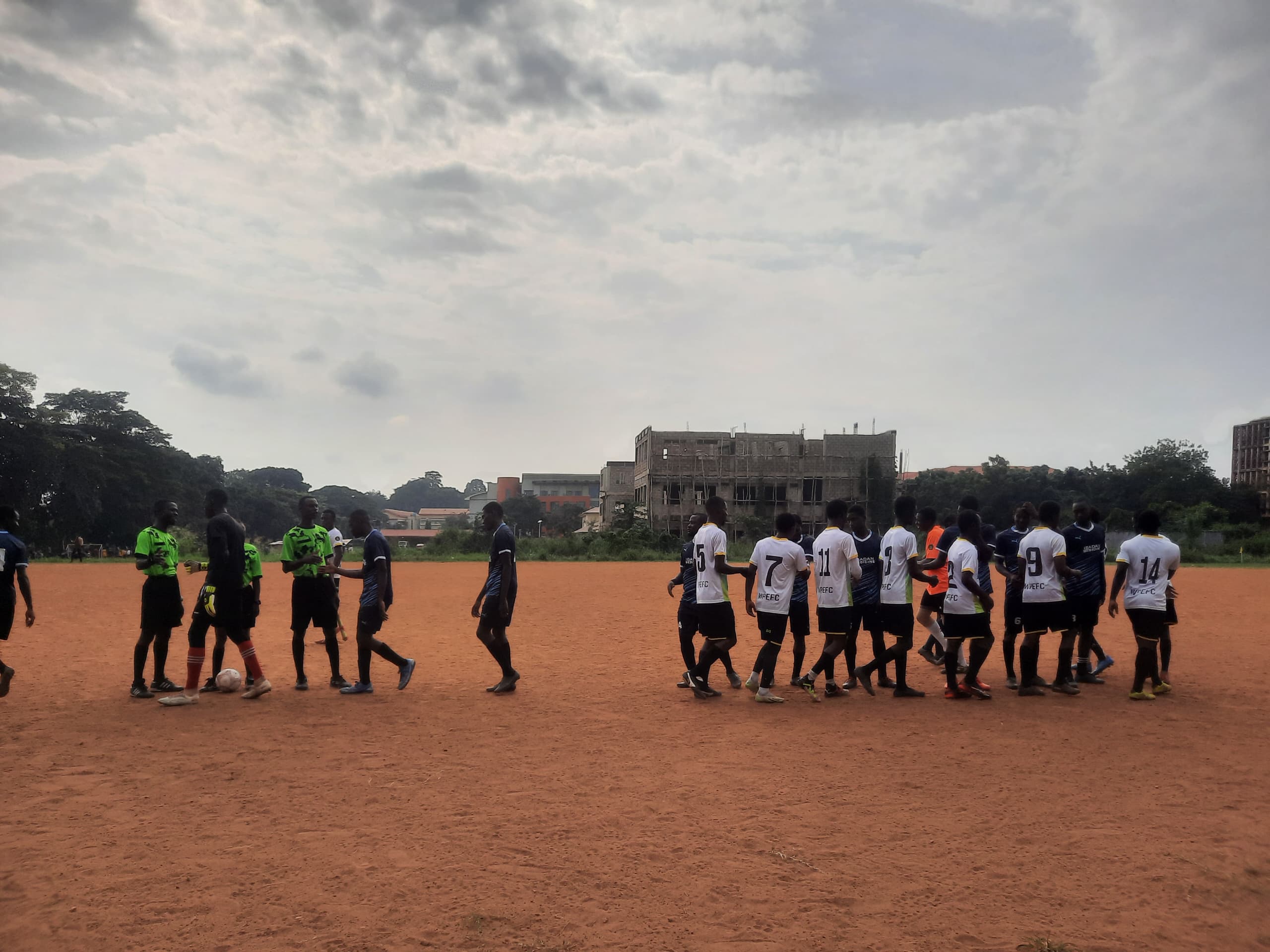
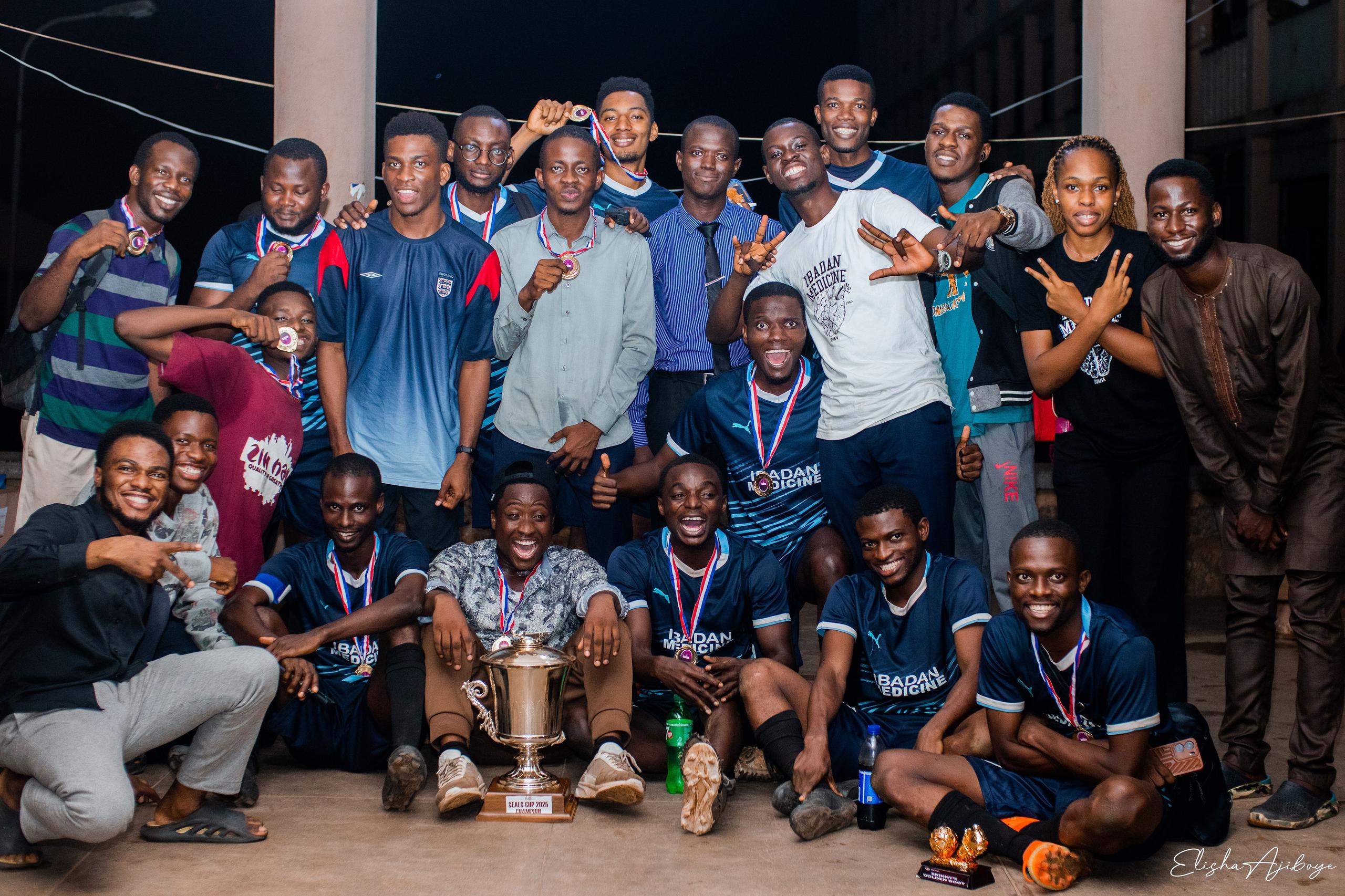
The University of Ibadan Medical Students’ Association (UIMSA) male football team etched their names in the history books when they clinched the SEALS Cup trophy for the second consecutive time last year. But beyond the applause, beyond the recognition, beyond the announcement of winners, lies a lingering reality: the promised prize money has remained unpaid long after the celebrations have faded. The situation is the same for Human Kinetics females, the winners of the competition’s female category.
This is not an isolated incident. It is not a one-off delay that can be dismissed as an administrative hiccup. It has now become a pattern, as detailed here by IndyPress last year.
Following the previous editions of the SEALS Cup, prize money owed to winners took an extended period to be fulfilled. The same issue has resurfaced. Almost a year after UIMSA’s most recent victory, the prize money remains outstanding.
We are now days away from doing it all over again. The posters are going up. The hype is building on social media. But the question must be asked: With what moral authority does the SEALS Cup organizing committee announce a new tournament when the debts of the last edition remain unsettled?
To understand this issue fully, it is important to move beyond surface-level frustration and examine the system behind it.
Reaching out to members of last year’s SEALS Cup organizing committee, including the chairman, Olowu Daniel, and other key stakeholders, reveals a clearer picture. According to them, the primary challenge is funding. Unlike what many participants might assume, the competition does not enjoy structured financial support from the university management, the student union, or even the sports council. Instead, the burden of fundraising falls on the organizing committee itself.
This reality introduces a difficult constraint. Funds raised are often directed toward immediate logistical needs, such as pitch arrangements, equipment, first-aid supplies, officiating, and general coordination. In such a system, prize money, rather than being secured upfront, becomes dependent on what remains after these essential expenses have been covered. And when resources are limited, it is often the prize money that is deferred.
This explanation does not excuse the outcome, but it does contextualize it.
What emerges, then, is not a story of negligence but of structural weakness. The SEALS Cup, like many student-led initiatives, is operating within a system that celebrates ambition but does not adequately support its execution. The result is a recurring gap between intention and fulfillment.
In a discussion with one of the members of last year’s SEALS Cup organizing committee, he specifically lamented several reasons, all of which are summarized:
- The University, the Sports Council, or the Student Union do not support the competition.
- The timing. The SEALS Cup is a first-semester competition, typically starting in the 6th week of the semester. What it means is that the organizers have less than two months to fundraise.
- The cost of ensuring quality officiating is high, with semi-professional referees charging up to ₦14,000 per match and ₦40,000 for finals, totaling around ₦750,000 for the entire competition.
- Defaults from brands that promised sponsorship. He gave an example of a particular brand that promised to give ₦250,000 and individual awards for MVP male and female, but ended up giving just ₦20,000 eventually.
- For brands that do deliver, retaining them as sponsors is difficult because the return usually requires players to register for the brand. However, if the competition has started before securing the sponsorship, it is challenging to mandate player registration while the tournament is ongoing, as there is no way to penalize defaulters.
For the MBBS boys, this delay in payment hurts more because they arguably sacrifice more than most other teams. Emerging as winners meant the team played seven games, with each game costing the team as much as ₦12,000 in transport and other logistics. Spread out across the seven games, the team spent at least ₦84,000 from the players’ pockets. While expressing his displeasure about the situation, Ayodeji Ramoni, the team captain, said, “Personally, I feel they shouldn’t go ahead with [this year’s] registration because it makes no sense. The same thing happened in 2024, only this is worse. And if they are going ahead with registering for this year’s edition, they shouldn’t pay the registration fee. The fee should be deducted from last year’s money while ensuring they receive the balance.” When asked if this would affect the motivation of the team for this year’s competition, he said that he didn’t believe so because the competition has never really been about the money but more about the bragging rights, since the team even sometimes spends more than the prize money for the duration of the competition.

The story is similar in the camp of the Human Kinetics girls. Olaniyan Deborah, the skipper of the side that won the trophy, complained that their team also hasn’t been paid, and there was no communication from the organizing committee all this time until she asked the erstwhile sports secretary, Victor Kolawole, a few days ago, to which he pleaded for more time.

With the upcoming SEALS Cup, the organizers have the chance to avoid the errors of the past three years. To ask whether the structure currently in place serves both organizers and participants, and whether the balance between ambition and capacity has been properly aligned.
To address this, the Press had a chat with the current chair of the SEALS Cup organizing committee, Laura Onyetube. In her response, she said, “I agree that it is an ugly situation, as the SEALS Cup is a non-profit competition [we don’t charge vendors and spectators], so I cannot guarantee that this situation [delay in payment of prize money] won’t arise again, but as much as possible I will work hard to try to avoid it.” She then vehemently promised that before this year’s edition kicks off, the winners of last year’s edition will get their money.
This is where the conversation must shift from complaint to reform.
Several practical steps could help bridge the gap between intention and fulfillment. First, difficult as it may be, prize money should ideally be secured before the competition is announced. This may require a more deliberate approach to fundraising, one that prioritizes financial stability over scale. It may mean smaller competitions or reduced expenditures in other areas. This may mean a compromise in quality, but it ensures that commitments made to participants are honoured.
Second, there must be greater transparency in financial communication. Participants, through the departmental sporting directors, should clearly understand how the competition is funded, what constraints exist, and what expectations are realistic. This does not weaken the credibility of the organizers; if anything, it strengthens it by aligning perception with reality.
Finally, there is a need for broader institutional engagement. The SEALS Cup is too important to fail, but the lack of support from university management, the student union, and the sports council puts it at risk. It is an indictment of the university’s commitment to student life that a tournament of this scale is left to go bankrupt year after year. Student competitions need some level of institutional backing, whether through funding, sponsorship facilitation, or administrative support, to maintain their relevance and impact.
Year after year, the SEALS Cup organizing committee shows commendable initiative in keeping the competition alive despite limited support, but sustainability requires more than effort. If student competitions are to retain their value, then their promises must carry weight. Otherwise, victory risks becoming symbolic, and recognition, incomplete.