Gaining admission to medical school is a dream come true for anyone who comes upon the chance and understandably so, as out of the multitude who apply, only a select few get the opportunity. For instance, in 2023, JAMB revealed Medicine and Surgery had over 452,000 applicants for just around 80,000 spots. What then becomes of this great joy when a person has been stuck in a class for five years that they should ordinarily spend just three years and worse, still with no end in sight.
Some would say this is the current story of students of the MBBS program in FUTA, but the ones with a deeper gift of insight would realize that this is the hum of a familiar song, one that has been playing for a while in the medical education landscape of Nigeria. And while the FUTA issues appears to have been resolved, with news of the MDCN accreditation coming recently, one must still pause and reflect on this common yet unfortunate pattern.
A new school or a school without an MBBS program suddenly gets the program, and admission seekers exhausted by years of failed applications to various other schools scramble for a piece of the new cake, unbeknownst to them that it is one laced with poison. It is a familiar tale, one that has played out in numerous institutions.
Let’s start with the most recent.
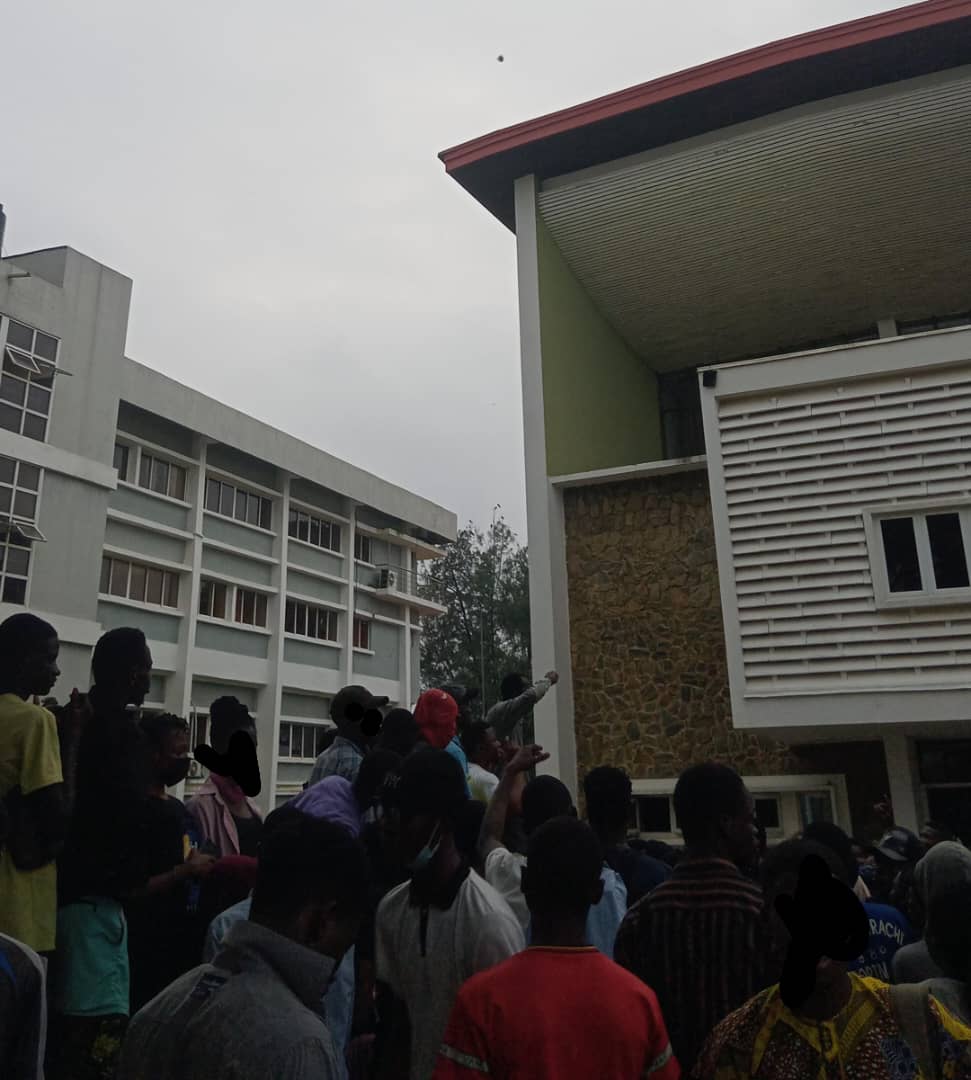
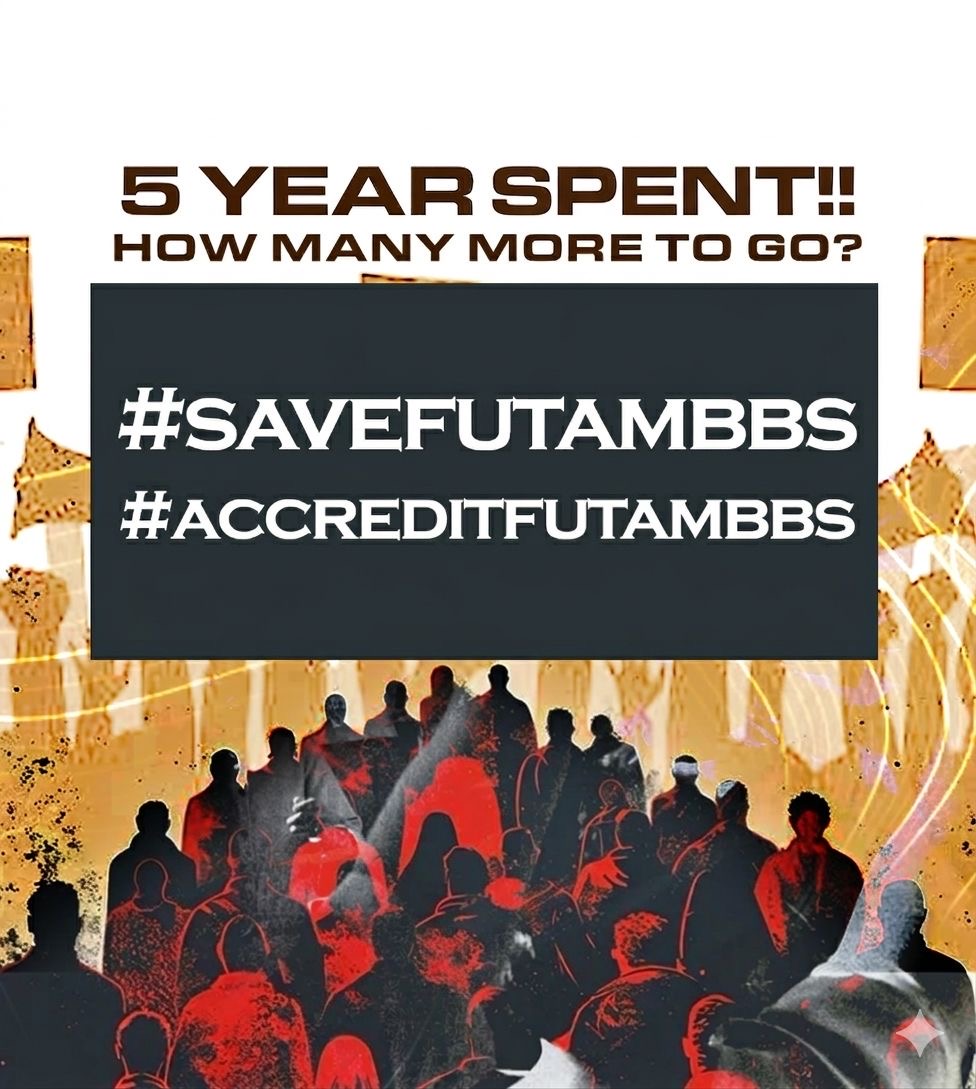
On April 22, 2026, the medical school of the Federal University of Technology, Akure (FUTA) was accredited by the Medical and Dental Council of Nigeria (MDCN), authorizing a 100-student admission quota. In the moments leading up to this, there were 3 classes stuck in 300L (300L A, B and C), with the first batch of 300L students admitted in 2021. As at the admission of these students, FUTA lacked a teaching hospital until October 2025, when the Ondo State Government handed over its state specialist hospital to FUTA — four years after students had already been admitted into a program lacking the facilities to properly educate them.
In 2017, UNIABUJA graduated its pioneer set of MBBS students, who were admitted 12 years prior, in 2005! They first spent 8 years in their preclinical years and at some point in the accreditation tussle, the school was indefinitely shut down. The sacrificial lamb in this case are the very familiar ones usually slaughtered on altars of this manner, the pioneer set, the one granted the unfortunate gift of an early admission into a program that was never properly designed to work from the start.
Ambrose Alli University tells a similar story. As highlighted, amongst others, in our editorial on Nigerian healthcare and medical education, after spending 10 years in the university, medical graduates had to resort to protesting to get a chance at being inducted. In fact, in 2023, a 300L medical student lamented about the school requiring them to sign an undertaking before taking the first professional exams. In the undertaking, as published by an article by the daily post, “”I hereby undertake as follows:
“1. After my Part 1 MBBS (Professional) Examination, I will undertake an 18-month intercalated BSc programme in Anatomy or Physiology in the College of Medicine.
“2. I will wait until one above before proceed in to the clinicals.”
“3. I will pay school fees as a medical student during the intercated BSc programme.””

This is institutional extortion and kidnapping. By forcing students to sign such before writing their examinations, the school attempts to absolve itself of the legal repercussions of such requirements. As preposterous as this sounds, it is a trend seen in institutions lacking accreditation by MDCN or admitting more than their allocated quota allows for. But why exactly are there loopholes that allow for this?
One of the issues lying at the core of this problem is the double accreditation requirement of medicine (and most other professional courses) which requires the NUC accreditation and the MDCN accreditation. The NUC validates that the university curriculum and facilities meet minimum academic standards while MDCN ensures that the training standards align with proper medical practice standards.
The NUC accreditation is a lot easier to come by and is the one that licenses/authorizes an institution to admit students into a certain program. This is the accreditation that most of these institutions whose students eventually get stuck in a limbo, including FUTA, have. The MDCN accreditation on the other hand is required by the institution to:
- Conduct professional examinations
- Graduate and induct Doctors into the medical profession.
This type of accreditation is more difficult to come by and is usually the missing link in most institutions that are able to admit into the program but unable to write professional examinations or even induct after final year. The MDCN accreditation has multiple requirements ranging from the availability of a teaching hospital to ensuring that the laboratory facilities are adequate, even going as far as ensuring that conducive hostel facilities are available for medical and dental students.
This explains why it is usually the more difficult to get of the two forms of accreditation, and as someone who is in sync with the mediocrity with which Nigeria is identifies with, one cannot but be thankful for the existence of such watchdogs serving as gatekeepers of the profession. Two questions come into mind. First, why are institutions allowed to admit into the program without at least a partial accreditation from MDCN?
But secondly, given that the NUC and MDCN are pursuing the same goals fundamentally, why does the NUC give accreditation to a school that lacked a teaching hospital in 2021 when their facilities did not, in fact, match the minimum requirements to study Medicine and Surgery? Except the answer is, they don’t! FUTA only received accreditation from the NUC on April 7, and 15 days after, they received MDCN accreditation. How then were they able to admit students into their MBBS program without accreditation?
There are 4 stages in the NUC accreditation process: application, resource verification, accreditation and finally, re-accreditation. Important to this discussion is the resource verification exercise undertaken under the NUC supervision. In this stage, a university like FUTA, invités the NUC to see their labs and lecture halls, or maybe the plans they have for a teaching hospital and then if the NUC thinks they have the potential to teach, they grant “Resource Verification.”
Here’s where the issue really lies. Once resource verification is completed, it is completely legal for the University to advertise for admission. Thus, JAMB is obligated to put the school on its portals and that opportunity is open to thousands of students, out of which some get admitted. But after resource verification, the program will be allowed to run for only a few years after which it would require proper accreditation from the regulatory bodies before these students will be allowed to graduate or be inducted. Or in some cases, be allowed to cross to their clinical years.
This apparent lack of synchronicity between the forms of accreditation could be said to be the primary source of problem. One could argue that students should not apply to institutions that are not MDCN accredited for medicine, however a more cursory look shows a deep problem with this demand. At the time of application, most students do not have the details of whether or not their choice institution is partly accredited, fully accredited or not even accredited at all and in reality this is an unfair burden to place on the usually naive students. The clear tactic though is that these universities use the students as a tool. After deliberately collecting fees for years, and not completing the requirements for accreditation, the universities use the students to beg the government for funds or resources, or the regulatory bodies for mercy.
The immense psychological toll on students who spend nearly a decade studying such a gruelling course in incredibly tumultuous conditions only to be thrown into hopeless conditions where they either don’t write their exams at all, write it late or even sometimes pass their exams but watch their mates get inducted without them is however something we forget to talk about. Situations like this, no matter how aberrant they appear, are a mosaic. However irrational the pattern you observed last was, you know it would happen again.
There are many institutions currently offering MBBS that are likely to run into similar troubles very soon. Institutions like Federal University of Medicine and Medical Sciences, Abeokuta (FUMMSA) — who just received her resource verification in July 2025, Federal University Oye-Ekiti (FUOYE), to mention a few. Thus, it is perhaps not out of place to fear for the future of the students in these institutions. After all, #SAVE FUMMSA MBBS or #SAVE FUOYE MBBS is a battle cry that we may chant very soon, as unfortunate as that sounds.
THE WAY FORWARD
It has been firmly established that the current system shifts the burden of responsibility unto the frail and oft immature shoulder of students; it thus follows that the way out is to shift the burden of responsibility unto the shoulders of the key stakeholders: JAMB, NUC, and MDCN.
Throwing the weight of students on balances you haven’t fully tested isn’t exactly the most decent move. The NUC’s method of allowing universities admit students without being fully accredited should be scrapped. If their capacities to cater for the learning of real students haven’t been fully tested, then they shouldn’t be allowed to be enlisted in JAMB portals. These regulatory bodies should also work hand in hand to ensure that accreditation processes are unified in order to prevent regulatory muddy waters. By ensuring that institutions that do not have the go-ahead of the MDCN do not also have the approval of the NUC to start the program at all, much of these problems can be mitigated. A synchronized NUC-MDCN initial accreditation would help to ensure that many of the later problems that affect MDCN accreditation are nipped in the bud, that our students can focus on studying to save lives and not looking for who to save them from a system that is attempting to swallow their years and give nothing in return.
If they absolutely must carry on with the accreditation process being utilised in status quo, then every program should mandatorily be labelled with their corresponding accreditation process levels, such that students can be fully aware of which schools lack the capacity to graduate before walking into a fight they haven’t been fully armoured for. While FUTA’s accreditation save granted a much needed sigh of relief, it should not be mistaken for a victory. It is merely a reminder that the system only creeps when students are already trapped inside it. Yet students keep paying for the privilege of being trapped, in both monetary and psychological tolls.