
Whew!
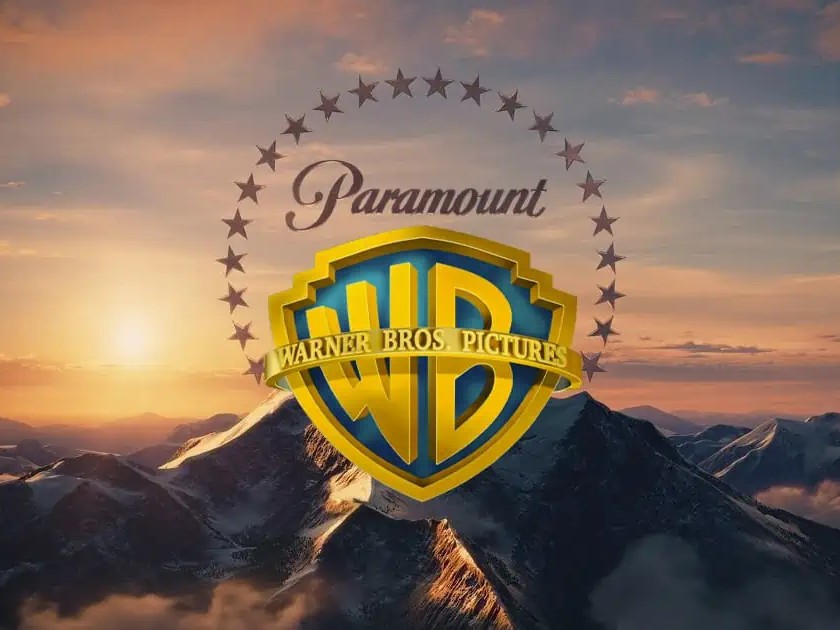
Welcome to the other side of the merger; Paramount Skydance won the bid! At the time the prequel to this article was written, we all believed that Netflix would take over Warner Bros in that $82.7 billion takeover bid. At the time, cinema faithfuls all over the world were scratching their heads over what this meant for film, television, and cinema, as many believed the takeover heralded the death of cinema. Interestingly, around the end of February, news outlets around the world announced that Paramount had acquired the company instead of Netflix.
Initially, this decision looked like it had set the ground running as the Warner Bros board had agreed to the idea back in December 2025, and this couldn’t be reversed, but in truth, it’s much deeper. For a merger of that scale to happen, a lot of paperwork and regulations must be signed, sealed, and approved, along with several court visits, before the deal would have been able to stand on two legs. Netflix, as a company, has solidified itself in the industry, and there seemed to be nothing in its way of acquiring the company in question. But just a few days after the initial announcement, Paramount valued and bid for the company at $108 billion, reigniting a series of legal wars until eventually Netflix stepped back, saying the deal was no longer financially buoyant for them, evident as their stocks had been falling and giving Paramount a freeway to acquire Warner Bros for a whooping sum of $110 billion.
There could be a myriad of reasons why Netflix stepped back. I’d prefer to begin with financial reasons. Acquiring a large library of old franchises for $82.7 billion as their initial bidding price, whilst their competitor had bid $110 billion, is no doubt a lot of pressure for a company, albeit successful, that only recently claimed the limelight. For Netflix, the worth of acquiring this franchise at this pocket-splitting cost could have raised doubts. This is not to speak of the unending bureaucratic chain of regulatory bodies they would have to go through to set up a merger of that size, at further financial expenses. One may not be wrong to assume that Netflix overestimated the amount of money and hype they would have gotten from the Stranger Things season finale, and when it fell through, they decided not to go through with it. But what do I know?
Paramount Pictures is one of the oldest and most influential movie companies in the world. One could argue that it used to be a direct rival to Warner Bros at some point. It’s the perfect competitor because they produced films, distributed them, and owned movie theatres. Basically, everything Netflix couldn’t do on its own initially. Movies like The Godfather, Transformers, Star Trek, Mean Girls, and A Quiet Place are just a few of the highest grossing projects of this company. Acquiring Warner Bros would strengthen Paramount’s position as a competitive entertainment market against Netflix, whilst also allowing both companies to combine storytelling and production networks, reducing costs in a way. It is also worthy of note to mention that Paramount Skydance is a product of another internal merger in 2024.
What does this mean for me, you, the average cinephile in UI that loves crashing the cinemas when blockbusters get released? While it means our plans of watching Harry Potter on Netflix have vanished, this new deal is a good thing. You no longer need to pay separately for HBO Max and Paramount+, which means you can watch Game of Thrones, Euphoria, and Transformers all on the same streaming service. In this doing, Paramount has widened its audience and reduced cost for a fraction of the audience. This would also elevate them into direct competition with streaming services like Netflix and Disney+. Paramount CEO, David Ellison, says that he plans to keep Paramount and Warner Bros separate companies, and ensure they release about 15 films per year each. He also mentioned that these movies would have a 45-day window in theatres before coming to streaming services. HBO would remain its unique self with Paramount refraining from inserting meddling hands in its affairs. Abrupt cancellation of shows is also no longer a threat. Good news, right?
Unfortunately, the truth is mergers aren’t always beneficial to the masses. Streaming services’ prices would definitely go up, further impoverishing the already-poor public. Independent producers and actors would find it much harder to break into the spotlight, as there would be fewer studios to buy up finished films, fund distribution, and provide theatrical releases. The presence of competition, which should help to increase the value of films, would be absent, leading to these established studios paying less than the fair market value for films. As you can imagine, this would deepen the industry’s wealth gap, reinforcing the all-too-known cycle of the rich getting richer at the expense of the working class.
Netflix, on the other hand, chose to buy InterPositive, a start-up founded by Ben Affleck, which makes AI-powered tools for filmmaking, which is concerned with “making content 10% better than making it 50% cheaper”. Funding this would enable them to oversee tools that could be widely used by producers in the future, including producers under Paramount, thereby making the post-production timeline shorter, increasing quality, and reducing cost. What could this mean in the near future?
This series of events has shown us that the world of television is changing. Movies are being primed for eventual streaming as more and more people are preferring to watch movies from the comfort of their rooms rather than going to the movies. Traditional studios are losing while streaming services are winning, and it doesn’t look like anything can be done to stop it — despite the little sparks of innovation from private groups to restore the cinema culture. The truth nevertheless stares us in the face; our world is changing, so is the movie industry, and it is becoming increasingly hard to predict the future from where we stand now.






So nicely written. I like how it’s tied back to how it affects the average cinephile and also compares traditional method of seeing movies to where the world is advancing to right now which is streaming platforms.