“The Dark Nights Pass”: Medical Students Confront Determinants of Mental Health

Emmanuel still remembers the distinctive sound of Ifeloluwa’s laughter. They were 100 level medical students preparing for exams and Ifeloluwa reached out for help with a difficult aspect with everything eventually melting into laughter. Later that night, Ifeloluwa paid the entry fee — a thousand naira per head — to the night class they attended for the both of them. Ifeloluwa Wisdom Akinmade passed on March 2nd, 2026. He was a 300L medical student at the University of Ibadan. He was 21.
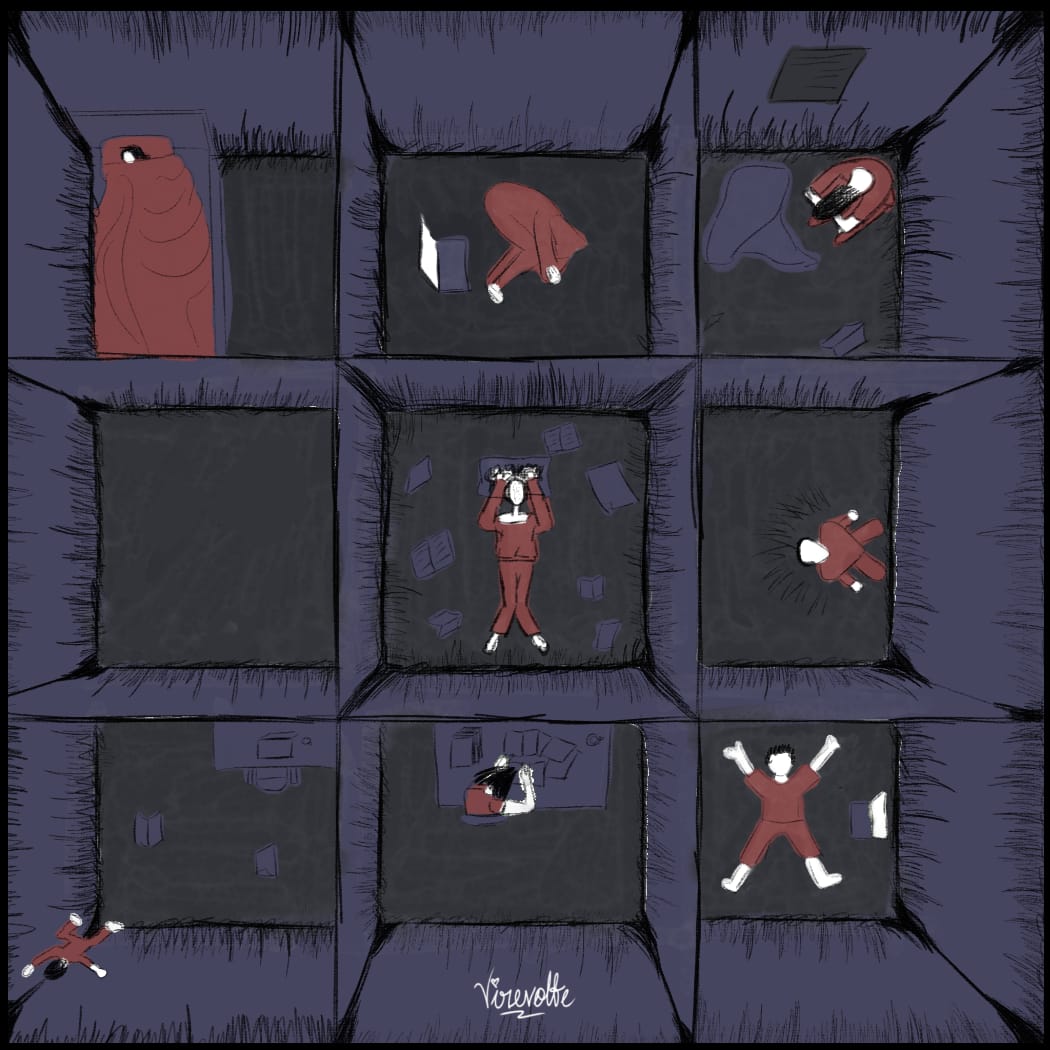
The classic analogy used in describing medical school is ‘drinking from a firehose’ — phrasing that describes the immense amount of pressure and overwhelming volume of information medical students are expected to learn in very short periods. In medical schools in Nigeria, this is exacerbated by subpar socioeconomic conditions, with scores of medical students struggling to cope financially — some outrightly unable to afford the fees required to stay enrolled. With other non-negotiable social infrastructure such as accommodation and power supply also becoming luxuries, medical school soon transforms into a penitentiary, albeit one in which you learn to better the lives of everyone else but yourself.
‘The future in medicine doesn’t look bright again,’ Wale*, a 500L student at the University of Ibadan, said. ‘Strike, accommodation, pressure — it’s just a lot,’ he sighed. Unlike their counterparts in other departments, medical students run on a separate academic calendar. This results in a disengagement from campus life activities and, at certain periods, isolation in school when everyone is at home. Feeling this pain first-hand, Wale added, ‘All this waiting behind when everyone has gone home in 200 level ain’t necessary. That is the period depression hits the most, and not much people are around to motivate or vibe up. Scrap the whole thing off the syllabus.’
It is not a UI problem alone. A 2024 systematic review of medical students across Africa found that between one in two and one in three show some form of psychological distress during their training. ‘Yes, (I feel depressed) a lot of the time. I even wonder why I chose this course,’ Benedicta, a 300L UI medical student, contended. Two respondents from Babcock University, including Tamilore Olufade, also report feeling depressed.
Depression, in medical school, does not have a classic expression. ‘I try to avoid people because I have issues with controlling my anger at times,’ Uche*, a 500L UI Medical student, shared. ‘I also try to distract myself by doom scrolling and try discussing with my friend.’ Anita*, a 300L medical student from the University of Abuja, resorts to “isolation” when things get dark.
For some other students, it looks like just holding on till it gets easier. ‘I just know days that are easier to get through come along and the dark nights pass,’ Mayowa*, a 200L UI medical student said. It gets more visceral for Jochebed, a 200L UI medical student. ‘Sometimes, when I feel too overwhelmed, I do have panic attacks. So, I looked for an online therapist. But then, I realized, though my mental health is important, am I really going to spend in dollars cause of this? I didn’t seek to inform my parents though. I declined their discount still. So, I didn’t really go through with it,’ she said.
To Jochebed, depression has no single face. ‘Depression can be loud in the silent ways. Maybe in the people who are joyous for no reason, hyperactive ’cause being dormant makes that feeling come, makes it hurt more, in the out-of-this-world moments and gazes, in the smiles that are so bright that conceals all, in the quiet, in the bossy behaviour, behind the extrovert, in the girl that doesn’t relate to other people, in that guy that acts so rude and pissed all the time.’
The response to depression in medical school is a lot more nuanced than is realized. Medical school cannot necessarily be considered a microcosm of Nigeria because unlike in other parts, there is an overwhelmingly high awareness on mental health issues around medical students. It’s a ravaging silence in a loud room no one speaks about because everyone is already speaking. There is a plethora of organizations created, and even within the system, lecturers and colleagues at moments like this convert the phrase “Speak up” into a chant.
Yet, not everyone does.
Benedicta doesn’t because even though ‘…the lecturers they seem approachable, I won’t or can’t approach them because I feel they won’t understand. For colleagues, what if I approach the wrong person and I am made jest of?’
‘Well, even colleagues act high and mighty and see me as unserious because I am doing business. Well, we will soon see who is not serious. Lecturers only favour and interact with those that can answer their questions – and I am not planning to be among, so hell No,’ Wale poured out his heart. Anita would rather stay in isolation because ‘…everyone thinks you’re joking or ‘whining’ them. They don’t really rate you.’
Jochebed thinks people don’t reach out despite it all because ‘Some colleagues, also me, might not seem approachable to other people, because they’ve built invisible, mental walls around themselves, either defensive or offensive mechanisms. To survive. They haven’t seen a reason to be open and free yet. Truthfully, not everyone is approachable. But sincerity is important also. Some lecturers, pride in their work and, along the way, may forget to be approachable in their dealings.’ Uche doesn’t reach out because ‘no one knows my problems and no one has to. They’re my issues.’, casting a dark shadow on the sense of community medical students try to breed.
Some people also stop reaching out because they’ve been shut when trying to do so.
‘You’ll be fine. It’s something that’s said in passing without much thought, but it does prevent me from saying anything when I know that’s the reply I’ll get.’ Bola, a 300L UI medical student, said. Wale claims he wasn’t surprised when he heard of the tragedy because he was shut down when he was trying to reach out about a depressing situation by someone around the same period in medical school. Tamilore and Anita also faced similar occurrences and while the former did nothing about it, the latter stopped reaching out altogether.
And in all of this, Jochebed wonders, ‘Organizations are created, founded but are people coming forward for help? Are they taken seriously? Are they given the help they deserve? Do they leave and vow never to talk again?’
Well, what’s working?
Some things. In private medical schools like Babcock and Rhema universities, students find their colleagues and lecturers more approachable. Wale talks on the UIMSA Mentorship program which matched every preclinical student who applied to a clinical student mentor. ‘I am still a bit connected to my mentor now even though I am in 500level,’ he said.
Check-ups during MB exams from other members of medical student associations have also been found helpful. ‘The lady kept calling me and since she doesn’t know me (enough) to judge me, I expressed my whole self to her, and her words and constant check-up went a long way to impact my success in MB1. Beyond those, I got a contact of someone from Asido that really helped a lot,‘ he added.
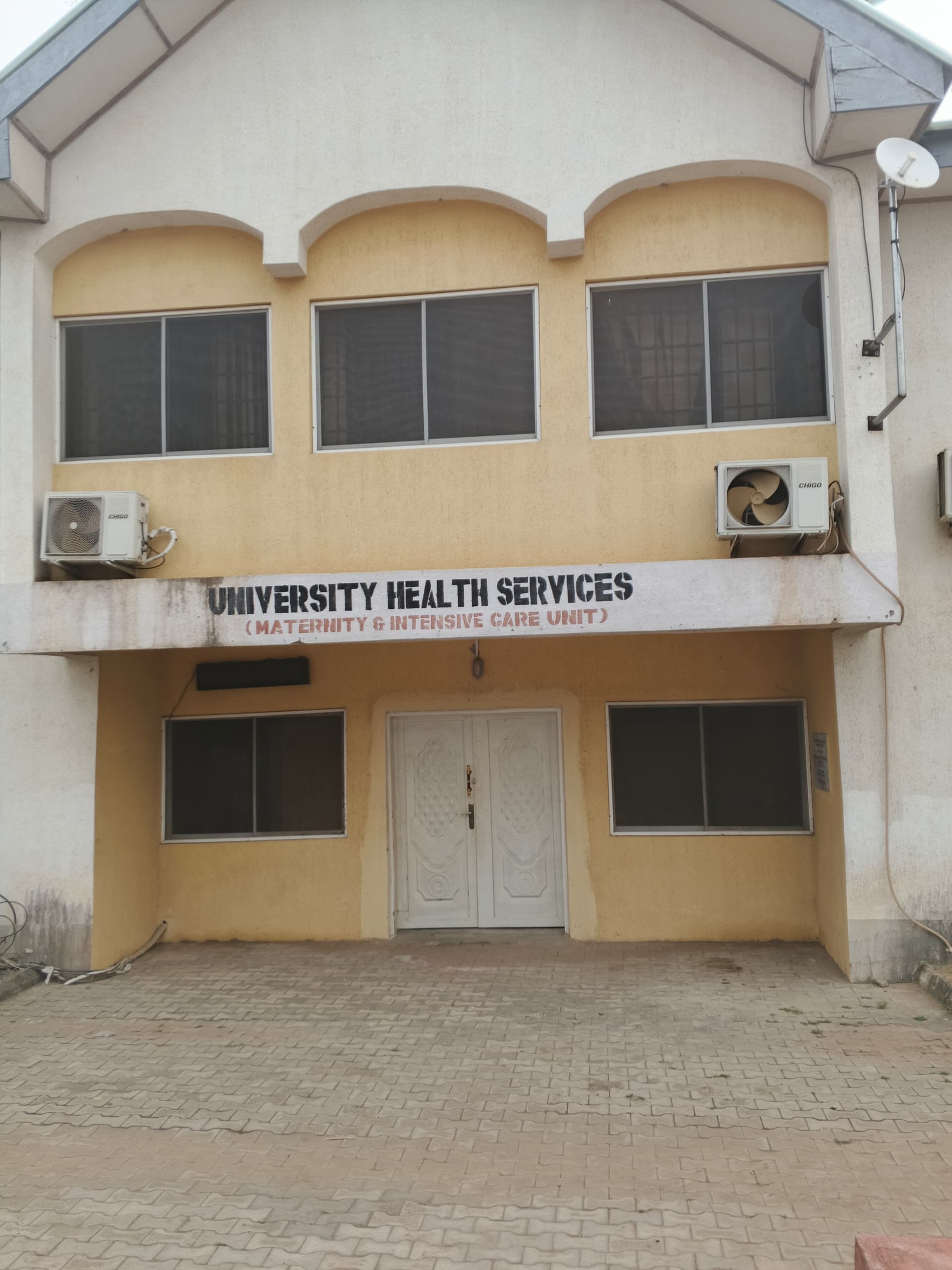
Yet, not everyone knows about mental health services being offered by the University. ‘No. I don’t even know that something like that exists,’ Dolapo, a 300L medical student, said — a sentiment echoed by many others.
‘I don’t trust that they’d understand or really help,’ Uche says. For Jochebed, it’s more of the time factor. ‘The university system, Jaja Clinic, is a not-fun way to waste your time. And I’m not looking to take a tour to the mental health service. I haven’t because of time, and I find it difficult to really express myself to people.’
“I heard from a friend that went there that all they gave her was tea and told her, ‘Don’t say you’re tired’. There’s really nothing much that’s going to do for me.” Bola says. ‘They (lecturers and staff) think it wasn’t a problem during their time, therefore it shouldn’t be a problem in ours.’
And for those who consider outsourcing for help, ‘I got disinterested. It seemed too much of a hassle. Also, at that time, I didn’t have my own money to pay for the services of those that offered professional therapy.’ Mayowa shared.
Though disgruntled, medical students have ideas.
‘Maybe be more realistic with how they approach problems; it’s more than just the mental health talk. We don’t want the talks; we want practical solutions.’ Uche pointed out. Wale suggested the mentor-mentee program restored permanently. He also wants curricular changes — starting with scrapping the aspect that keeps medical students on campus after everyone else has gone home. ‘I feel as though lecturers should be duly and sufficiently educated on this kind of matter,’ Sarah*, a 200L medical student from the University of Abuja, shared. Fola*, a 300L UI medical student, envisions something else; ‘Creating a platform where students can express themselves anonymously and get replies.’ Ada*, a 200L UI medical student, believes we need ‘more awareness, more campaigns and more one-on-one sessions for students that require it.’
When it comes to remaining in optimal mental health state, waiting till the system is perfect isn’t really an option. When life goes grey, some people reach out to others to add colours once again. ‘I talk to my friends who pass through the same,’ Ahmed, a 300L UI medical student says. ‘I ask people around how they cope, also I talk to my brother and parents more often,’ Stella*, a 200L OAU student shared.
‘Sometimes, I exercise, take walks, talk to people, listen to uplifting music, draw,’ Jochebed says, showing some people lean into more healthy solitary practices similar to Joshua*, a 400L Babcock medical student, who in response to how he deals with the rigors of medical school says, ‘I pray’.
‘I watch a lot of series, and I read novels. The higher the stress level, the higher the rate at which I plough through my series/novels’, Bola said, revealing the avoidant tendencies that exist. For Anita, it’s ‘watching movies, isolation, sleeping,’ highlighting the transition from avoidance to isolation, its scarier twin. Another interesting category of people redirect their energy. ‘I just find something else to do. Now I’m into a business and channelling my energy into that,’ Wale shared.
‘Ifeloluwa loved some stuff. At least going through his Instagram posts, he did some covers for some songs and even though he was quite gentle, he was into web3 and co. He was a cool guy, he wasn’t always moody — he still had a regular life,’ Oluwafemi, a 300L UI medical student shared.
‘In our conversations, he was looking to be a successful doctor. When he wrote jamb and got 300+ and wrote post UTME and got into UI medicine, it came as a shock to everyone and that was a great feat for him. Becoming a successful doctor would have been a thing of joy to him,’ Emmanuel said. ‘People actually didn’t get to see his fun side, his expressive side because I can still remember vividly how Ife laughs and all people saw was just a gentle and timid part. People didn’t see his fun and lively part. I got to see it and I’m grateful to God I can at least live with the memories. I pray God grants him eternal rest.’
* Some names have been changed to protect identity.