
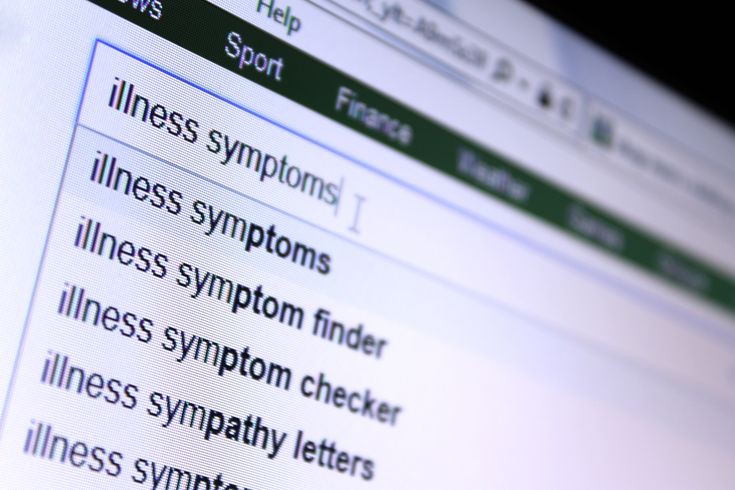
We live in a time where medical diagnosis is only a search or even a simple prompt away. A few taps on the screen can turn worry into something that feels like clarity. A headache is no longer just a headache; it quickly becomes a list of possible conditions, neatly written and explained. And with that information, we often gain confidence—the kind that feels convincing, even when it may not be completely accurate.
This growing habit of attempting to understand our bodies through the internet has been increasingly normalised. Many people now turn to search engines or short videos before they consider seeing a doctor. We type in symptoms, scan search engine results, and the conclusions are drawn. Mostly, it feels fast, accessible, and in some way, empowering.
But medicine is rarely that simple. The human body does not always follow clear patterns that can be easily matched to online descriptions. The same symptom can mean different things depending on context — age, medical history, environment, and other factors that are not immediately obvious. What often appears straightforward on a screen is far more complex in reality.
I would like to think this is something that only “other people” do, but it isn’t. I have found myself doing the same thing repeatedly. A simple headache can send me searching through different types, trying to figure out which one matches what I am feeling. In the moment, I’d feel I understand what is going on. But more often than not, it leaves me uncertain, thinking of one possibility after another.
It is easy to criticize this culture of self-diagnosis, but it is not entirely without reason. For many people, going to the hospital is not always convenient. Long waiting hours, crowded environments, and the cost of consultations in some hospitals can make the process stressful. In comparison, searching online is quick, private, and requires far less effort. In situations like this, turning to the internet becomes less of a careless decision and more of a practical one.
Technology has only made this easier. Beyond search engines and social media, artificial intelligence has introduced a new way of accessing medical information. Instead of scrolling through multiple pages, people can now receive direct, well-structured answers within seconds. These responses often sound clear and confident, almost like a conversation with a real doctor. For many, this makes the information feel even more reliable.
But there is an important distinction between having access to information and truly understanding it.
There have even been stories of artificial intelligence identifying conditions that were initially missed after multiple hospital visits. Cases like these are often shared as proof that technology may be outpacing traditional medical practice. While such examples highlight the potential of AI, they also risk creating a misleading impression that accurate diagnosis is simply a matter of arriving at the right answer, rather than a process that involves careful evaluation, context, and professional judgment.
Artificial intelligence can provide explanations, but it does not examine patients. It does not see physical signs, ask follow-up questions in the same depth, or interpret subtle details which may change everything. Medicine is not just about matching symptoms to conditions; it involves judgment, experience, and responsibility. These are things that cannot be fully replaced by quick answers, no matter how convincing they sound.
Even in the early stages of medical training, one fact becomes clear to medical students: the more you learn, the more you realize how much there is to understand. What seems simple at first often becomes layered and complex. This makes it difficult to rely on quick conclusions, because many conditions overlap in ways that are not immediately obvious. Perhaps the issue is not that people seek answers, but that the easiest answers are not always the most accurate.
This does not mean technology is harmful or should be avoided. In many ways, it has improved awareness and made health information more accessible than ever before. It allows people to ask questions and become more involved in their own health. However, I believe access should not be confused with expertise.
Information can guide, but it cannot replace careful understanding. It can point in a direction, but it does not always provide the full picture. And in a field as crucial as health, that difference really matters.
As we continue to live in a world where answers are always within reach, it becomes important to recognize the limits of those answers. Because in the end, medicine is not just about finding information, it is about understanding what that information truly means.



This is good. It makes sense and balances the equation