On the 1st of May, 2026, the Joint Action Committee (JAC) Non-Academic Staff Union (NASU) and Senior Staff Association of Nigerian Universities (SSANU) embarked on a nationwide strike, following the failure of the Federal Government and the committee to come to a conclusion after several renegotiation meetings. The consequences of the strike were immediately obvious, causing inconveniences, delays and even suspensions to various aspects of the student body.
A major effect of the strike was the unavailability of electricity, as it was cut off across the halls, leaving students stranded and stressed. Because many activities are dependent on electricity, the absence of it caused unproductivity and delayed the schedules of a lot of students. ‘Since there was no light on campus, I had to go outside the school to charge my phone which seriously affected my reading schedule,’ Temiloluwa, a 100L Medicine and Surgery student shared. ‘I spent a whole day charging at a student friendly centre. My day was unproductive,’ Kharisma, a 300L student said.
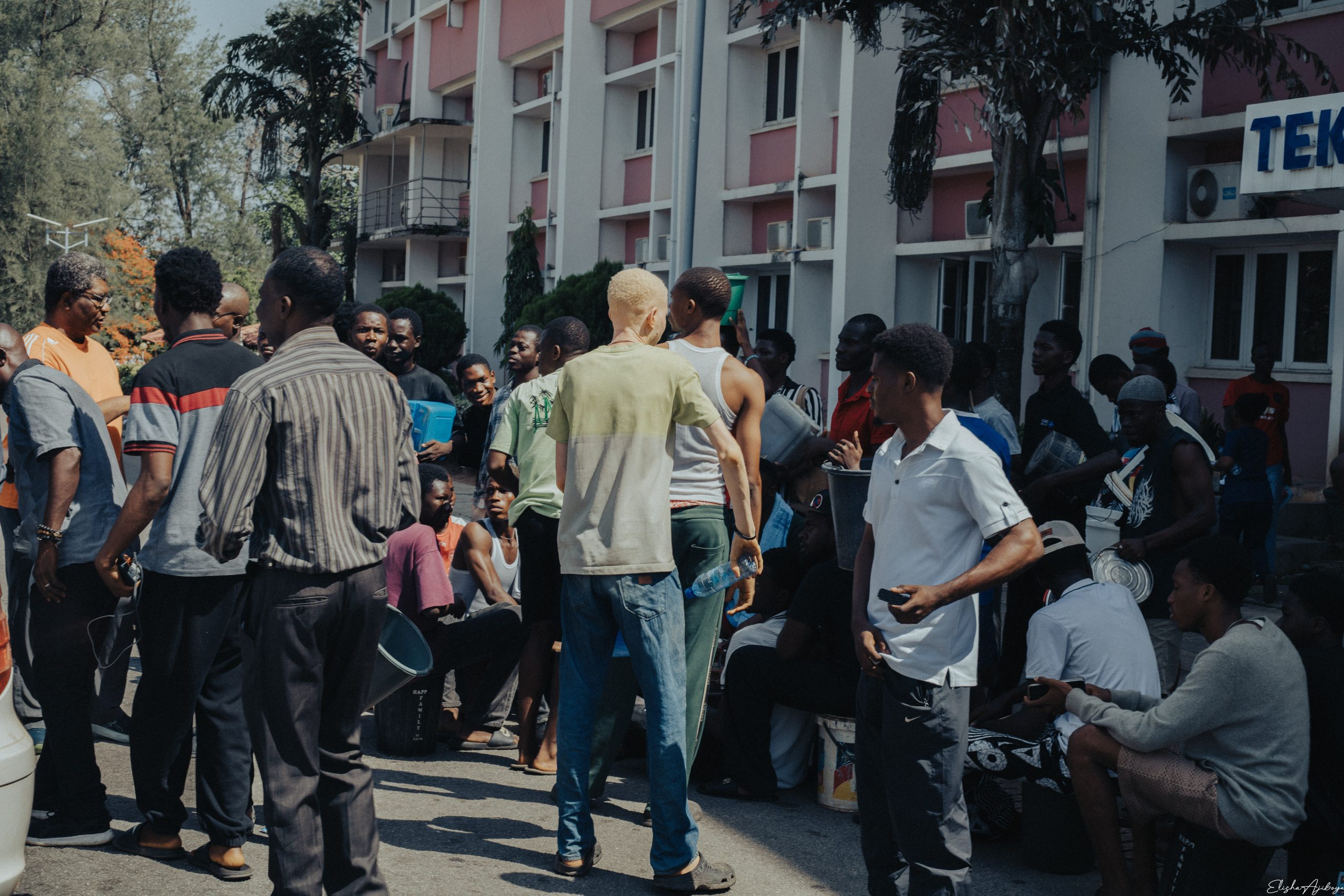
Consequential to the absence of electricity was the absence of water. Several hostels had no water, causing students to have to find water in other school halls and even some unexpected places. ‘I had to walk some kilometres up the hill near the school’s main gate so I could get water. It was rather stressful,’ Irikefe, a 100L student said. Some students had to wait in 20-bucket long queues to fetch water, causing wastage of time. ‘So the light was restored for a while, due to the long duration of no water, a lot of people had to come out to fetch water, so I had to queue for long hours and walk long distances just to get water. It was a very stressful experience. I had to pause my reading and almost dedicate an entire day to fetching water,’ Hawau, a 100L student shared. Yet these are even the lucky ones. Some students were unable to get water, causing them to skip important parts of their routines. ‘There was a day I couldn’t have my bath just because there was no water,’ Kharisma, a 300L student complained.

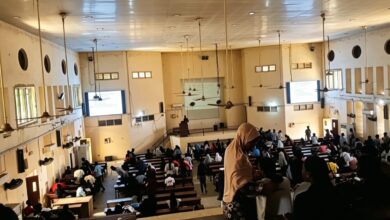
Academically, the lecture halls were shut down. This led to cancellation and postponement of many classes and tests which had been previously scheduled to hold, causing frustrations and confusions for students who had prepared for the classes/tests. ‘Well, a lot of my tests were postponed and I think that put me in constant mental confusion because there were some contradicting messages regarding the postponement and I couldn’t really focus and prepare for some of the tests that weren’t postponed,’ Hawau said.
Major tests which had been scheduled to be held were cancelled on the spot. An example is the MTH 102 test for 100L students. The candidates had arrived at the Distance Learning Centre (DLC) and had even entered the examination halls when they were told that they could no longer take the test that day. Ayomide Bello, a 100L student said, ‘My Math tests were postponed, and the transport fare I spent to the test hall was just wasted.’ ‘All of us didn’t eventually take the test after spending up to hundreds of thousands in totality to get to the venue. It was a very annoying experience that wasted my time, money and energy,’ Hawau lamented.
Across the campus, major gates were locked, restricting movement and forcing students to take longer routes to their destinations. An example is the Indy-Idia gate. ‘My day was already so exhausting, and my exhaustion was tripled when I found out that the gate was locked when I reached it. I had to go back and pass a different, longer route to my hostel that day,’ Adenike, a 100L student shares. Some students however climbed over the gates, making light of the situation.
The health and hygiene of students were also affected by the strike. Because the cleaners were not around, some halls and toilets were dirty and very unkept. ‘The condition of the toilets was very terrible. It was very unhealthy to live in my hostel during the period,’ Godfrey, a 100L student said. For students with health issues who were in need of the school’s health centre (Jaja), it was rather disappointing to find that the clinic was closed and alternative healthcare had to be sought out. It is also scary that the university was willing to continue academic activities knowing fully well that the school clinic which was already not sufficient enough to cater for the health needs for students, had shut down completely leaving students handicapped. ‘I had dysmenorrhoea and because Jaja was closed and I had to get my drugs outside UI,’ Vanessa, a 100L student shared. As for Arikife, ‘I had a cold and a breakout on my skin. I had to visit the pharmacy opposite Jaja, even though I already paid for subsidized healthcare.’
There is a limit to what any human can take, and so it was not surprising that on the 6th of May, frustrated students marched on to lecture theatres where classes were held, chanting, ‘No light, no class! No water, no class!’ as they rallied in crowds. Soon after, their cries were heard and the university provided electricity for a few hours, allowing students to fetch water, charge their phones and devices. But the protest didn’t end there. Typically, the Students’ Union were neither vocal about these struggles prior to the protest nor was the protest their ingenious plan.
The strike was eventually suspended on 11th May, after more than a week long torturous period. Even though it is a great relief that the strike has been momentarily suspended, and activities that were previously affected have been resumed, we can only hope that the JAC’s pleas are heard, and permanent solutions are provided to these issues.
Fadekemi Adesina