‘I Had Mentally Prepared for The Worst’: UIMSA Press Speak With Foreign-Trained Medical Doctors in UCH

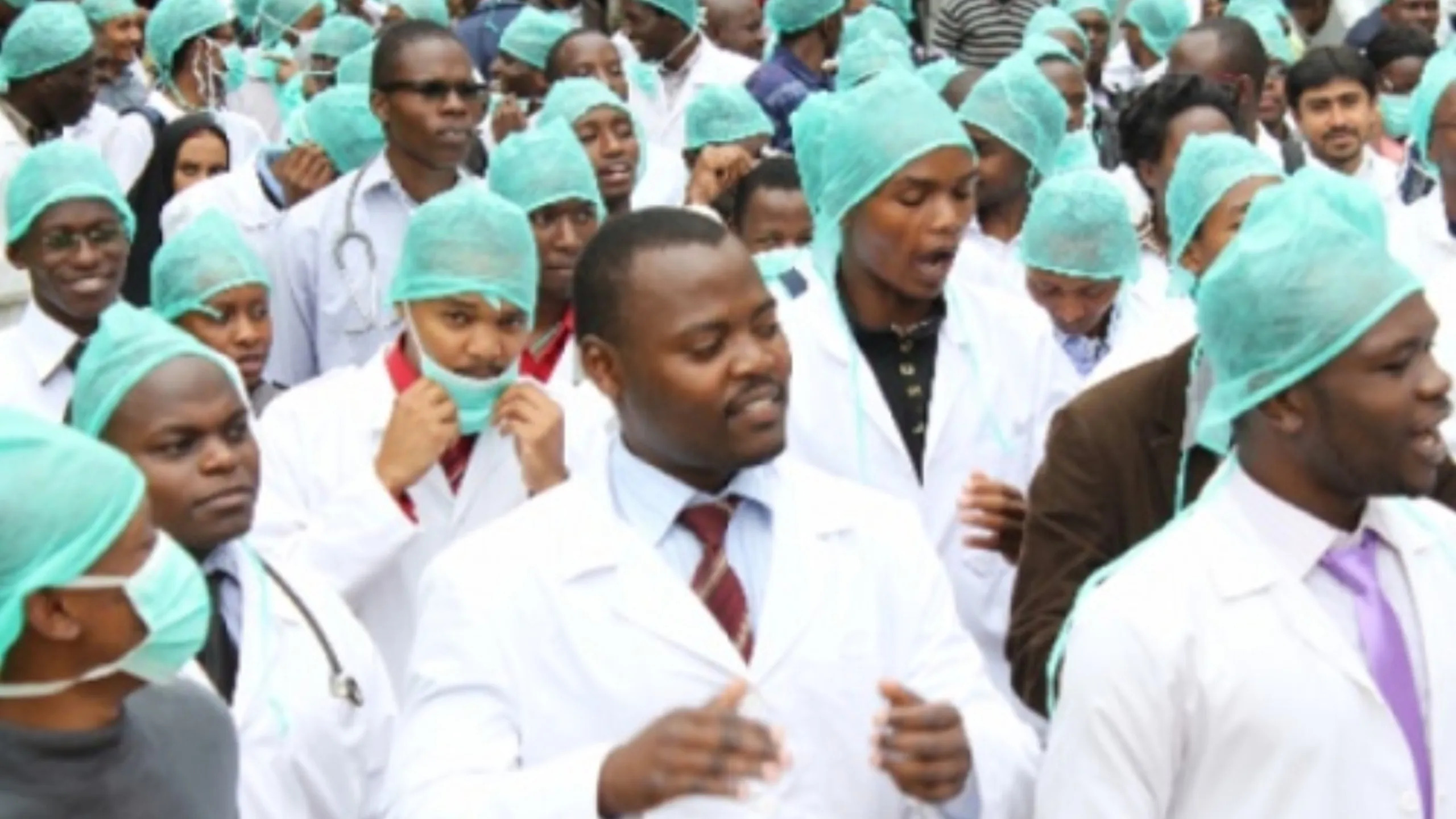
“It’s the Nigerian way of doing things. When we want to embark on a project, we like to go and start from the base our forefathers started from decades ago, instead of continuing from the current standard and elevating it.” UIMSA Press, in a conversation with Dr Julius, a resident at the Otorhinolaryngology Department, UCH, who studied in Russia, discusses the different realities of medicine in Nigeria and beyond shores.
In the systems that work and the ones that do not, a confluence exists and persists, which is foreign-trained professionals. This is not even a recent wave because even the patrons of medical education in Nigeria, had, at some point, left Nigeria to study abroad either for undergraduate or post-graduate programs and come back to give back. Rare opportunities, financial leverage, and even national-scale insufficiency, in the case of India, maintains the existence of foreign-trained medical practitioners. It is no secret that it is quite difficult to get into the MBBS undergraduate program in India because every year, 2 to 2.5 million students compete for about 1.3 million slots for the program. For many, the alternative is to enroll in a foreign country, get the degree, and go back home to practice – after the necessary licensing examinations of course. For Doctor Abiodun and Doctor Ibikunle, medical officers that completed their house job at UCH but studied at Shenyang Medical College, China, and Sumy State Medical University, Ukraine, respectively, it was them seizing the opportunity that came their way.
The disparity in experiences of medical training starts from medical school itself. Dr Julius is a perfect example of someone that can do a side-by-side comparison. He started medical school here in the University of Port Harcourt, Rivers State, in 2002 and left for Kursk State Medical University, Russia, in 2004. In Nigeria, a set in medical school take lectures and practicals together, for the most part of their preliminary years, until clinical school where they are divided into groups that do different postings simultaneously. In Russia, from the first day of school, the class is divided into 22 groups of ten where every alternate group does either winter semester or autumn semester. These semesters run concurrently and it’s very possible that you won’t meet a classmate doing a different semester at all in a full academic session.
Another significant difference is how medical education is examination-focused in Nigeria. “Here, our medical education is more examination based, you either pass or fail the exam. But in Russia, you may go to school and not need to write some exams before moving to the next level. Every day in school, we attend lectures, meet lecturers for tutorials and do tests. If a student does well across all tests, they might not need to write all exams,” he explained. “There’s nothing like 75% attendance in Russia; it is 100%. Everybody has to be in school everyday or get sick leave from clinics if they are not feeling well.” he added.
On the other hand, he did point out a similarity in the expectations lecturers have of students in both countries.“My physiology teacher then loved Guyton. It’s like she has it in her hand and she will quote where she wants you to read and the edition of the textbook. One of my friends like to read Ganong; if you make that mistake to read from another text, you may not pass,” he explained. This is not different from the average Nigerian lecturer that explicitly state their favourite text to read from and expect that all students use that text because test questions might come verbatim from it.
Due to the little differences in medical training across these different countries, practising as a foreign-trained doctor does come with hitches, right from registration for the one-year internship. It took Doctor Abiodun about 3 weeks for her credentials to be verified because the Medical and Dental Council of Nigeria asked them to use the Electronic Portfolio of International Credentials (EPIC) verification step. And this is even after an assessment has been written. It was even far worse for Dr Ibikunle who studied in Ukraine. “Due to the Russia-Ukraine war, my qualifications were outrightly rejected and it took me two years because I finished in 2022 and my certificates were not accepted until 2024”, she said.
Even after scaling through the assessments and oftentime burdensome verification processes, these doctors have to spend a chunk of their first year of practice convincing the average Nigerian doctor colleague or chief that they had an equally good medical education abroad. Aside from the existence of that stereoptypical belief in people’s minds, it sips out even in practical scenarios. “I remember when I was doing housemanship in Niger Delta University Teaching Hospital (NDUTH), if I tell anyone I studied in Russia, they look at me like I don’t know anything. In fact, the first day I told them I wanted to site a line, they asked me if I knew how to do anything. I eventually got the line after many of them tried and failed,” said Dr Julius. “What they don’t know is that during my second year of study, I was a nursing assistant and the nurses taught me how to do all the basic procedures,” he added.
It doesn’t stop at housemanship. Dr Ibikunle shared her experience with the MD of a hospital as a medical officer. “I had gone for a job interview as a medical officer. Then the MD told me since I trained in Ukraine but had a six months post university training in Abuja, she would take it as I’ve been trained for only six months. I told her there was no need to continue the interview and walked out,” she said. Over the years, the system has been conditioned to disregard the quality of medical education outside Nigeria. Even senior colleagues and consultants naturally think that foreign-trained doctors would not be able to give correct answers to certain questions during ward rounds or other unit activities.
On the bright side for these doctors, these opinions and stereotypes are just what they are. They could hurt one’s esteem however, they don’t affect one’s pay. MDCN handles payments of house officers nationally so there is no disparity in pay grade due to where one trained. Also, there’s no hierarchy because of the country of study. A house officer won’t be a senior colleague to another house officer because they were locally trained.
There’s also the infrastructure gap in healthcare in Nigeria and healthcare abroad – talking about equipment, medications, staffing, etc. Dr. Abiodun didn’t allow this to affect her practice while Dr. Ibikunle had a lot of adjusting to do, also because she had a two-year gap between her final year in medical school and housejob. It even extends to operational protocols. “Whatever I need to work with, they will provide it. And again, there’s nothing like JOHESU there. Here, everything you do, some people will tell you that it’s under an association or union. I have pushed a patient before from the fourth floor to the theatre. It can never happen over there, never,” Dr. Julius added. Due to these experiences, they think MDCN and the federal government share a larger cut of the blame for the bottlenecks that surface during the integration of foreign-trained doctors.
On what could be done or what they would change, Dr. Ibikunle said “There is a lot of bureaucracy in the system that needs to be taken out. They don’t do anything significant. They just frustrate people and siphon funds. Also, as a whole, there’s little to no accountability.” Dr. Abiodun said “Foreign-trained doctors spend a lot of money on documentation so I will reduce the cost.”
Even while Doctor Abiodun didn’t, at any point, consider leaving UCH just because she thought she would be taught better, she admits that she can’t stay back. “I can’t stay because Nigeria isn’t it and UCH is stressful and does not value its staff,” she explained. She even further added that if she had a chance to go back in time, she wouldn’t come back to Nigeria after medical school. For Doctor Ibikunle, she didn’t have time to consider leaving but she definitely regretted coming back at some point. “Nothing at this point will make me stay although, my retirement plan is to come back and give back.” On coming back after medical school, “Before coming, I had mentally prepared for the worst, I just wanted my Nigerian license so regardless I would still have come back.”
One distinctive experience Dr. Julius pointed out in his training in Russia and Nigeria is the manner of address amongst medical chiefs. “Over there, you can’t talk to me anyhow; I couldn’t tell if it was because I was a foreigner. I could relate with them freely and feel comfortable. My chancellor called us his colleagues from the first day of school. But here, your consultant and seniors can talk to you anyhow. I came to Nigeria and I saw a medical officer quarreling with a house officer because the HO called her ‘colleague’.”
On the different realities, basic concepts like yearly healthcare budget in comparison with other sectors, mortality rate for avoidable illnesses, operational synergy, are reasons Dr. Julius would rather practice outside. He finds it amusing that Nigerians don’t want to always start from the present and upscale. He gave examples of how older models of medical equipment automatically become artifacts in museums abroad but an average Nigerian company or organization will rather buy older models to operate in this digital age and time. It’s a no-brainer that this contributes to the scarcity of high-end radiological equipment in Nigeria and patients have to travel interstate for care.
The year is 2026. Foreign-trained doctors shouldn’t have to go through strenuous processes to get licensed in Nigeria. The system should also be kinder to these doctors and not shove a stereotypic view of inferiority in their faces. It does no good to the doctors themselves. If there’s a knowledge gap, it can be covered in a much more constructive approach. Lastly, toxicity should have no place in medical training. It being passed down the ranks is even sad to experience as medical students at the base of the pyramid. That way, doctors don’t feel let down by the system they pour their all into, even without commensurate pay.