Emmanuel is a medical student in the 2k25 class. He does not have bad weeks. He has bad days, and then he keeps going. Recently, it was a missed ward round; a new SR had led the team while Emmanuel was away from UCH (University College Hospital) taking a tutorial class. To amend, he had to write a letter, one which, in his words, “led to my hearing plenty of things; those things dug deep into some long-buried emotions.” Digging so deep that he reported crying on the ward that day. But as he says, “Sometimes, you just have to keep going, all focused. A bad day is not a bad life.”
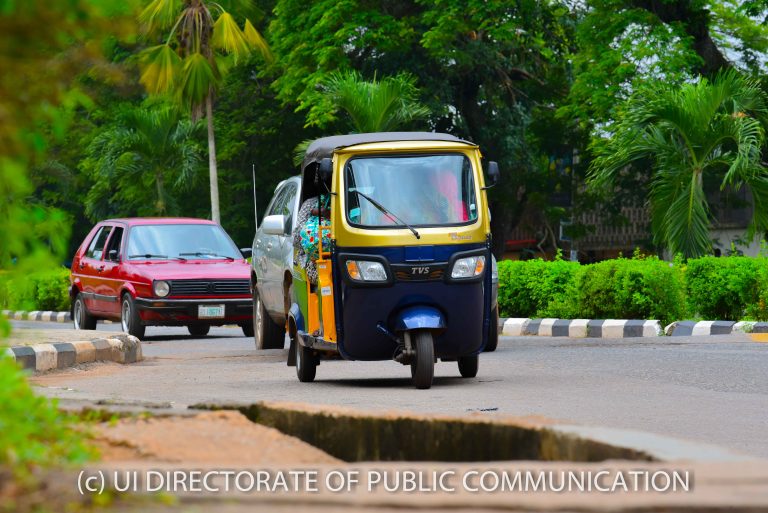
Emmanuel is currently rotating through internal medicine in his M2 postings. On a typical Monday, he wakes up, studies a little, gets dressed, takes a hundred Naira keke to MOP, finishes by 2pm on good days, and then heads to DSA to teach at the JAMB class he runs with a colleague. “Go to take class maybe 2pm-4pm or 4pm-6pm. I take class twice at the center and most times have to go supervise how things run.” He says before adding that his days are the same, with the exception of Wednesdays, where “I have class from 9AM to 11AM at Orogun, then rush to a unit meeting by 12 in UCH, go back to Mokola, and head to teach at the center in Agbowo.” He reports.
According to him, each day takes at least four hours of work outside school. About 28 hours in total. Emmanuel is not the exception. In fact, he is closer to the norm.
Across the college, a quiet economy runs on the labor of students who cannot afford to be only students. They have no choice but to put in the extra hours to work, not because they have extra needs, but because they have basic fees that must be paid, phones that must stay charged, and stomachs that must be fed. And the reality is that some of them have been at it long before even gaining admission.
Ayodeji, a member of the 2k25, currently rotating through cardiology, goes to clinics on Mondays and Thursdays. He has ward rounds on Tuesdays and Fridays; hence, Wednesday is his only free day from school. On that day, he goes to a secondary school to teach science subjects and conduct practical sessions. On that Wednesday alone, he works close to ten hours. In addition to this, there are the two hours he spends daily creating handouts and writing proposals for the Yoruba teaching organization he founded. “I literally don’t get allowance from home,” he says. “I saw a need to not ask anything from home and to help my younger siblings and cousins. And seeing that medicine alone can’t give me the life I picture, I decided to build something.” That something he talks about is called ‘Learn Yoruba Initiative.’
Another student in the 2k26 class, Isaac’s week runs like a fixed timetable: secondary school teaching from 8am to 2pm, UTME tutorials from 3 to 6pm, church, and then he goes home. He does this almost every day. “The program is completely self-sponsored,” he says, talking about his education. “I already understood I had to find a way to fund the whole thing.”
In a similar situation, Anthony*, who is a member of the 2k27 class has been tutoring since he left secondary school. He hosts both physical and virtual sessions in schools and in homes. Around 20 hours a week. During class periods, he skips once or twice a week to cover his commitments. Saturdays are a full workday for him.
Before preclinicals, Emmanuel, like many others in his shoes, had worked several jobs, with him having worked as a personal assistant at a cake store, then a chef at Richbam, a popular supermarket close to the school campus. He’s also worked at Grills and Shawarma, a bakery at UI and Mokola, all while simultaneously running tutorials. “I had to resign when preclinicals got deep,” he says. “I couldn’t keep up attendance and don’t want to risk issues.” Speaking on the struggles of balancing that many jobs with school. However, he noted that the tutorials stayed. They were the one thing flexible enough to survive.
And that brings the conversation to an important area: the academic cost. Medical school does not generally favor distractions, which is something that they recognize. Emmanuel once had ambitions for a distinction in anatomy. He let it go. “I think if I were not working, I’d be doing a lot better academically,” he says. “But I just knew I should let it go. Working maybe has not made me score super low, but I just think I would be doing a lot better if I weren’t working.” Isaac puts it simply: “You definitely don’t have the number of hours folks (students) whose only business is school have.” When exhaustion hits, he switches to videos, jottings, and short notes. “I definitely don’t have the time for extensive study.” Anthony echoes it: “It does affect my performance. From classes I’ve missed to fewer hours of reading and feeling extremely tired after hours of standing to teach.”
Ayodeji is the outlier. For him, his grades have held. “Work has not affected my performance in school; I’ve been doing well so far. God has really been helping.” But even he came close to missing his MB 1. He owed two sessions of HPTL fees. “Miracle no dey tire Jesus,” he says, alluding to his eventual payment on the influence of God on the people that eventually helped him. “People helped out.” He says.
By the time most of them get home, the day has already taken everything. Emmanuel still tries. Whether through a website or a quick AI summary, he tries to study whatever he can hold onto. “Reading is very important if you’ll be in this Ogba,” he says, “so I ensure that by every means, no matter how little, I must read something.” But some nights the body decides before the mind does. “I sleep off even while eating.” Ayodeji doesn’t fight it anymore. “I sleep. There’s no law that says you must read every night. You live to fight another day.” Anthony says the same. “If I sleep off, that’s okay. I pick it up from there when I wake up.”
The Sponsor a Student Program (SASP)
The Sponsor a Student Program (SASP) exists for students in exactly these situations. It covers their school fees and, for some, a stipend. Ayodeji found out about it through a classmate who knew his situation and advised him to get the form. “It’s funny now, though not then, that I trekked from UI to UCH to get the scholarship form,” he says. Before it, feeding was stressful, and his phone was in bad shape. Afterwards, he claims that “My fear of surviving in clinicals actually disappeared. I was able to think of other things.” The program, he says, is enough for fees and includes some stipend. “That has taken off a great burden.”
Isaac, who is a new beneficiary of the program, says he found out about it when the announcement was posted on his class group, and his friends tagged him to the message and made sure he applied for it. He currently has no good phone and no laptop. As a new beneficiary of the program, he hasn’t received any payments yet but is hopeful they will help.
Emmanuel has not made it onto the program. Not for lack of need, but the window keeps closing before he reaches it. Students from his own tutorial classes have used recommendation letters to apply and gotten in. “I plan to apply,” he says. “The only issue is I’m barely aware most times. I hope the next application, I don’t miss out.”
On the other hand, Anthony heard about the SASP in 100 level. He and his classmates went together to apply. Reportedly, the administrator accepted forms from four or five of them, then stopped and told the rest they were not supposed to apply, telling them that 100-level students were not eligible. That was the last he heard of it.
Regarding the efficiency of the program itself, even Ayodeji, the one who has most clearly benefited out of the four, is honest that the program does not close all the gaps. “Things are getting better, but they’re not close to optimum. There are still times I have other needs beyond myself.” Emmanuel, looking in from outside, identifies the barrier: “The process can feel so rigorous that at first I thought it wasn’t even for people like me. I’d just make it easier for genuinely indigent students to get help, see reasons to even seek the help so nobody has to compromise med school just because they don’t have money.”
Anthony wants a different kind of intervention altogether. He wants a real conversation with the school management. “The system should allow feedback, especially from 200L. Could be once in six or three months. There should be a kind of student-lecturer meeting. It could be just three lecturers meeting a class. Genuinely ask us how we are faring. What are our problems? Create avenues for students that are sponsoring themselves to talk.” Anthony’s concerns cite the need for more communication between the management and students, most especially in the areas that concern student welfare. Isaac’s ask is more material; like many others, he needs conducive accommodation, stipends, stable electricity, and basic amenities.
Despite how tough it is, they all remain resilient, though. None of them are leaving. When the subject of dropping out comes up, Anthony doesn’t entertain it. “I am not dropping out if this school doesn’t drop me. Drop out how? If it’s crawling, we crawl out of here.” He has a friend who he describes as a real hustler who plans better and does better academically. “He’s my go-to guy when I’m overwhelmed,” Anthony says. “I’m improving too.”
Ayodeji’s answer is faith, grounded in specific things. The first are the classmates who told him about the form and the people who helped clear his fees before MB 1. “God still remembers people, and he hasn’t forgotten you,” he says. “He has time planned for everything.”
What keeps them going is also, in a way, why they agreed to tell this story at all. Ayodeji wants whoever reads this to hold on “God still remembers people and he hasn’t forgotten you.” Emmanuel wants his story to push back against the stigma of struggle. “I want people to see that your background does not define your future,” he says. “If my story pushes even one student to keep going and see their struggle not as a barrier, but as a part of their journey, that’s enough for me.” Anthony keeps it close to home. “I want to see my mom happy that I did it. I want to be happy I did it. I have come this far; I can go the rest of the way.”
And so they will.