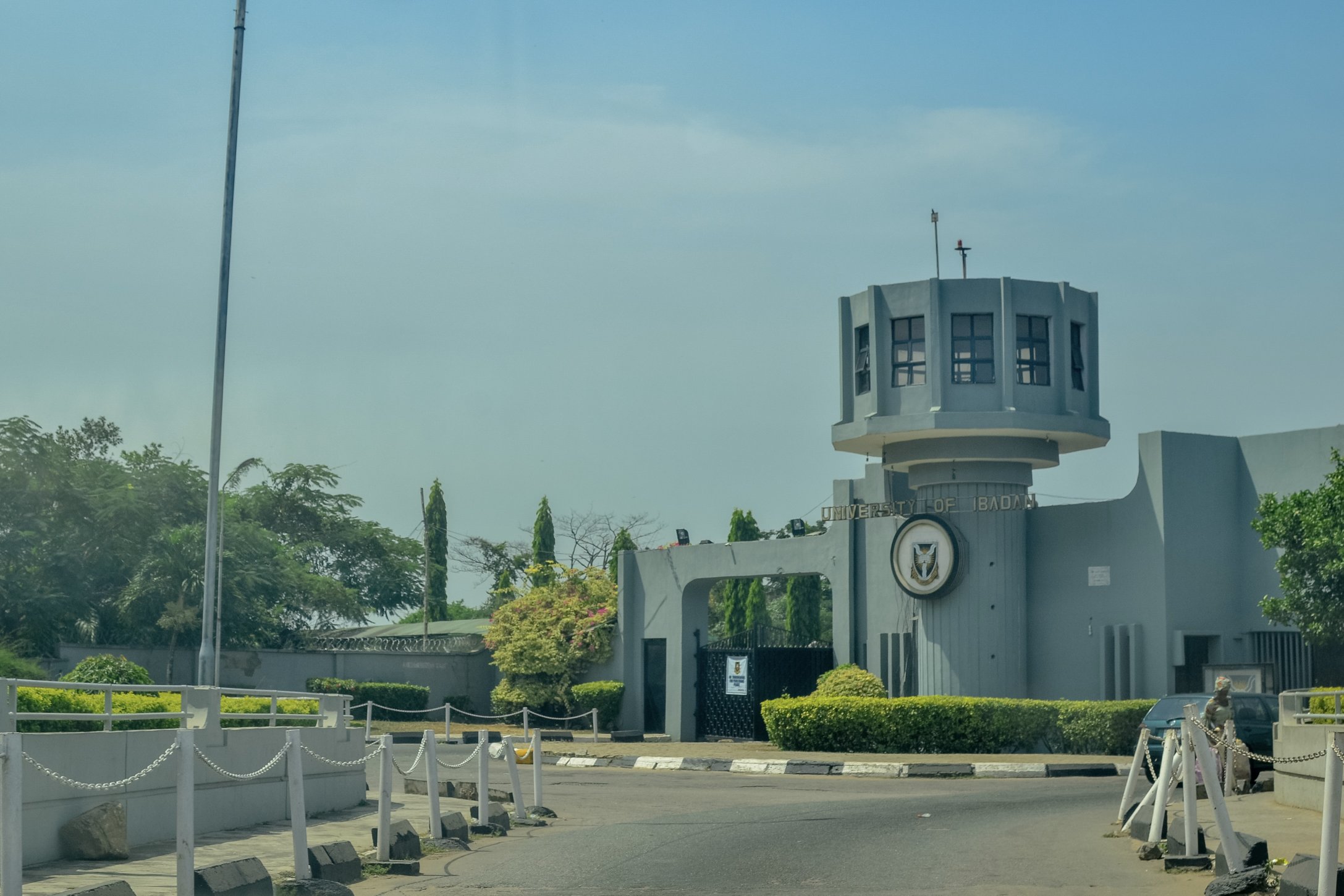
In what should ordinarily be the season of campus democracy, the 2025 UI’SU election has once again blossomed into a spectacle of administrative choreography. With a fresh memorandum from management pruning the constitutional landscape and the Deputy Registrar (Students), S.O. Oyewunmi, tending the electoral process with the enthusiasm of a gardener rearranging flowers he insists are “self-growing,” one cannot help but marvel at the irony: a Students’ Union whose most decisive actors are not students at all. As rules bend, timelines wobble, and eligibility shrinks like fabric in cheap detergent, the university seems determined to remind us that even democracy, in this Ivory Tower, must first pass through official hands for approval—or sterilization.
On the 12th of April 2025, the revised student handbook was made available to the student community. It contained several modifications, especially in the Article X section.

The first provision of Article X stands in direct violation of the Union’s constitution, which states that ordinary members of the Students’ Union, otherwise known as the matriculated students of the University, shall have the right to vote and be voted for. The recently implemented restriction rules have ignited significant controversy and raised serious concerns regarding their legality and adherence to the foundational tenets of the Union Constitution. Critics argue that these new regulations constitute a substantial overreach of authority, effectively violating several established provisions designed to protect the rights and autonomy of the student body.
Furthermore, a palpable atmosphere of dissatisfaction has emerged concerning the management’s approach to overseeing the students’ electoral process. This managerial interference is perceived as a direct threat to the democratic integrity of the student union.
It would not be the first time the school management has been caught interfering with and undermining the integrity of the student election process. This is evidenced by legal action taken against the University of Ibadan by Nice Linus after a controversial memorandum was issued by the University’s Deputy Registrar (Students), Mr. T.I. Musa, which nullified her election. Nice Linus, who assumes a hollow studentship 19 months after the May 2024 protests for which she has been victimized, still hasn’t been issued a sentence by the University of Ibadan. Yet, she was barred from assuming the role of SRC Majority Leader with the Deputy Registrar stating, “This appears to have been an oversight, as the University regulations clearly state that students with pending Disciplinary cases are not eligible to contest or hold any elected positions until their cases are resolved”. But how can that be when even in the latest hastily edited Student Handbook issued by the University this year, item iii of Article X of the ‘Students’ Union Constitution’ categorically states, “Aspirants must be of unscathed record, not having been convicted by the police, rusticated or expelled from any institution, ejected from a hall of residence or indulging (sic) in substance abuse. They must be persons proven to abide by the rule of Law.” How can an institution that claims to uphold the rule of Law or purports to train legal luminaries bar a law student from office based on a case that is still under investigation? What sort of message do we pass across to the lawyers training here—that the Nigerian Justice system is a zoo?
Year after year, students watch as the Student Union Electoral Commission (SUEC), theoretically an independent body, appears to orbit around administrative gravity. The first question mark is against the selection of the commissioners. The practice here is that Hall Chairs and Faculty Presidents recommend a student each to serve on the commission. This recommendation is addressed to the office of the Deputy Registrar (Student), the chairman of SUEC, who then forms the commission.
The problem with this setup is that our system is built as a microcosm of the nation’s democracy, and most democracies all over the world. Sections 153 and 154 of the Nigerian Constitution stipulate that, at the national level, the executive’s nominees for the membership and chairmanship of the national electoral commission must be ratified by the Senate before their appointments can be confirmed. This same principle applies in almost all the Halls, Departments, and Faculties across the University. Typical examples include the University of Ibadan Medical Students’ Association (UIMSA) and Nnamdi Azikwe Hall. Why, then, is the Student Representative Council (SRC) completely out of the equation in the most important student election at the University?
The answer is in the Constitution. It does not explicitly provide that the SRC ratifies the formation of an electoral commission. It does not even clearly provide for the process of nominating members of the commission. However, common sense will see that the SRC’s approval or rejection of an electoral committee traditionally implies a corresponding ratification or rejection by the student populace. However, the existing situation has dismantled this essential framework, resulting in an electoral committee that lacks legitimate student approval.
Interestingly, it is worth noting that in an interview with the UCJ, a member of the SRC mentioned that some members of the SRC resigned their positions just to get a spot on the school management-constituted SUEC. This calls into question the motives of such commissioners and the entire vetting process by which they even became commissioners.
The second question mark is the role of the Deputy Registrar (Students). It is not that the Deputy Registrar has been demonstrably proven to have overstepped the established boundaries of their authority or to have acted with malice or clear procedural misconduct. Rather, the concern lies in the fundamentally flawed constitution that vests electoral control in the hands of the school administration (Deputy Registrar) and undermines student self-governance.
Added to this is the report that the electoral process has been consistently marred by a deeply concerning lack of transparency, particularly in the critical phase of result announcement. The established practice has seen the Deputy Registrar (Students) solely announcing the election outcomes. Crucially, this announcement has habitually occurred without the mandatory presence and verification of key stakeholders. Neither the Electoral Commission, which is ostensibly responsible for overseeing the integrity of the polls, nor the duly appointed agents representing the various candidates, nor members of the Press, whose role is to provide independent scrutiny, have been permitted to verify the raw election results. This systematic exclusion from the verification process has inevitably led to widespread and serious concerns regarding the overall credibility and fairness of the election results, casting a long shadow of doubt over the legitimacy of the entire democratic exercise. The absence of a transparent, multi-stakeholder verification mechanism suggests a deliberate attempt to limit oversight and has fueled suspicions of potential manipulation or errors in the vote tabulation. This makes the entire exercise feel less like a democratic contest and more like an administrative seminar on controlled outcomes.
The University of Ibadan Students’ Union Constitution mandates that the Union’s electoral activities must begin within 30 days of the second semester’s commencement each academic session. And according to the revised academic calendar, the second semester began on the 25th of August, 2025. However, as we have come to identify over the years, the chairman of the SUEC did not mandate the ban on electioneering activities to be officially lifted until November 2, 2025. This delay meant that a full 69 days of the semester had elapsed before political activities could legally begin, which is 39 days later than the constitutional start date for campaigning.

This substantial lag in lifting the ban creates a compressed and hectic political season. By pushing electioneering and the subsequent elections so close to the critical period when students are actively preparing for end-of-semester examinations, the administration inadvertently introduces a significant source of academic distraction and stress. This convergence of high-stakes academic and political activities only exacerbates the already increasing rates of voter apathy among the student body. When faced with the choice between intensive exam preparation and participation in political campaigns or voting, a substantial number of students will inevitably prioritize their studies, leading to reduced engagement and a less representative electoral outcome. And this picture has flatly played out. This cycle is marred by atrocious political participation and very little political activity. At the University College Hospital, Ibadan, there is no hint of an ongoing electoral process with exactly zero banners or flyers stationed within Alexander Brown Hall or Ayodele Falase Hall. All this serves only to promote a heightened disconnect between students of the College of Medicine, University of Ibadan and the rest of the University. And the picture is not much better on the main campus, amidst reports of reduced door-to-door campaigns especially, a far cry from what was obtainable in previous years.
Furthermore, the prolonged ban indirectly fosters an environment where the Constitution is openly disregarded. The vacuum created by the official silence on political activities encourages students and groups to engage in campaigning, either directly or through subtle, indirect means, well before the official ban is lifted. This ‘underground’ campaigning is a blatant violation of the established regulations, normalizing the circumvention of rules and undermining the integrity of the electoral process from the outset.
In a political space that is already beset by voter apathy due to multifactorial issues and low voter accreditation, a question persists in the background: must it be this way? Must the Union continue as a ceremonial body whose elections arrive prepackaged, shrink-wrapped, and gently supervised? Students are only asking for what any credible democracy requires: clarity, fairness, and the radical idea that those contesting and voting should matter more than those observing from administrative offices. A transparent electoral process is not a privilege; it is the minimum requirement for any institution that claims to prepare citizens for the real world. And if the University persists in modeling a version of democracy where rules change without consultation and oversight overshadows agency, then it silently endorses a troubling lesson: that legitimacy is optional, and that authority alone can manufacture consent. Until these issues are addressed, our elections will remain what they have slowly become: an annual reminder that, in the self-acclaimed ‘First and Best,’ even democracy must queue for clearance—and sometimes, it never gets signed.