Basic hygiene practices sound cliché to the average citizen, regardless of how many times they’ve fallen sick due to transfer of germs from original sites into the body. They sound like some common sayings to residents of metropolitan cities that have been defaced by clogs of dirts across drainage routes, bags of refuse at different inappropriate spots, and even flooding from inefficient drainage systems. Worse is, even to the average medical student that resides two minutes away from the wards at the University College Hospital, Ibadan – temporary home to a myriad of people admitted due to bad hygiene practices – they sound like some platitude that is, at best, registered in distant memory but never implemented in day-to-day life.
For a people so close to victims of bad hygiene, presenting with cases like Diarrhoea, Cholera, Hepatitis A & E, urinary tract infections of all sorts, and even the more globally threatening COVID, we are not self aware enough. We live and impact the living of people around us in a very negative way, one that should not be found amongst learned individuals with as much exposure to medicine and healthcare as we have. It is an issue of concern that can be likened to that pudding that everyone – students, management, janitors – gets a piece of. Residents live too carelessly, janitors clean shabbily, and the management just looks away like a problem isn’t staring them in the face. The hall itself isn’t exempted from these problems as the infrastructure we currently reside in is prone to inundation whenever rain falls. Floors are flooded with every little downpour, rain water seeps through closed windows to spoil people’s belongings, subjecting them to sundrying their bags, boxes, mattresses, etc. Apart from the obvious aesthetically unpleasant sight of puddles on corridors and displaced baskets of dirt on staircases from windy rains, the risk of diseases increases with the infestation of rats and mosquitoes in environments that encourage their survival.
But why are we here? And more importantly, why are we not bothered?
To answer the first, let’s talk about each group and their piece of the pudding. The waste management system in Alexander Brown Hall is nothing to write home about. It is extremely awful. There is an incinerator – albeit poorly managed – at the rear end of the hall, just behind the male’s boys quarters. The janitors in the hall clear the bins on each floor and are expected to empty them in the incinerator. That is what happens, but how it happens is very questionable. Most of the bins on the floors are plastic drums that are broken in varying ways, however, the common effect is the inefficiency in waste disposal. They are managed this way by students and the janitors, alike. When the latter cleans, they find ways to gather all the dirts from the bins across each floor on a block into the biggest drum they have, then move the dirts to the incinerator – either by dragging the drum by the handles or emptying into an abandoned mosquito net and dragging that by the ropes to the incinerator, which is where the problem is. This sequence only even happens daily when there are enough janitors and that has not been the case, at least for up to a year.
As a very much needed deflection from the direct causes of the bad hygiene problem, let’s talk about inadequate janitors in the hall. For a long time, the norm has always been two janitors to a block – each manning two floors – to effectively function in cleaning the corridors and bathrooms/toilets, and waste disposal. Due to a long, tiring, back and forth of owed salaries – some measly 15,000 Naira that is not even adequate to start with – and a more overt claim of disrespect and inefficiency on the side of these janitors, some were laid off without permanent replacements, putting a further strain on the numbers left. The ones left too, for survival, take up other menial jobs like laundry and fetching water to buffer whatever comes from the university management as payment for their primary job. Some people opine that the quest for additional income has affected the focus on the primary, thereby reflecting on their attitude towards cleaning. Regardless, the fact remains that the turn of events has significantly affected the chances of seeing a clean ABH at any random hour of the day.


Back to the pudding, the next group and their piece of it – students. Inadequate janitors is no news to the average student in the hall; it’s oversight to not notice. But even before that, our hygiene practices are very bad and they contribute, in their own way, to the overall hygiene of the hall. For every paper wrap you carelessly drop while walking on the corridor, every empty pet drink bottle you abandon by the volleyball court, every chocolate wrap you fold and fit into crevices, you make the hall dirtier. Almost everyone in the hall is guilty of one of these habits but it get worse with certain habits like dumping some waste in inappropriate places e.g., sanitary pads in toilet bowls, bathing soap wraps in bathrooms, sachet water wraps in basins, and even dumping a nylon of feculent matter and bottles of urine in waste bins on corridors, etc. It’s inconsiderate to the overworked and underpaid janitors, insensitive to the wellbeing of your colleagues, unhygienic and wicked to jeopardize efforts to keep these places clean. As casual as these bad habits are, they contribute to the persistence of rodents and roaches in the hall. They are the reasons it seems like ABH can’t be permanently free from rats and bugs. They are the reasons yearly customary fumigation won’t have any effect. Because the behaviorial bits that should contribute to the holistic approach to hygienic living are missing.

Our corridor maintenance culture is in the pits. Many floors have overflowing buckets of soapy water from dishwashing that has been there for weeks. This is a regular habit but then we wonder how rats get so bold to share our rooms with us. It doesn’t stop at the corridors and waste bins, the conditions of the bathrooms and toilets are very bad, some notably worse than others. Understandable, some of these facilities are old and need revamping but since that is a far more unrealistic option for Brownites, the best that can be done is to maintain what we have now and we are terribly failing at it. Leaving a bathroom with soap lathers all over the walls or leaving behind the wrap of the soap you opened in there, going to use the toilet without a decent volume of water to flush, further pouring fluid of any kind in a clogged basin, or even pouring food particles in hand basins, are just animalistic, simple as. And Brownites’ reactions to such behaviors typically position the majority as enablers that only know how to complain on floor group chats. Oftentimes, we can trace the perpetrators of these acts and find out respectfully but we will choose to ignore and only have the loudest voices when such acts affect our personal belongings or our turn in use, which in itself explains our maintenance attitude.
Since a considerable number of residents exhibit the second law of thermodynamics that talks about the natural tendency for disorder to increase per time, we must now question the function of elected floor representatives. The unfortunate reality that is the strain of numbers on spaces has necessitated people’s will to run for these positions to secure bed spaces, beyond the will to ensure their environment is as neat as the said bed spaces. Nonetheless, we must ensure that we hold these individuals accountable in performing their duties. A dirty floor cannot appear as though there is nobody in charge when in times of assembly sittings, we have the supposed representatives contrastingly present in shirts, ties and shoes. If people cannot live right, they have to be enforced to, because their actions affect the wellbeing of others.
Now to the management and their piece of the pudding. First is the random once-in-a-month notice to highlight any ‘plumbing’ issues you’re facing on your floor because a ‘plumber’ is coming around, only to do that and come back from a long day at school to see that same bad pipe, clogged basin, or leaking toilet. At some point, you begin to regard the notices as just jokes. But from another standpoint, it shows that the hall authorities are aware of the problems existing in the hall because the complaints never cease, but the persistence of these problems is what is unfathomable. Almost every floor in every block has one or more bad toilets and in some extreme cases, all are bad, making the floor members dependent on toilets on other floors. Worse is, the janitors that have spent many years working here can tell you how long those pipes and toilets have been bad and that will leave you befuddled. Continuous usage, decent or otherwise, will eventually need repairs and replacements in worse cases and that is exactly the reason they have a share of the blame.


On May 9, 2026, a windy rain lasted hours. It was a break from the heat-stricken nights for many Brownites. For a select few, it was cleaning and mopping out buckets of water from their rooms. A Block residents are plagued with fear of flooding whenever there’s a heavy downpour. Locked doors and windows don’t help, the rain seeps in, still, and so has it been for them on many occasions in the past. If anything, it is obvious that the louvres in many rooms are now incompetent yet even though there’s been many complaints over the years, they have not been changed. The broken roofs were fixed but the windows remain that way. Residents of oft-affected rooms have now adapted by clearing their properties by the windows when they are leaving their rooms because they don’t want to be disoriented, yet again. Corridors are not exempt from this inundation problem too. The roofing sheets aren’t well extended enough to minimize puddles of water after rainfall. The janitors also have one more job to do on days after rainy nights, getting rid of the puddles on these corridors. We have to live, and live better.


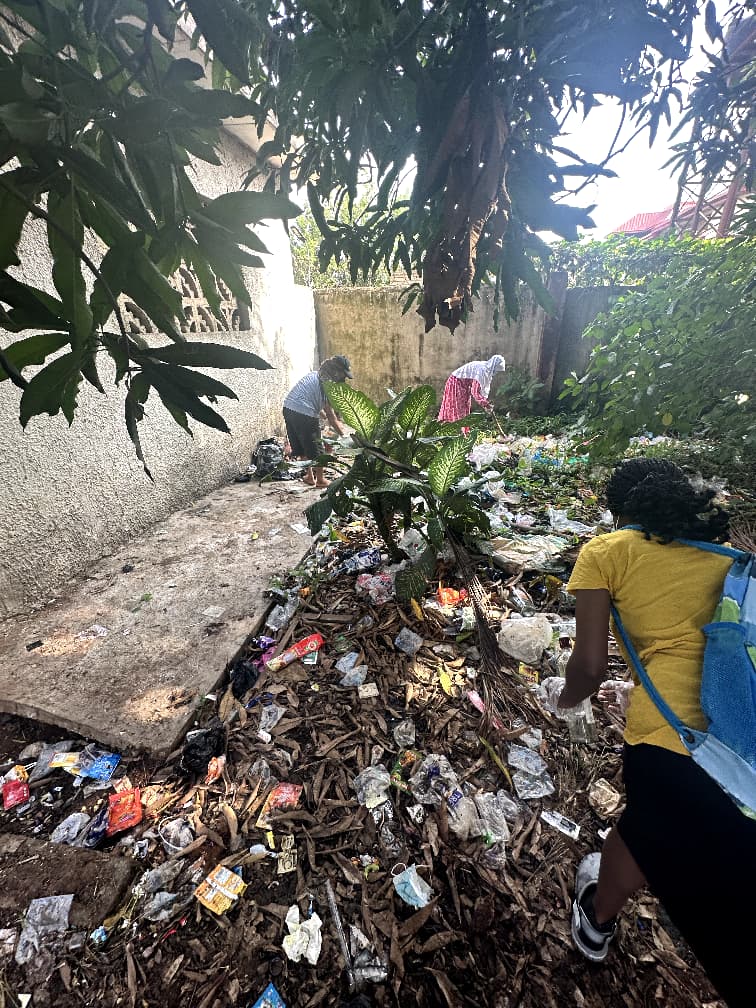
Lack of constant basic amenities like electricity and water already jeopardize the quality of living here, bad hygiene and flooding can’t be additional worries. Worthy of mention are the clean up programs done by Team Impact and the Alexander Brown Hall Health Committee in making ABH cleaner than its default. Apart from making the hall cleaner, they have also shown just how dirty our surroundings are, even with the presence of janitors in the hall. However, these programs can’t sustain the hall in its clean state. It requires the intentional acts of every resident in ensuring that their spaces are neat. We can’t don ward coats and stand in front of patients to advise them on healthy lifestyles after leaving behind a toilet unflushed back in Alexander Brown Hall. It is counter-intuitive and we should live better, because that’s the only right way to live as clinical students.