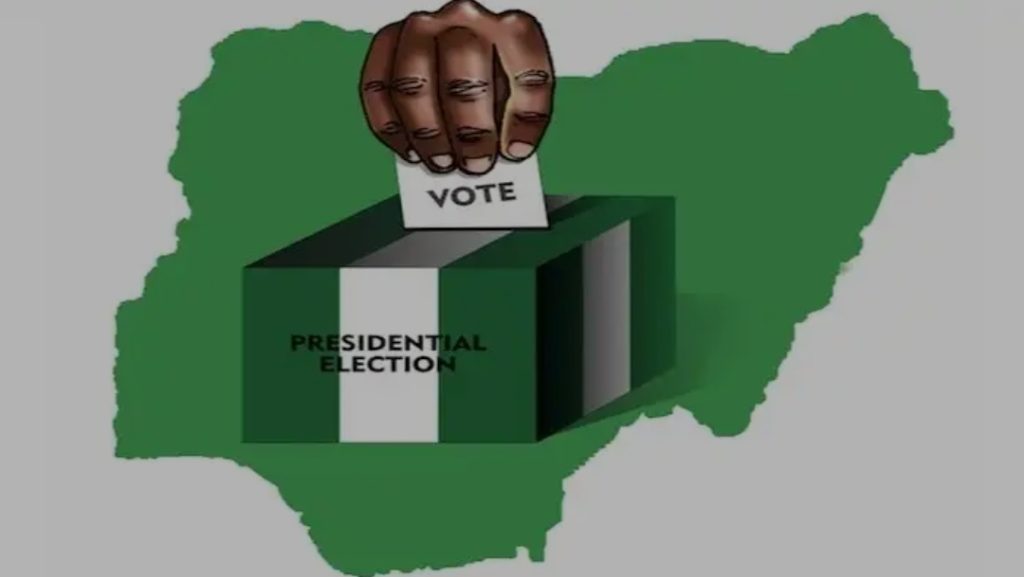
Nigeria’s presidential elections are fast approaching and as usual with elections, people are up and about in both physical and virtual spaces campaigning for their candidate of choice and enlightening people on the need to vote and the dire consequences of not voting or voting for the wrong person; “go and get your PVC” has been a popular exhortation in Nigeria in recent months. In ABH where most of us reside there has been a fervent campaign by certain individuals to ensure that all Brownites register for and get their PVCs and that they also exercise their rights and vote in the upcoming election.
I went about E block asking its denizens if they planned to vote, who they planned to vote for and why and their thoughts on the political aspirants. The responses I got were enlightening and interesting and they provide an insight into the thought of UIMSAites in the upcoming election. Most individuals I interviewed said they were planning to vote, the individuals who were not planning to vote gave reasons such as a general apathy to politics in Nigeria and also a belief in the fact that voting will be a wasted effort as they do not see any possible good prospect in the result of the upcoming electoral process.
Most of the individuals I interacted with expressed their desire to vote for Obi; it is interesting to note that although these individuals were united in their decision to vote for Obi, their reasons and expectations had a great degree of variance. Some were of the opinion that Obi was the lesser of the evils they were presented with, some described it as choosing between the devil and the deep blue sea, and one even expanded this idiom to include a choice between the devil, the deep blue sea and a criminal with his choice being the criminal; I refrained from asking him to explain his analogy. While a few were true believers in the Obi cause and expect that Obi will turn the country around should he enter power, most didn’t expect Obi to do much, they think that Obi will just be able to stabilize the country, do the bare minimum and prevent its further degeneration. They do not expect him to cause a drastic change to the dwindling fortunes of Nigeria and some just hope that he will halt Nigeria’s current freefall into its destruction, a more hopeful individual opined that one person cannot change Nigeria but that Obi will definitely put Nigeria on the right track. Many however expressed confidence that his performance will not be on par or worse than the disaster Buhari wrought on Nigeria.
During the course of these very engaging conversations, Obi’s track record kept coming up as a reason for their decision to vote for him; his management of funds in Anambra, absence of a corruption allegation against him and his achievements in education in Anambra state were cited as the reasons for their support for him. When I brought up Tinubu’s claims of his achievements during his tenure as governor of Lagos state, I was told that Tinubu was laying claim to some of the successes of his predecessors and successors and that given the revenue generated by Lagos, it will be wickedness on his part not to have done the bare minimum, they opined that given the finances available to the Lagos state governor anyone could have done what he did and more. They also opined that Obi seemed the healthier, more coherent and more logical out of the pick of aspirants.
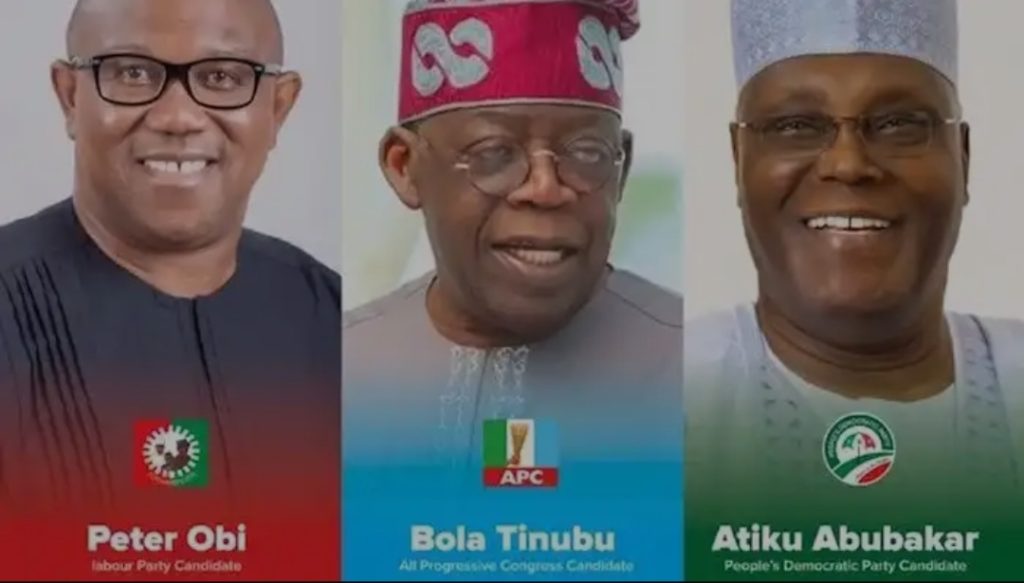
When I inquired about their knowledge of Obi’s plans and which one they were looking forward to him implementing, I came upon a startling revelation; most had no idea of his plans and what he plans to do while in office, only a few had bothered to read his manifesto, nevertheless some were confident that Obi will be able to deal with the myriad of issues bedevilling Nigeria.
There was a general anger and indignancy directed towards the candidacy of Tinubu, the source of this anger can be surmised into the very proclamation Tinubu first made during one of his campaigns and which has been taken up as the slogan and the rallying cry of his candidacy and has earned the ire of many a Nigerian; Emi Lokan which roughly translates to “it is my turn.”
UIMSAites interviewed could not stomach the audacity of an individual claiming as his birthright the leadership position in Nigeria. It is Tinubu’s arrogance, assuredness and certainty in his future ascendancy into the presidency that seems to have set UIMSAites firmly against Tinubu as opposed to the other scandals and allegations levelled against Tinubu.
Tinubu seems to be the candidate with the most scandals in the build-up to these elections, during the conversations I had, Tinubu’s physical and mental health was called into question and even his agency as a person to think and act independently as an adult was in doubt. Based on their observation of Tinubu’s behaviour during his campaign, many believe that he isn’t of sound mind and body to rule; they opine that they fear that if he becomes president, he might be sick throughout most of his presidency and that others will be making decisions in his stead. Some also fear the Yaradua situation of his possible death during his presidency and they are afraid of his vice, Shettima, taking over the reins of government; a man who they allege to be a chief sponsor of Boko Haram. There is also the drug peddling allegation, the bullion van affair and for those from Lagos state his godfatherism and his blatant allocation of a sizable portion of Lagos government revenue to himself and his cronies, which they claim has seriously harmed Lagos and has been inimical to its progress. There is also the fact that many are angry with him for making Buhari president and believe he shares culpability in the disaster wrought by Buhari. Some also noted that they might have voted for Tinubu of yesteryears, but that the current Tinubu is senile, seems to have lost his marbles and is running for the presidency solely on the basis that it is owed him.
Many seemed not to give much thought to Atiku’s candidacy except noting that they would rather vote for him than vote for Tinubu, an individual seemed to think that Atiku was the most pragmatic choice and that if he made up his mind and decided to vote, that Atiku will be his preferred choice. He posits that Atiku as a detribalized Nigerian which he says is evinced from his marriage to five wives who come from different parts of the country and also the fact that he is a liberal and not a hardline Islamist, is in a unique position to heal the rift along tribal and religious lines that plagues this country and that also contributes to the high rate of insecurity in the country. He also claims that Atiku was part of the team responsible for the economic success under Obasanjo and that he believes that Atiku can lead Nigeria into an economic recovery if given the chance. He argues that in the present political clime in Nigeria, only an aspirant from either APC or PDP can emerge as president and that given the choice between Atiku and Tinubu that he will pick Atiku, although he states that Obi being the best choice unfortunately has little chance of winning. Another individual who I interviewed recalled that numerous corruption allegations have been levelled against Atiku, especially by his former boss the past president Obasanjo.
I will now add that before one makes the choice of whether to vote or not and who to vote for if they choose to vote, it behoves them to consider the following; what can I identify as the current problems Nigeria has? What are the possible solutions to these problems I have identified? Is it feasible that these solutions can be actualized under the current political structure that Nigeria has in place? What is my picture of the ideal leader and ideal political structure that Nigeria needs? Is it worth it to vote in this election? Whom among the following candidates is best suited for ruling this country and whose presidency is most likely to benefit me?
In conclusion, the decision to participate in the electoral process and to vote rests entirely on the individual and as such, we should endeavour to choose a decision that best aligns with the noble interest of all Nigerians.
Sly writes for the UIMSA press