
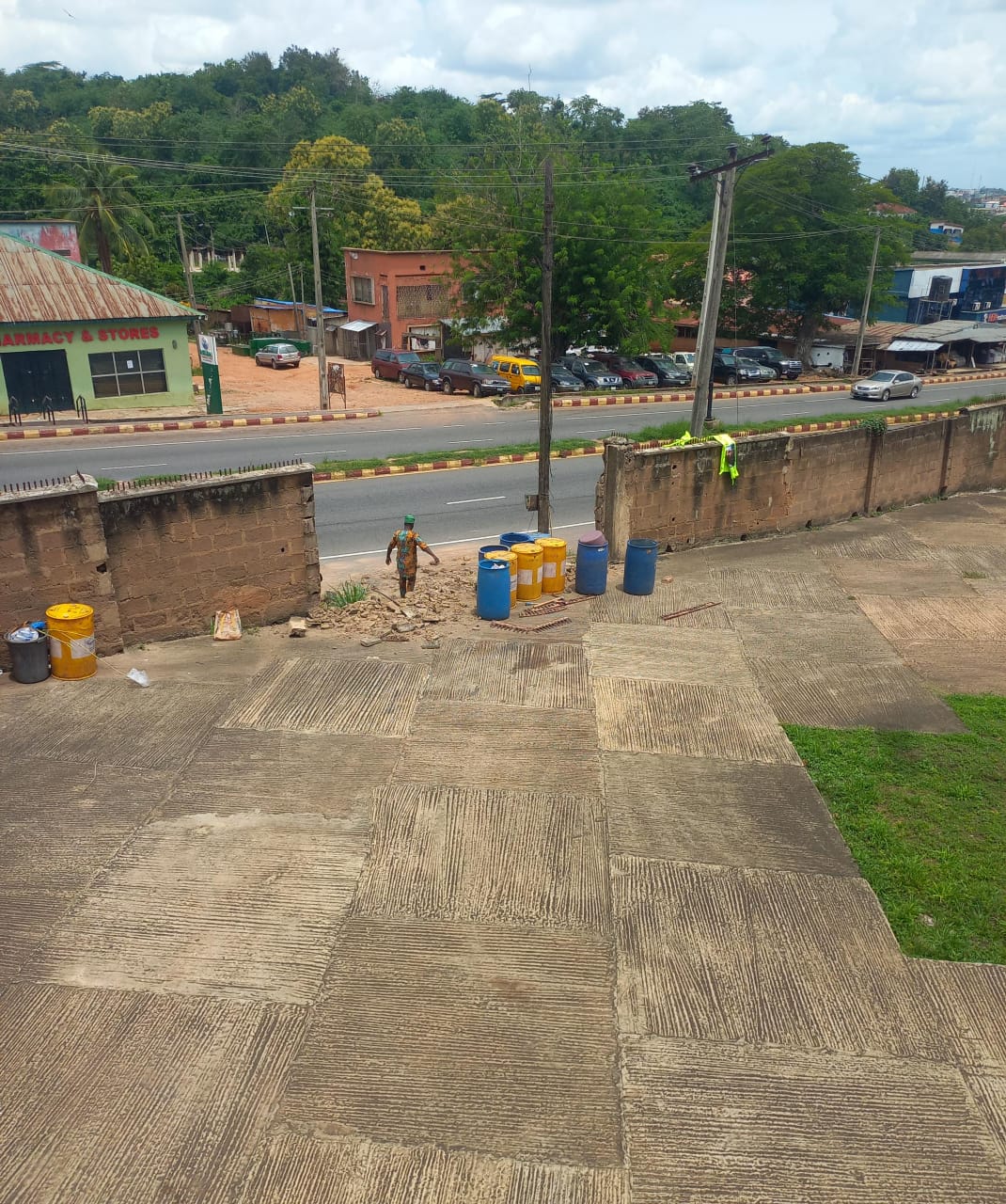
Tunde, an ecstatic newly admitted fresher, scours social media trying to research the different private hostels in the University of Ibadan. From rumours alone, he already believes the public hostels available might be below his standards. Like everyone else in this content creation-ridden age, he settles on the one he finds most aesthetically pleasing. Fast forward to resumption; he packs into his “beautiful” hostel only to see that there is no light and it has been that way for a week. Worse is he discovers that his mates in the public hostels he looked down on enjoy far more electricity supply than he does. He runs to the tap in the “modern” bathroom, hears a creak, waits for water to flow — nothing. He returns to his room mourning the half a million naira paid for substandard services and begins to sweat, forcing his eyes toward the sorry excuse for a window.
“I’m screwed,” he mutters, realising this is his room for the next year.
Ironically, private hostels were never meant to become the default option for thousands of University of Ibadan students. When the University was established in 1948, it operated a largely residential system modelled after the Oxbridge structure, according to IFRA, where the university offers accommodation, dining, social spaces and academic support which is why halls of residence were considered an integral part of student life and community. This system was easy to follow back then as just 55 students were offered admission in 1948. However, over the years, student enrolment expanded far beyond available bed spaces while hostel construction remained largely stagnant. Research by IFRA-Nigeria describes accommodation in the University as having “reached a crisis level” due to increasing admissions without a corresponding increase in housing facilities. Currently, the university enrolls between 33,000 to 36,000 students per session, comprising both undergraduate and postgraduate students. Despite the presence of twelve public hostels — 3 female hostels, 5 male hostels and 4 mixed hostels, their carrying capacity is barely 9,859 students out of over 36,000, which is a measly 27.39%, leaving the majority of students to fend for themselves. In some halls, rooms originally designed for four students reportedly ended up accommodating as many as fourteen (with squatters included).
This crisis did not arrive without warning. As far back as 2016, the Union of Campus Journalists reported that the demand for bed spaces had long outstripped supply, with admission figures rising sharply — from 2,839 newly admitted students in 2012 to 4,008 by 2016 — despite the absence of significant hostel development. Even the University’s own 2012 Annual Report, cited in the article, acknowledged that female enrolment had been increasing steadily while “the number of halls of residence remains almost constant,” promising the construction of additional hostels through private partnerships on a Build-Operate-Transfer basis. For clarity, the Build-Operate-Transfer (BOT) model is a public-private partnership or outsourcing strategy. A client hires a provider to build an asset, operate it for a set period to recover costs and make a profit, and finally transfer full ownership and operational control back to the client. More than a decade later, those promises, much like the water in Tunde’s dry tap, have been disappointing in execution. Most of the university’s hostel infrastructure was constructed between the 1950s and 1980s, with the most recent public hall dating back to 1998.
What emerged to fill the widening gap instead were private hostels. Private hostels like St. Annes’ Church Hostel and Imoran, which were initially just catering exclusively to female students, are now a sprawling and largely unregulated system that thousands of students are forced into not out of luxury, but necessity. Even the University’s Lodgings Unit which, through the University Student Lodging Bureau (USLB), should help students source accommodation outside campus, assist students in getting affordable and conducive accommodation, exists more in name than in practice, with no clear evidence of any officials actively overseeing its activities nor are students aware of its existence. This was also the University’s acknowledgement that it could no longer house its growing population.
Private hostels are marketed as modern, comfort-based alternatives to public hostels, with more stringent rules and significantly higher expenses depending on their maintenance and time of construction. Initially, only a few existed and they catered exclusively to female students, examples being hostels like St Annes Church Private Hostel and Imoran. Most of the private hostels built after then were still exclusively for females until a few years ago when hostels like Talents Apartments, CBN Hostel and Iyalode Taofeekat Hub brought up the innovation of mixed hostels, finally giving males the option of private accommodation. These hostels promise luxuries such as alternative power supply during blackouts, running water, better management, cleaner and more modern bathrooms, more aesthetically pleasing rooms, relative privacy depending on payment, and in some cases, solar power.
As appealing as these services sound, they do not come cheap. Currently, the lowest amount paid for accommodation in a private hostel is about ₦200,000, while the highest is about ₦1.7 million. This is outrageous when compared to the ₦60,000 paid in public hostels for an entire academic session — a stay that often extends deep into unofficial holiday periods. In contrast, some private hostels charge these exorbitant amounts for barely ten months of residence leading to cases where the residents have to pay much more than initially agreed. Examples being Talents Apartments and St. Anne’s Church Private Hostel where the students have had to pay a fixed amount of 45,000 and 40,000 for the period of the holidays without alternative power supply despite the staggering sums they had paid at the beginning of the session. Unfortunately, due to the minimal amount of bedspaces in public hostels, private hostels have morphed from luxury to necessity. It therefore becomes deeply disappointing when students pay such enormous sums only to receive not even a commensurate half of the services promised.
Electricity, as we all know, is a necessity in life, more so in tertiary institutions where productivity lies in power and especially in an age where most educational materials are stored on digital devices. Yet electricity blackouts are common to most of the private hostels as they are located in the Ring 5 axis. This often means they remain without power even when other parts of the University have enjoyed electricity for hours. During the 2024/2025 session, particularly in the second semester — blackouts became alarmingly frequent for residents in this area. As sad as that sounds, one would expect the alternative sources of electricity promised to these residents to come in handy, but as you can guess, they don’t.
The absence of electricity affects everything: studying, water supply, and the overall quality of life. One of the major services advertised by these hostels is generator usage during power outages. Sadly, many hostel managements appear far more interested in making grand promises than fulfilling them. Residents of Iyalode Taofeekat Hub, for instance, have repeatedly complained about irregular generator schedules despite prior agreements promising three hours of generator use daily. A similar issue exists in St Anne’s Church Private Hostel, where rent was increased with promises of extended generator hours, only for the hours to be reduced upon resumption due to claims like “diesel is expensive.”
For residents of Talents Apartments, the problem can sometimes stem from defaults in payment by the management, resulting in disconnection from the school’s electricity supply and forcing innocent residents to suffer despite paying more than enough. Meanwhile, residents of Engelbert Beyer Catholic Hostel Centre, UCH, have become so accustomed to power issues that blackouts every three to four days are normalised, with many unable to remember the last time they experienced stable electricity for an extended period. Not just that, they are currently plunged into perpetual blackout because of a recurring fault despite several troubleshooting attempts. According to a release by the UCH Students’ Association, it will cost ₦26 million to provide a long lasting solution to the problem affecting the electricity along the College of Medicine, UI, building and Catholic axis.
The absence of electricity often translates directly into the absence of water. Sadly, for residents of Iyalode Taofeekat Hub, the presence or absence of electricity has no effect on the availability of water. According to a correspondent, electricity could be on for five hours while water is pumped for only thirty minutes — nowhere near enough for residents. Worse still are periods when the hostel relies solely on generators, resulting in no water for days. In many other private hostels, it is common to see buckets lined up around inadequate tanks once there is a blackout. Ironically, students paid heavily for water to run directly into their rooms, yet they are constantly met with excuses such as “the generator cannot carry the pumping machine.” In CMF, residents are given a specific time frame during which water will be available, regardless of whether they are physically around at that moment. They are also prohibited from leaving taps open and risk fines if they do. The importance of water in daily life hardly needs to be emphasised, yet students in private hostels sometimes appear to have it worse than their counterparts in public hostels when it comes to access to water.
Every student wants leadership that listens to complaints and actively works to improve living conditions, or at the very least communicate when it is a problem beyond management’s power – which is a rare occurrence. Unfortunately, this is perhaps one of the most neglected aspects of private hostel management. Residents frequently complain about poor ventilation, mold-covered walls, drainage problems, inadequate fumigation, faulty facilities within rooms, poor cleaning standards, and persistent failures regarding electricity and water supply. One would expect the management to respond promptly, but students are often met with silence or temporary, ineffective fixes.
In an age where it seems Gen Z are the only generation particularly vocal about mental health, the management of many of these hostels appear completely indifferent to both the physical and mental wellbeing of their residents. From mold-covered walls and poor ventilation capable of triggering respiratory distress and allergic reactions, to the constant anxiety caused by threats of eviction whenever a student dares to speak up about issues they have every right to complain about, the disregard is glaring. Also pressing is the unsavory frustration students feel upon comparing the outrageous rent fees they pay to these private pockets to the ₦60,000 charged in public hostels, only to realise the difference in living conditions is sometimes barely noticeable. Worthy of note is how Engelbert Beyer Catholic Hostel Centre, UCH, charges approximately ₦450,000 per bedspace, ₦900,000 per room, and the residents’ new normal is going to the first floor to charge in an inadequate ‘common room’ that is solar-powered, but with charging outlets unlike in the rooms. The feeling of exclusion also weighs heavily on many residents on UI main campus as they watch different events and activities take place in public hostels while theirs remain relatively socially lifeless. Parents pay through the nose for these supposedly premium services, only to discover that what was advertised is far from the reality their children live in. Beyond discomfort, the persistent lack of electricity and water — alongside many of the issues already mentioned — can make it difficult for students to study effectively during examination periods, ultimately affecting their academic performance.
Even worse are cases of victimisation. Residents bold enough to speak up are sometimes threatened with eviction despite having paid in full. Some management resort to insults or intimidation rather than accountability. Long-standing problems are patched over instead of properly solved — mold-covered walls are painted over rather than repaired, leaking taps are tied with ropes instead of replaced, and students are treated like children, occasionally locked into compulsory “meetings” that could easily have been bare notices. Complaints often remain ignored until parents become involved.
At Engelbert Beyer Catholic Hostel Centre, UCH, a section of the fence facing the road reportedly collapsed, and, even 48 hours later, there were no visible signs of repair, reflecting an alarming disregard for student safety and welfare. This break in the wall directly leads to the Mokola-Total Garden road, which means that these students are prone to attacks from rascals roaming the streets in the dead of the night. The walls remained unfixed for three days, after which it was attended to and repaired. Time and time again, students’ cries fall on deaf ears until a new session begins and managements are once again ready to demand another outrageous fee increase — emboldened by the absence of any regulatory body capable of checking their excesses.

Beyond these major concerns, there are smaller but still significant issues. Public hostel curfews often extend till midnight, which is especially beneficial for medical students returning late from clinical calls. Yet many private hostels close as early as 10 p.m, showing little consideration for students attending events, or academic activities organised with public hostel schedules in mind.
Many private hostel residents also complain about the absence of shops and cafeterias — and where they do exist, they often operate inconsistently and offer substandard services. In contrast, public hostels typically offer multiple options that remain open late into the night. Privacy is another concern. Despite paying for supposedly premium accommodation, residents frequently experience hostel porters or officials barging into rooms without notice. Some hostels ban visitors entirely, while others enforce extremely restrictive visiting hours.
Even running for political positions from private hostels is an arduous task as they are often not taken seriously by opponents from their original portal-allocated halls. In the University of Ibadan, hall identity has long played a major role in campus politics, with halls functioning almost like political blocs during election periods. Residents of private hostels, however, exist outside this structure and are often politically isolated because they lack the collective identity and visibility public hostel residents possess. An article by UIMSA Press on private hostels and campus elections noted that many private hostel residents feel detached from the intense hall culture that shapes student politics in UI, leading to political apathy and reduced participation in campus elections. While hall residents bond over campaigns, rallies and support for aspirants from their hostels, many private hostel residents simply watch from a distance with little sense of belonging. This isolation weakens not only political participation, but also the collective voice private hostel residents could have used in demanding better welfare and living conditions.
Moreso, exclusion happens not just politically but in other aspects of campus life. They miss out on events like Jaw War, Hall Weeks, and even brand collaborations organised through the Student Union. Community life within these hostels is often almost nonexistent, with few activities designed to foster unity among residents. The discrimination during rallies and campus events is usually obvious and rarely addressed. On May 9, the Student Union reportedly distributed yoghurt from CWAY across several public hostels without visiting a single private hostel.
Currently, there is no university-managed regulatory body responsible for overseeing the prices charged by private hostels or ensuring that advertised services match what students actually receive. Regulation only becomes exercised when a certain university staff feels disrespected and students face victimisation or wrongful eviction at the Dean of Students’ Office — and even then, consequences for erring hostel owners are often minimal. This lack of accountability is exactly what allows these substandard conditions to persist year after year, unless a student is willing to pursue legal action.
It should not have to remain this way.
First, it’s a proof of inadequacy for the university to resort to certain partnerships to create more spaces for students. If we are going to be realistic and concede to the need for these partnerships, there should never be an excuse to keep admitting more numbers without regard for accommodation. Second, in the establishment of these private hostels, more attention should be paid to the building plan beyond courtesy visits to cut ribbons and clap hands. Correspondents confirmed that CMF hostel does not have a reading room or library. For a hostel without that, how does it serve the academic populace or mirror the structure of public hostels when there is an eventual transfer of ownership?
Also, the practically dead dedicated regulatory body should become functional in carrying out routine inspections of private hostels, regulating annual rent increments, and assessing whether hostel fees are justified by the quality of services provided. Hostel owners must understand that profit cannot come at the expense of the students under their care. Complaints and feedback should be taken seriously, and the culture of threats and retaliatory evictions dismantled entirely.
Beyond management practices, the infrastructure of these buildings also requires urgent attention. Proper planning before construction would help prevent the chronic ventilation and drainage problems affecting many hostels. Fumigation should be carried out regularly to eliminate rodents, pests, and stagnant water that breeds mosquitoes.
The recurring issues surrounding electricity and water supply equally demand long-term solutions rather than temporary excuses. Utility dues should be remitted promptly to avoid disconnections, and the persistent Ring 5 blackouts affecting the majority of private hostels in the area must be addressed urgently. The Student Union also has a role to play. Private hostel residents must be intentionally included in advocacy, represented during hall deliberations, factored into rally demands, and considered in the timing of events like Jaw War and music concerts. Hall executives should function beyond mere inaugurations and actively represent all students, regardless of residence.
Finally, students residing in private hostels can also begin building stronger communities amongst themselves. Organising events, creating social activities, and fostering interaction beyond online group chats markets should resolve the isolation many students experience. Alternative versions of hall weeks and community events could help remind residents that they are not alone. More importantly, unity would create a stronger collective voice capable of challenging exploitation and demanding accountability from hostel managements.
The long paragraphs and Instagram posts about how the existence of private hostels has eased the strain of numbers on spaces do not do justice to the actual statistics that matter. If over 70% of UI students are expected to pay hundreds of thousands for hostels that battle epileptic power supply and no running water, then the school is as good as non-functional. If a hostel like CMF is granted permission to accommodate students without a reading room/library when there’s a much later clause to transfer ownership to the university, then we are not serious enough with this public private partnership model. If certain management can threaten students that protest inadequate basic facilities, then the USLB should be checked. We have gone past the age of long paragraphs of golden history and photo ops of ‘ground-breaking’ partnerships. If we fail to uphold fairness, accountability, and proper standards even within the smaller systems directly around us, our endless complaints will continue to ring hollow.


This was a beautiful read!
The writer did a great job striking the nail directly on the head. I hope that this gets to the relevant authorities and significant changes are made.
I’m a resident of engelbert beyer hostel buy what you wrote here are just lies, the fence wall fell after a heavy downpour and it was fixed the next day, and we don’t pay 450,000 engelbert beyer hostel we pay less than 400,000 and the light issue is general, a nigeria problem not peculiar to any hostel or institution, you don’t have to lie on your blog, the least you can do is do your findings well before posting
The total rent for the hostel is about 450,000. The fence was not fixed the next day, I have a timestamped video not only showing the fence unfixed two days after but also showing an intruder trying to get into the hostel with security no where in sight
If you actually live pass this night, it means your grace is strong because I can’t be suffering like this and one bastard, one Idiot, one fool, probably in the comfort of his home with more than 10 hours light will come and be saying this bullshit. We are legit trying to speak up through every means we can so that our issues can be fixed so we can live a somewhat comfortable life and you are here saying arrant nonsense. If them born you well, come to the common room of the hostel anyday and make yourself known
Dr. I don’t know if you are a current resident or speaking as someone who stayed there in 2017, but I’ll keep that to me. You were probably paid to post this but I don’t really care. My gripe is this. The management is very fond of marketing 24/7 light and water. If we still have to depend on the government for that then why market it as such and why do other structures neighboring the hostel not deal with loss of power and water.
“Dr” “Chi” or whoever it is behind this comment, if you are truly a resident of this shit hole called Engelbert Beyer Center, and you are well oriented in space and time—or better yet, know how to measure time—you would know that the issue was addressed in the timeframe you mentioned. If you’re truly a resident of this hostel, you definitely paid 380k + 70k utility fees. That sums it off to 450k. I have to spell it out for you just incase your intellectual capability isn’t enough to perform basic maths.
My response is more towards who hired you, “Anthony” and “Fatima” to undertake this pathetic attempt at covering their incompetent arse: Mrs Sarah Itoyum. If you can see this, Do better. This article barely scratches the surface the the hardships we’ve faced in this facility—issues exacerbated by your apparent nonchalance and indifference to our plight. Your performance as the facility manager has been way below satisfactory.
Whoever you are Dr Chi, Anthony and Fatima because I know you’re one person or you were together when typing this about the hostel because how are your time stamps so close?
Nobody living in this hostel can ever say anything good about this place. ITS NOT WORTH IT AT ALL.
Barring the fact that we’ve not had light in months and that’s not your fault, the main point when you marketed this hostel was constant light and water. There’s inverter that does not last long and when complaints are made, the fault is placed on residents.
Moving on to water, the erratic water supply plus the fact that we are told to fetch dirty water at the gate when there is no water is not great. In addition to this, the priest telling occupants that they don’t live in UK and are not paying “abroad prices”, so they can’t expect clean water is quite deplorable.
This attempt at damage control is quite disheartening and sad but not surprising. Provide basic things and what you said you will provide in your contract!!!!
The engelbert beyer hostel fence was fixed less than 24 hours, saying 3 days is just lies from the pit of hell, and I pay 370,000 as a resident of engelbert beyer Catholic hostel not 450,000.
I appreciate your useless creativity, but I’m struggling to find the logic in leaving a fence broken for over two days, which I did see with my own eyes. The wall fell around 4 pm, and it wasn’t fixed completely till Sunday morning. What nonsense and gaslighting is this — especially after we explicitly requested a fix since it was a danger to our safety. If we are going to continue lying, I’d at least appreciate ones that are slightly more believable.”
Guys, our grievance about poor electricity should be directed at the government and power authorities, not private institutions alone. They can only work with the power supplied to them. And I saw that Catholic hostel when it fell after the rain and it was fixed the next day and I don’t think they pay up to 450,000 my broy that stays there pays ₦370k
It is fascinating that you suggest we take our grievances to the government, considering we pay a private institution 370k, plus an extra 60k/70k specifically for power. Expecting us to show gratitude for a week of constant outages and zero communication is quite a stretch, especially when other parts of the hospital face no such issues.
If you are going to craft narratives to avoid accountability, I suggest checking your timeline first. The wall fell at 4:00 PM on Thursday and wasn’t fully fixed until Sunday morning. Let’s stick to the actual facts next time.
Anthony, Fatima, Dr Chi. We know you’re Catholic management trying to do damage control. Maybe you should focus instead on providing your residents with constant supply of clean water and electricity. Cause that dirty water that is flowing from the tap which is currently the only source of water isn’t fair to those paying 380k as you’ve insinuated plus another 70k for light in case you’ve forgotten. Also, If you can connect the inverter to the room sockets it’ll be nice give the residents their money’s worth which is bare minimum by the way.
Dr. Chi, Fatima and Anthony. Since all of you paid 370,000, oh sorry, It’s your brother that did it Fatima. Then you are clearly part of the Nigerian problem that you are using to defend the management of Engelbert beyer the 40+ occupants here paid 450,000. It’s simple. Make your proper transfer now and stop defending the thieves that run the hostel just because you are a thief yourself. Unless you were really hired by the management to discredit the only source that the residents are using to complain about the facility that is being taken seriously.
I don’t know why you people are crying here, I saw what I said and that the fact, bring your receipt if we are truly paying 450 and if you think the Catholic Church will stoop so slow to pay people for damage control then your are dumb, even people we paid for the hostel it was there in our prospectus that the hotel will not be responsible for power supply, we all saw it before we paid but still they still tried to give us light, even did solar for us and you guys are still complaining, the system is not palatable for everyone but let be fair in our doings and judgement , direct your anger to the right authority
What we pay is 380k and even if we claim to be paying 450k and with 450 we are expecting 25 hours power supply who does that, with 450k we are paying approximately 1,250 naira daily in a year and with 1,250 daily we are expecting 24/7 power supply, and maintenance, you guys should be fair, direct you anger to your government and leave private institutions alone
Have been in this hostel for the pass 3 years and I won’t even lie and say everything is perfect but it not as bad as you guys paint it, they are trying, and the fence was put up in less than than 24 hours i saw it, you guys should not be agent of darkness and be truthful for once, we can only fight on keyboard but we can’t talk I’m face of oppression, even within out learning environment, see what uch is doing to us, but we can only show power where it not needed
Dr Chi—or whoever you actually are—it is incredibly disingenuous to spread outright falsehoods about a situation you clearly don’t understand. If you’ve truly stayed in this hostel for three years, you would know exactly why the 70k electricity fee was instituted. Furthermore, if you’re claiming you only paid 380k total, you’re admitting to being part of the problem. You shouldn’t be living here without paying the light bill, meaning you’ve been freeloading off the residents who actually fund our already erratic power supply. Talk about an ‘agent of darkness.’
Many of us moved here because management promised a functioning inverter system that, combined with the grid, would provide near-24-hour light. If that wasn’t the reality, it shouldn’t have been used as a marketing trap. It is baffling how an inverter system that allegedly costs an outrageous amount can’t even match the performance of the public school hostel blocks, which power far more than just lightbulbs.
Lastly, if you actually lived here, you’d know the manager was sent a photo of the collapsed fence on the official group chat at exactly 4:43 PM on Thursday, May 14th. They didn’t even start fixing it until Saturday—leaving it half-done and unsafe—and only finished on Sunday. I didn’t pay my fees to the government; I paid a private facility that has a contractual duty to deliver. If you’re going to gaslight us, at least use believable facts next time.
This is honestly just another attempt by management to cover up their mess. At this point, it is hard to tell if it is pure incompetence or just complete lack of concern for residents. The facility promised, and it is clearly written in the pamphlet, two hours of electricity supply. But the solar system installed cannot power anything in the rooms apart from bulbs. We cannot iron clothes, people can barely work properly, and most times we have to sit in the cramped common room just to charge phones and laptops. If you come back late after the power window, especially as a medical student, then that is your luck for the day. Even the common room itself is poorly maintained and gets cleaned whenever management feels like it.
The people in charge are completely disconnected from what residents are dealing with. The priest in charge has insulated himself from the whole situation with round the clock solar power and a generator buffer, and the manager stays in an office with constant power, so there is barely any urgency to solve anything. Residents were once informed that water would be unavailable for 2 to 3 days, but no reason was initially given and no proper alternative was provided. Later, it turned out the tank was being painted. In the meantime, residents had to manage with inconsistent dirty water not fit for cooking, while some people had to beg others for water.
When complaints were made about the solar system via our reps, management claimed the problem was residents leaving bulbs on. That excuse was honestly ridiculous. The system mainly powers a common room where people charge phones, laptops, and power banks, yet it still struggles to last a few hours even on sunny days, constantly tripping off. Instead of admitting the system clearly lacks capacity and upgrading it step by step, management keeps giving excuses and acting like residents are stupid. The priest in charge should come testify if only one room in his house has working sockets when running on solar power.
And now there are anonymous comments, most likely from management themselves, spreading obvious lies in the comment section. Shame on you Engelbert Beyer Centre management. You were incompetent then, you’re incompetent now, and you’re the gift that keeps on giving when it comes to incompetence.
Thank God you accepted the hostel already told us they won’t be responsible for electricity before we paid, so electricity provided for us is out of humanitarian ground, so direct your anger to uch management and the government.