It happens everywhere, It’s like a universal glitch in how people relate and communicate. It is especially tiring when it comes wrapped in the “just stating the obvious” or “just being honest” coat. In every sphere of life I’m familiar with, accuracy is not optional; be it Medicine or Business or Data analysis. Yet it’s quite noticeable in our daily social interactions, we often go with a reckless lack of precision, or to put it in better words, lean on redundant observations, shielding ourselves behind the ultimate defense: But I’m just stating the obvious.
“Yes it’s the obvious, but why must the “obvious” be our primary lens? Why must we greet the short or the tall with a reminder of their own height? “Omo, you’re short o!” or “Ah, you’ve grown so tall!” something that isn’t new information. We treat these evident physical appearance and facts as if they are breaking news. Why must we meet a person and immediately anchor them to their physical shell? When we lead with these descriptors, it most times signal that, the most important thing about the individual is a biological trait they did not choose and cannot change. It is a redundant dialogue-filler that avoids the harder work of engaging with who the person actually is most times.
Why must we label an educated woman as westernized to explain her brilliance? When a Muslim woman — or any woman — displays fierce intellect, professional ambition, or autonomy, why is it a reflex to call her Westernized? In most cases, this is a cautionary tag designed to gatekeep authenticity. By claiming her intelligence is a foreign import, we imply that it is not indigenous to her culture or her personality. It is a way of saying, ohh you don’t fit my narrow box of what a proper woman should be, so I will exile your identity to the West.
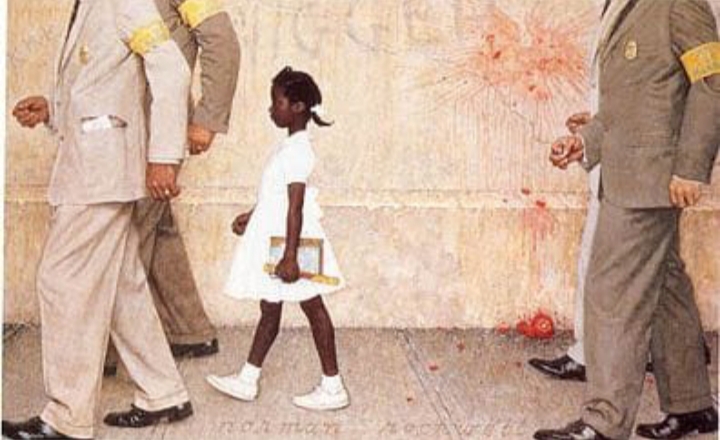
Why must blackness be used as a qualifier in a room where it is the norm? Even in our own context, or when looking abroad, we often use “Black” as a redundant descriptor. If the colour doesn’t change the context of the story, why is it the headline? Using race as a primary identifier when it has irrelevant functions as a very basic categorization. It serves only to remind everyone of their otherness rather than their contribution to wholeness or character.
Why must we dismiss a peer’s struggle by labeling them a “Lapo” or “Nepo” baby? In Nigerian slang, the “Lapo” (low-income) or “Nepo” (nepotism/silver spoon) labels have become the ultimate tools for erasure. Why must we see a successful peer and immediately go, “Na nepo baby, everything was served to him”? While systemic advantage is real, using these tags as a conversational “gotcha” is a way to bypass their actual effort.
Usually we use these labels to soothe our own insecurities, deciding that their hard work doesn’t count because of their origin. It is the death of merit-based appreciation, a sad realization when you think about it. Why must we brand the traditional or the accented as “Local”?On the flip side of the westernized coin, why must we see someone deeply rooted in their heritage and go, This one is too local? We equate a certain aesthetic or a specific way of speaking with a lack of refinement or intelligence. Again, it is a cautionary label used to diminish the value of indigenous knowledge. We assume that because they aren’t polished by our specific standards, they have nothing to offer the table.
Why must we dismiss the elderly as ancient or the young as the indomie generation? It is very common in recent times, why is age the first weapon we pull in an argument? We see a senior colleague and go, “Ohh he’s old school, he doesn’t get it” or a junior and go, “This Gen-Z people are just lazy.” These chronological stereotypes are the peak of intellectual laziness. They often allow us to ignore the actual content of a person’s ideas by simply pointing at their birth certificate — information that is evident, yet completely irrelevant to the validity of their point.
It is obvious, of course it’s the easiest thing to see, but generally it is the least interesting thing about any human being. As students, colleagues, professionals, and citizens, we owe each other more than a summary based on tropes. To the honour of true connection, we must stop using labels as shortcuts. So yes, the next time you feel the urge to state the obvious, ask yourself: Am I describing this person, or am I just trying to find an easy way to dismiss them?