
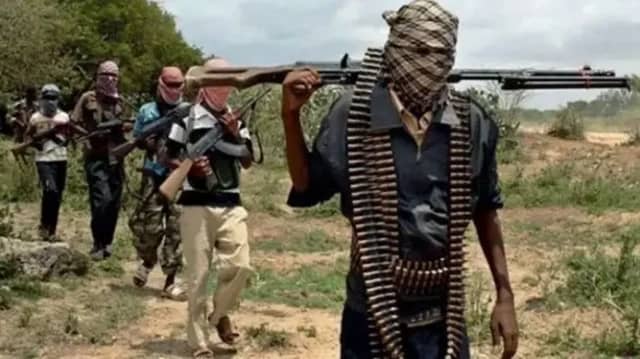
For years, Southern Nigeria has worn the label of ‘safe haven’ in a country battling insecurity — but how long can that label stay put? Banditry and terrorism are words that have always belonged to the North, sadly so. Mention Maiduguri, and you immediately think Boko Haram. No one ever really thought of Oyo, or perhaps Kwara.
In the early to mid-2000s, the South had a relatively low fear of terrorism. The Boko Haram insurgency had not yet escalated nationally. Suicide bombings and mass-casualty attacks were not part of everyday security concerns, and urban life felt freer. Cities like Ibadan and Lagos had crime, but people still moved around at night with fewer existential fears. Armed robbery, kidnapping, cult clashes, and occasional political violence existed but were episodic and rare, not constant. Even interstate travel felt normal: road trips, night buses, and interstate commerce were common without widespread fear of abduction.
By the late 2000s to mid-2010s, specifically between 2009 and 2014, the Boko Haram insurgency intensified dramatically. Though concentrated in the North, it reshaped national psychology. The South began to experience heightened vigilance: churches, mosques, and public spaces started introducing security checks like metal detectors and guards. Even though attacks remained rare in the South, people became more cautious everywhere. Still, the South was widely seen as a “safer alternative” within Nigeria during this period.
But in the late 2010s to early 2020s, the “Southern safety” narrative really began to deteriorate. Kidnapping spread southward and was no longer confined to the North. Traveling between cities began to carry real risk. Urban insecurity increased: robberies, cult violence, and sporadic clashes became more frequent. International travel advisories (from the UK and US) now caution about specific Southern states: Abia, Anambra, and Akwa Ibom, amongst them, eroding the reputation of safety. These warnings reflect a hard truth: the Southerners were no longer insulated from organized armed violence.
In the South-East, that violence takes the form of rising separatist violence (IPOB/ESN), attacks on security forces, enforcement of “sit-at-home” orders, and targeting of infrastructure. Once described as “a relatively peaceful zone,” the region recorded 257 abductions in just one year (2024–2025), a stunning 5.6% of all national kidnappings. That’s a staggering rise for an area that historically sat far below northern figures.
The Indigenous People of Biafra (IPOB) is a separatist movement in southeastern Nigeria that campaigns for the creation of the independent state of Biafra. IPOB garnered global attention under the leadership of Nnamdi Kanu, who used radio broadcasts and social media to mobilize support. In the time since, the Nigerian government has labeled IPOB a terrorist organization, a designation the group rejects. Their sit-at-home orders, often enforced through fear or threats, have had a strong impact on everyday life in the southeast: schools close, markets, and businesses shut down, and public services slow down.
The South-South herself has seen militancy re-emerging in the form of creek-based gangs, oil theft, pipeline vandalism, hostage-taking, and rival group clashes. The militant resurgence is less a sudden flare-up than a relapse. The 2009 amnesty programme temporarily stabilised the creeks by paying and reintegrating fighters, but uneven funding, corruption, and the exclusion of newer militant networks weakened its hold. This vacuum has enabled the quiet return of influential figures such as Government ‘Tompolo’ Ekpemupolo, now operating in a blurred space between ex-militant leadership and state-backed pipeline security.
The economic stakes are stark for Nigeria, losing between 100,000 –300,000 barrels of oil per day to theft and vandalism, occasionally higher during peak crises. At an average oil price of $70 per barrel in 2021, that translates to roughly $7–21 million lost daily, or several billion dollars annually.
Oyo, Ogun, and Ondo now face rising farmer-herder conflicts, a crisis once seen as a northern drama. This conflict is defined not only by mass killings but by frequency; a grinding pattern of farm destruction, sporadic killings, and rural insecurity that erodes livelihoods. In places like Ibarapa and Oke-Ogun, the same forests that sustain grazing have become contested spaces, feeding both communal clashes and criminal activity, including kidnappings along the Lagos–Ibadan corridor. Add cult-related violence, and the picture darkens further.
This South-West insecurity did not emerge suddenly but through a gradual southward expansion of criminal activity from the late 2010s into the early 2020s. What initially started as isolated highway robberies along routes like the Lagos–Ibadan Expressway around 2016–2018 evolved into more organized kidnapping operations by 2019–2021. These zones became increasingly vulnerable due to their dense forest cover and weak inter-state security coordination, allowing armed groups to establish semi-permanent bases. By 2022–2024, the pattern had shifted further from opportunistic crime to a more organised rural kidnapping economy, with repeated incidents targeting commuters, farmers, and traders along inter-city corridors.
Why Now?
The deterioration in parts of Southern Nigeria can be traced to a convergence of economic and social pressures. Rising poverty, inflation, and widespread unemployment have left many young people without stable livelihoods, increasing vulnerability to crime and recruitment into violent networks.
At the same time, rapid urban population growth has outpaced job creation and infrastructure, especially in major cities, deepening inequality and strain on housing, social services and security.
This situation is further worsened by insecurity spilling over from Northern Nigeria, where insurgency and banditry have displaced large populations into southern regions. These movements add pressure to already overstretched urban systems, while weak state capacity limits effective policing and governance. Together, economic hardship, internal displacement, and fragile institutions reinforce one another, creating pockets of instability and gradual erosion of safety in parts of the South.
Before The South Becomes The North…
Jobs are needed. Many young people are joining criminal groups because there’s nothing else. The government needs to create real work opportunities in the most affected areas, not just make promises.
There should also be better policing across state lines. Armed groups move freely between states because security forces don’t coordinate well. States need to work together more, sharing information and running joint operations.
For the South-South, the amnesty deal should be fixed. The original peace deal with militants worked for a while, then fell apart due to corruption. It needs to be honestly renegotiated, not just patched up.
Military force alone hasn’t stopped the IPOB situation in the South-East. At some point, the government needs to actually sit down and address why so many Igbo people feel unheard, because you can’t arrest your way out of a political problem.
The uncomfortable truth is that Nigeria mostly knows what needs to be done. The bigger issue is whether the government will act before things get significantly worse. The real question is not whether the South will/has become the North, but whether the government will wait for it to get there before acting.
Ayomide Bello




Thank you for this piece. I’ve drawn more insights on the subject matter from the article, and it’s been a great read so far.
Before now, I had already been considering how I would take my time to go and sit down with history again, but I may not have to do a lot of work anymore as this blog now provides me access to insight and data.
The matter of insecurity is one major one, and I now have some information to run with even as I try to learn more and see to how I can make valuable contribution when discussions are being organised with regards to solutions.
Thanks, Ayomide.
Thank you, UIMSAPress
This issue of security will bring us back again to the matter of governance and leadership. As far as the current government body is concerned, according to what I’ve observed, it seems they’re not very actively involved in finding a solution to the problem (or maybe it’s also one of their various political propaganda).
I just really hope that we won’t one day find ourselves in a country where insecurity will become the order of the day and we’ll all have to beg for survival.