Building a Sports Structure: John Oludele on UIMSA Sports, Athlete Development and the Road Ahead

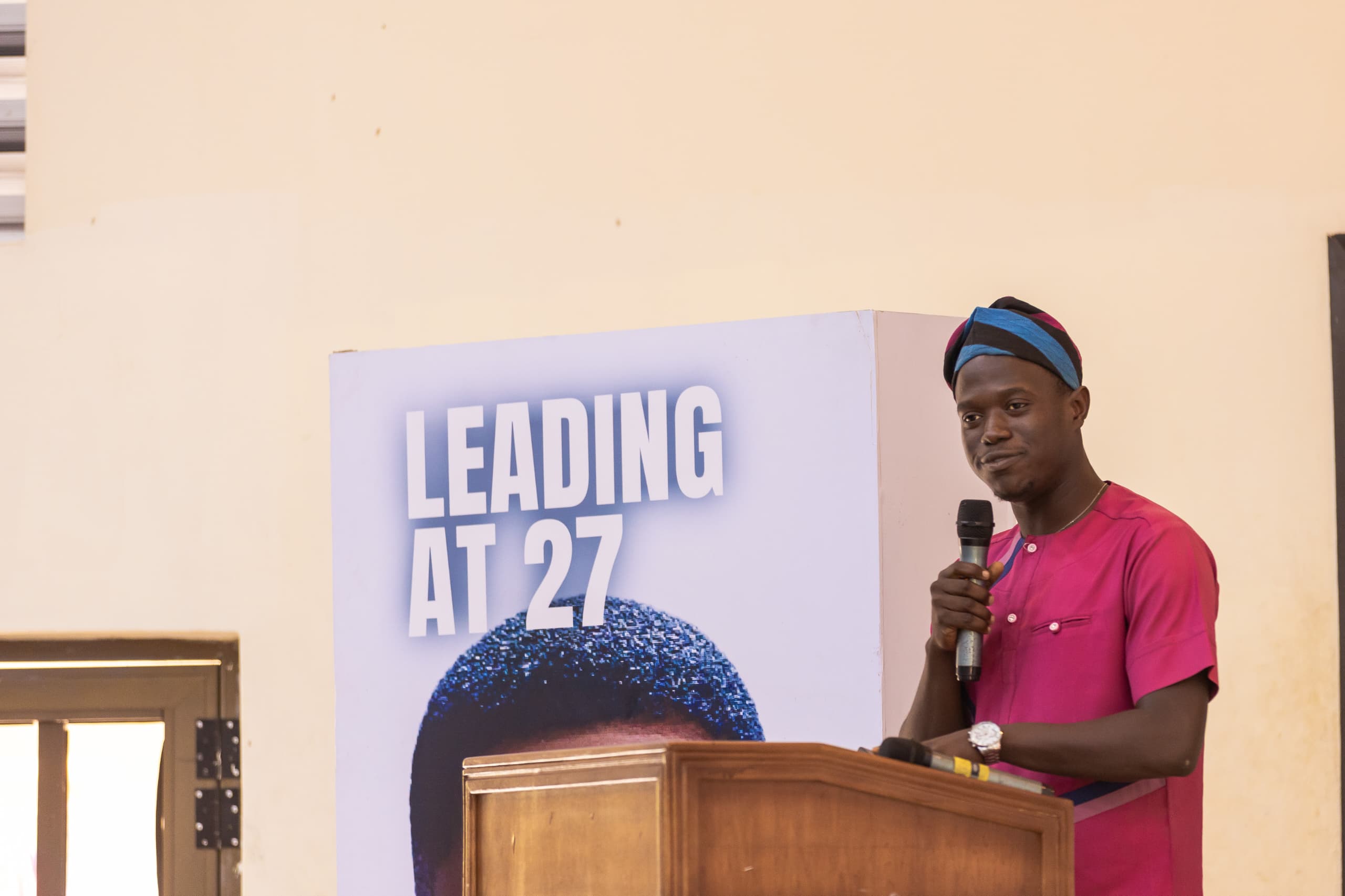
Following the release of the first part of our exclusive interview with John Oludele, Sports Secretary of the University of Ibadan Medical Students’ Association, we close things out with the second half of that conversation, reflecting on initial plans for the tenure, sports development in the association and participation of UIMSAites in inter-varsity competition.
Okay, without dwelling on this Chess and Scrabble Leagues point too much, let’s just move forward from this, knowing that it is physical at least now, despite everything. Regarding the Preclinicals versus Clinicals tournament, are you satisfied with the outcome of this project? Do you believe this has contributed to lasting sports development in UIMSA? And with one of the objectives of this project being the scouting of talents, were there any performers in the junior classes that were noted by the sports committee in particular?
The program did, it actually exceeded expectations. Honestly, I wish I did more. I wish I had basketball. I wish I did more for the Preclinicals versus Clinicals. It was really, it was a very important… I wish I had basketball, and I wish we had female football. It was very important, it fulfilled all the objectives of its establishment. In the sense that, first of all, a lot of players were scouted from the Preclinical team. A lot of players were called up.
UIMSA was at a point where it needed talent. And these talents were called up to the male team, they were scouted for trainings. So some of them, many of them, did not eventually make it to the SEALS Cup team proper. But many of them were called up to train. We even had someone from 2K29, he was also called up for training. In fact, he even made the UIMSA football team. We had Oluwatomi in football; we had a lot of them, really, that joined the team for training.
It helped. That’s the reason why the Preclinical teams are actively participating in sports currently, in football in UI. Because it all started with the Preclinicals versus Clinicals. It helped them feel more of a part of the association as regards sports. It proved to them that selection is based on merit and performance. There is no hierarchy or seniority in classes. And not just football, for the volleyball, in fact.
Volleyball is highly inclusive. We scouted a lot of players. We ensured, because there have not been tournaments so far, but we ensured that these players play consistently in UI. They play consistently in UI.
They train with the UI team. We’ve handed some of them over to the UI coaching team.
Yes, I can point out, I can say that it exceeded, it exceeded expectations, yes. I think that answers the question.
Okay, but kind of specifically I’m asking about lasting sports development because there’s a way I kind of want to frame that. Generally, there’s this view of UIMSAites about sports and about what they can achieve in sports. I mean, based on my personal interaction with youngsters. And it is specifically highlighted in the fact that across the past two NUGAs, across NUGA 2022, African University Games 2024 and the most recent NUGA 2025, apart from the chess players, that is, apart from a number of chess players who have played, who have represented the school as UIMSAites, the only other persons, the only other UIMSAites who have represented the school are Okpara in table tennis and Soriowei who is an athlete. I mean, especially when they get here (UCH), you see a lot of medical students who previously participated actively in sports kind of shy away from these roles, especially when they cross to clinical school. So, I mean, how can we sensitise athletes about their role in sports and their future in sports, as UIMSAites?
Well, as I said, I think, first of all, I don’t think I can measure — I don’t think measuring UIMSAites involvement in the combined tournaments, I personally don’t believe it is an accurate metric of sport development in UIMSA. Yeah, because there are so many factors that affect performance of UIMSAites in those tournaments.
For instance, volleyball, UI itself, UI was reluctant to have people represent volleyball. And we have the best volleyball players, the captain of UI Volleyball Team. And you failed to mention Onyinyechi in basketball, the captain of UI Basketball Team; she played at the African, the one that held at…
No, that wasn’t FASU or NUGA, that was a separate FIBA 3×3 basketball tournament.
Yeah, she played there. But in the basketball, in the other team sports, in fact, UI did not want to take football to NUGA. It was because of the pressure, they knew how important football was to UI, that’s why. So there are so many other factors. UI Sports Council prefer taking badminton players and judo players, single performers, lawn tennis and so on, than the other sports. Which is, of course, because of logistics and so on and so forth.
So I can’t really say that; I’d rather focus on the participation of UIMSAites in sports. In this particular sport, do we have a structure? One, that’s for development. Do we have representatives for this sport? Years ago, we did not have representatives for many sports. We did not have a track and field team. We only had a one-day Ulympics tournament in the whole year. And if God wills, an Inter-Faculty in the year and maybe an Inter-Hall if it happens. So we didn’t have those things, but now we have this team; we have captains, we have vice-captains.
We already know some of the athletes, we know the best of the best athletes in UIMSA right now. And if there is a tournament tomorrow, we can present these players. And that’s sport development. We try to pass it down to the classes, make sure that each class has representatives. We have the finest UIMSAites, they have that medium to train and to meet with some of the high performers in this sport in UIMSA. Of course, we have highly talented athletes.
Most of them, their performance in sports competition outside of UI is limited by so many other factors beyond just the development of sports in UIMSA itself. Some of them are just unavailable; some of them are particularly not interested in performing in those tournaments. But the point is that there is a sports culture in UIMSA.
And if you look across board, across every sport, you can point to active participants across these sports. We’ve maintained that, not just maintained that, we’ve increased the number of people of interest. We’ve scouted talent. The Pre-Clinical versus Clinical was a very important ground to do that. It really helped, it was very helpful in doing that. So yes, there is a structure in place now that can improve any interested athlete or any sport enthusiast in UIMSA. And that’s what matters at this point.
Speaking of intervarsity competitions, I think you’ve already mentioned NiMSA Games a little bit in this article. But can you categorically confirm at this point whether UIMSA will or will not participate in NiMSA Games this year?
Before we answer that, we are not even sure if NiMSA Games will hold this year. The administration, there has been a lot of administrative back and forth in NiMSA Games. So it doesn’t really look like anything is certain at this point. And if nothing is certain, it becomes really difficult to even fund logistics.
And logistics is a big part, it’s the biggest part of participating in this intervarsity tournament. So, till then, I can’t really say much. We don’t know whether the leadership at NiMSA or NiMSA Sports have direction on what they want to do. So, if those things are not in place, I don’t think we can really do much at this point. We can just wait; first of all see if it will hold. And then when we see what they have, then we can start planning on these things. Then things can be clear whether or not we’ll be able to participate in the tournament.
Okay, but previously, the NiMSA Games were announced for the 16th to 23rd of August at the University of Nigeria, Nsukka. Are you saying at this point that these games will not hold? (Note: This interview was conducted on July 28th, well before the release of this article, which falls after August 16th. As discovered in a 3rd of July circular, the hosting rights for the 2026 NiMSA Games have been withdrawn from the University of Nigeria Medical Students’ Association, and the bidding process was reopened to interested MSAs. As of the time of this publication, there is no update on NiMSA’s social media on the bidding process and the Games.)
In fact, I didn’t know that there was a change to Nsukka, to be honest. Because there has been so much back and forth. 16th to 24th is a really short time from now. And really, logistics is a big problem. It’s a very big problem, especially in participating in events in the East. And by logistics, I’m talking about the money for transportation, accommodation, and security. Security is also a very big challenge for this type of thing.
So, as of now, if you look at the budgets I created in August last year, you’d see millions of Naira just to get athletes to perform at the event. That’s a lot of money. And we don’t have sponsors willing to sponsor UIMSA. So, it becomes really difficult to make any plan with those challenges.
Regarding your plans at the start of your tenure, there were some specifics that were mentioned at the time, and haven’t necessarily been carried out at this point. These include improved media coverage of UIMSA Sports events, monthly recognition and promotion of athletes, early publicity of UIMSA Sports and award nights, and specific measures to improve female participation, such as the conduction of feedback sessions. What exactly is the status of these plans? And what has changed in the sporting landscape across the year? Will these plans still be effected by the end of your tenure?
The major problem I’ve had, more especially with the media, there were actually plans in motion for the media coverage But getting designers turned out to be a very big order. Designers for media, for the graphics, is a headache. It’s a big headache, really. A very, very big headache. And that puts a lot of things on hold.
Establishing the female team, the female recognition. Well, the plans I had also involved having the female athletes across different sports recognised monthly. That was the initial plan. But there were some problems that were encountered during the implementation. I actually planned to have mail letters sent to these athletes. Just to encourage their participation as a form of reward system. To give them some recognition.
And when I tried to implement this, I realised that, first of all, to carry out most of these things, there are some of these things that you can’t actually do because there are ways to go about them.
Such as what?
For instance, for the graphics, I got a couple of designers to design. And the designs that they made were not up to the standard of UIMSA. So, they were not designs that we could push out. And the UIMSA design team was constantly occupied with designs. Now, if I want to outsource for designs, I have to pay those designers. And paying the designers requires a budget, and comes to money. There is no money for all that. And you can’t push out any text. You can’t just broadcast random text to recognise these athletes. So, what I did, personally, was that I personally recognised them.
So, I speak with them from time to time, personally, as the sports secretary. So, I reach out to them, to the female athletes that participate. I try my best to support any competing athletes.
For instance, the female team in UIMSA, the UIMSA female team in the SEALS Cup. We made sure that everything as regards logistics was catered to from the beginning of the tournament to the end of the tournament. So, we put in as much support for these athletes. I reach out personally to different athletes. Athletes that participate in volleyball, for instance, some of the football athletes. Even the track and field female athletes.
So, that was the cost-effective method; let me put it that way. That was the most reliable method I could use to ensure that they are consistently trained because the end goal of everything was to improve female participation in UIMSA. So, with that in mind, I believe that we should be able to have females actively participate still in UIMSA sports. But, the tenure is not yet over. This is July, and there are still plans. As I said, for instance, female football, specifically in UIMSA, there are actually plans to ignite female football. I plan to go on a tour of every class, especially preclinical classes, and conduct preclinical training sessions with them.
The major hurdle to that is the schedule and the fact that some of the classes have MB at the moment. But that’s the plan. The plan is to go to these classes and organise training sessions. At the end of the day, most of these plans — the goal behind the plan is to improve their active participation. So, if the method to achieve it is not possible due to some restrictions, then I deem it fit to just find a way around it and make sure that, at the end of the day, the goal itself is achieved. So, that’s all I can say about that.
Speaking of the female football team, there was a notable incident earlier in the tenure when the team put out a broadcast complaining about their…
That was last tenure.
That was last tenure?
Yes. That’s what prevented this tenure.
Okay. I’ll just skip that. Now, to round things up. Speaking frankly, how has the experience been combining this role with your role as SRC Speaker? Do you believe either role has suffered? And what do you see as your future in the rest of your tenures, both as SRC Speaker and as UIMSA Sports Secretary?
I thought the interview was based on my capacity as Sports Secretary.
But you’re Sports Secretary and Speaker at the same time. At the end of the day, things affect each other.
You’re asking for what I see in the future as SRC Speaker. I believe if you want to ask questions in that regard, you should have a separate interview as regards my position as SRC Speaker. Because when I start talking about what I see in the future as SRC Speaker, you would have more questions as specific to that. I think that’s just better to not complicate the interview. But I can answer the question of creating the balance between being the SRC Speaker and the Sports Secretary.
To be very honest and to be very frank, just as you requested, being the Sports Secretary of UIMSA comes out of just pure passion for sports in the association. However, there was no intent to have both run concurrently, to be honest with you. There was no intent for that to happen. So I didn’t plan to be the Sports Secretary of UIMSA and be the SRC Speaker at the same time. As you all know, UIMSA’s tenure first of all. is ridiculously longer than it should. And we had strikes that made it worse. We had the five-month strike. So the plan was that by the end of last year, I would be done with my tenure as UIMSA Sports Secretary. And then I would serve this year, after contesting in February, as the Speaker. So I didn’t plan to have both run consecutively. But given that my tenure as Sports Secretary has had to last longer than I envisioned, of course, it takes a toll.
I think both offices hold their peculiarities when it comes to execution. And I think personally, I have to suffer the burden of lifting or bearing the weight of both positions. But when it comes to executing my responsibilities, I’ve tried my best to do so. And, well, of course, the suspension might be a misrepresentation of my activity as the Sports Secretary.
But I have actually tried what is possible. I’ve had to make compromises. You know, serving as a member of the Executive Council in UIMSA and, of course, as the Speaker. In fact, I think I have my foot totally on that. I have a full grasp on my function as the Speaker of the SRC. So, yes, it’s a lot of work. It increases the burden and makes me work more than I should. But there has been balance. And that’s what is most important: a healthy balance as a legislator and a member of an Executive Council. So, yes, that’s what I can say about it.
Okay. And what do you see as the future as UIMSA Sports Secretary?
Yes, in UIMSA Sports, my plan was to have a structure, one. To create a reward system for athletes beyond just monetary reward, two. To improve participation across board, three. And then four, to have UIMSA athletes recognised in UI. That is, by members of the UI Sports Council.
That’s what I envision in UIMSA. And I try my best at every opportunity I can to make sure that this is achieved thoroughly. It is a work in progress, and I believe that some of the events I could not hold this tenure, I’m going to pass down as an idea to the next tenure. And those initiatives will be maintained; they will start in the next tenure. So that’s what I envision for UIMSA as it is.
Some dialogue has been edited for clarity and readability.



One Comment