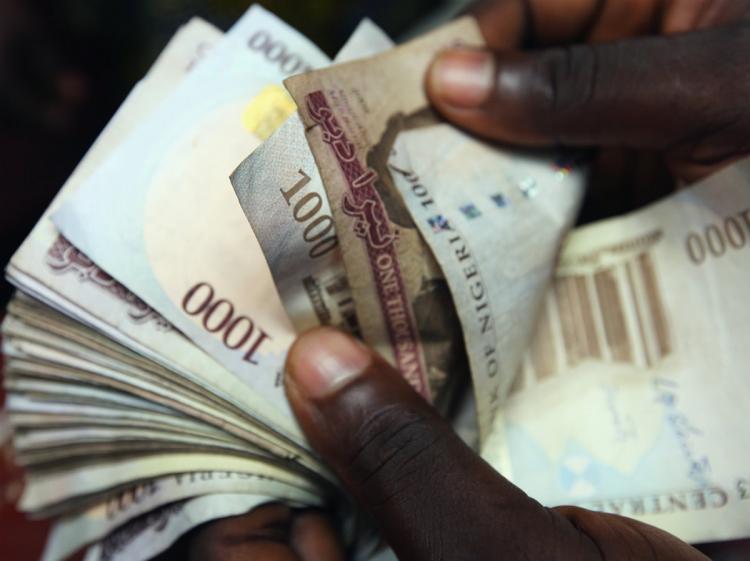
So I had exactly ₦1,000 this morning, and I decided to see how long it would survive. It wasn’t about being broke…well, I was, but that’s totally beside the point. I wanted to know specifically how far one clean, crisp (okay, it wasn’t) ₦1,000 note could actually carry me through an ordinary day.
9:45 a.m. I had a practical in 15 minutes, so trekking from my hostel to the lab wasn’t an option. I stopped a Keke, and since two other students were going in the same direction as I was, the transport fare was ₦200. If you’re not a UI student, here’s the deal: the school Keke runs ₦200 a head when three people share, and ₦500 if you charter it alone. The Kẹkẹ man handed me my change: ₦800.
When I got to the lab, I learnt that we would need a file, A4 papers and a tag for the practical. The woman beside the lab was selling them for ₦350, so I paid. That left me with ₦450, and it was only 10:00 a.m. After the practical, I considered taking a Kẹkẹ back to my hostel, but thought against it. With less than half of my original ₦1,000 left, another ₦200 felt like a luxury, so I trekked instead. When I got to my hostel, I realised I needed sachet water and bought a half bag for ₦250. That left me with ₦200, and that was around 1 p.m.
Just at that moment, MTN decided to remind me that the day was not over. Their message read: “You have 24.55MB remaining.” I needed data. Everyone needs data actually, for the assignment upload, for the lecturer’s WhatsApp group, for the five minutes of scrolling that keep you sane between lectures. But ₦200 can’t buy me the data I need. It doesn’t buy much anymore, really. It just sits in your pocket, technically money, functionally nothing — like a coin from a country that stopped existing. You see, I hadn’t even bought anything to eat out of this ₦1,000. There had been no breakfast, no lunch, no snack, no drink, or anything that could remotely be considered a treat. I had simply gone to a practical, bought what I needed for it, bought water and tried to get through the morning. Somehow, though, ₦1,000 was almost gone. That got me wondering how other students were doing it. The answer, it seems, is by calculating. A lot.
For Aishah, the calculation starts before she even leaves her hostel. “As I’m going outside I’m calculating, as I’m entering Maruwa, I’m calculating,” she said. When money is tight, transport is one of the first things to go; she walks instead. For Adesewa, it is the little things that require the most discipline. Popcorn, for instance, used to be an easy purchase, but now she finds herself thinking twice about it. “I realise I buy it a lot, and it ends up eating my budget,” she said. Oyinkansola has a similar problem, although she puts it differently. She says she is constantly calculating how much money she has left before spending. “I don’t think I’m collecting pocket money,” she said. “The money I’m collecting is basically for necessities. Pocket money should be something I’ll be free to spend as I like.”
For many students, money received from home is already spoken for before it even arrives. Food, transport, water, data and school materials all have their claims, leaving little for the things that make student life feel like more than a list of expenses. When there is nothing left, they have to improvise. They trek instead of taking a Kẹkẹ, skip the snack, buy less food, postpone something they wanted or borrow from a friend. Sometimes, even ₦1,000 has to be negotiated with. For Fauziyyah, the money doesn’t go very far. “It doesn’t really cover anything,” she said. “Maybe just snacks.” Adesewa’s approach is more practical, if she already has foodstuff at home, she said she would spend ₦500 on pepper and an egg, then use the rest for Kẹkẹ. For Aishah, transport, a drink and samosas can take up the money quickly.
The constant calculation is not necessarily because students are suddenly spending recklessly. In fact, when asked whether students were spending too much or whether money simply wasn’t going as far anymore, Aishah said the latter. Oyinkansola was even more direct: “We’re not spending too much.” Lawal, who graduated from the University of Ibadan last year, remembers his time as a fresher in early 2023. Back then, he said, ₦1,000 could buy him two meals. Bread and egg cost between ₦300 and ₦400, while a scoop of rice at the cafeteria cost ₦100. With ₦1,000, he could have breakfast and lunch — or, depending on how he spent it, brunch and dinner. Transportation was cheaper too. “Anywhere in UI was ₦50,” he recalled. A drop cost ₦150. Today, that same movement can cost ₦100, ₦150 or ₦200, depending on the trip. He said ₦1,000 could last him a day, two days or even more, depending on what he was buying. Lawal’s ₦1,000 as a fresher could cover two meals and potentially last beyond a single day. My own ₦1,000 had managed barely three hours before it was reduced to ₦200, and I hadn’t bought a single meal. Oh well.
The value of money isn’t only about how much is printed on the note; it is about what that amount can command. ₦1,000 is still ₦1,000, but what it can buy has changed. This is where the word “inflation” enters the story.
Inflation, simply put, is the general rise in the prices of goods and services over time. When prices rise and income or allowances do not rise at the same pace, purchasing power falls. The National Bureau of Statistics reports Nigeria’s headline inflation rate as 15.43%, while food inflation was higher at 20.31%. Those numbers sound abstract, but for a student, for me, they translate into “₦1,000 buys less than it used to.” Students feel that shrink particularly sharply because most of the things they spend money on are necessities. They still have to get to lectures, eat, buy data, print and submit assignments, and purchase materials for practicals. The expenses remain, even when the money available to meet them doesn’t stretch as far.
I started this experiment because I wanted to know how long ₦1,000 could survive. I had spent ₦200 getting to my practical, ₦350 on materials and ₦250 on water. ₦200 remained. All I had done was live through an ordinary student morning, yet most of the money was already gone. Perhaps, that’s the real story of ₦1,000 today. It isn’t that the note has become worthless. No, no, it hasn’t. It is that the distance between ₦1,000 and nothing has become frighteningly short.
If someone handed me ₦1,000 unexpectedly now, I don’t know, but I’d probably start calculating.
Ayomide Bello