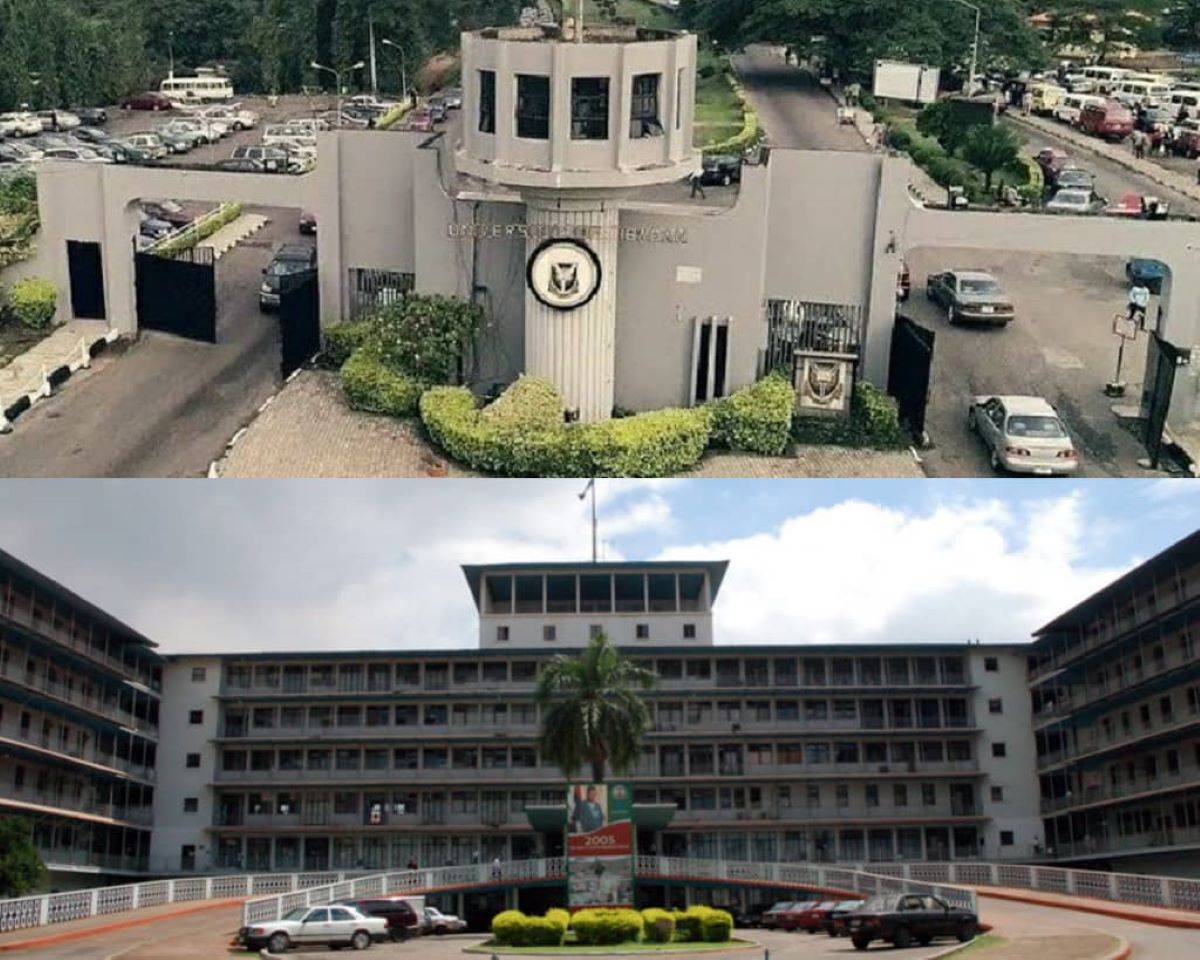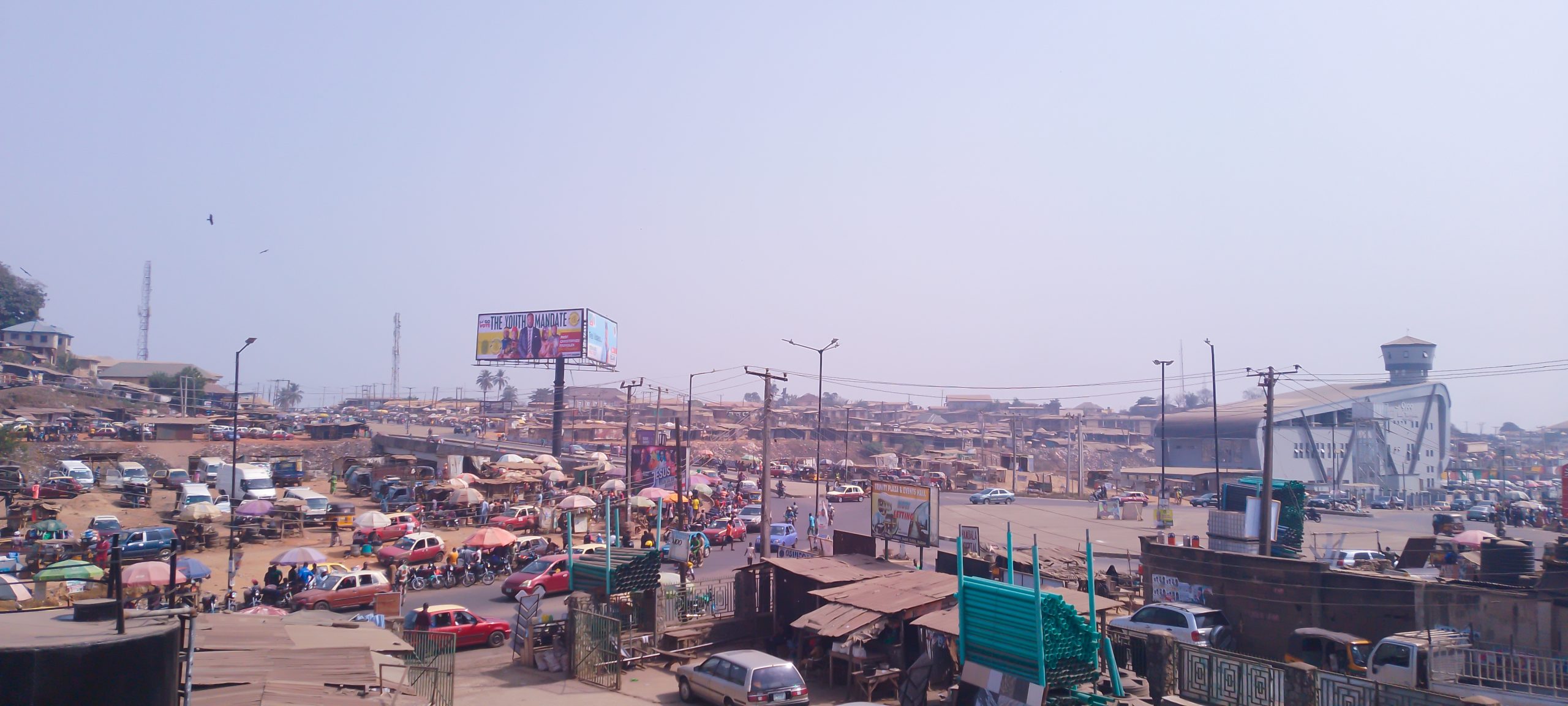
On the evening of Tuesday, July 7, 2026, an altercation at Ojoo area, Ibadan, between some men at a Point of Sale (POS) transaction escalated into arguments, and eventually death of one or two persons. By morning, it had devolved into the torching of nearby makeshift stalls by the affected groups in retaliation for the casualty of one of their own. Since the occurrence, there have been different reports by media outlets, each with somewhat varying accounts of what actually transpired, but some confluence at a point that suggested some tribal devolvement where each party looked out for their kinsmen more than seeking to find peace. Again, as reported by these media outlets, the deputy governor of the state, Bayo Lawal, visited the scene on behalf of the governor and spoke to the Press, debunking claims of the unrest being related to the tribal insurgence that has now become the nation’s order of the day.
This is not an article to rehash the reports by the dailies or to further bring to the fore the evil that happens in our backyard, but to analyse what this means for the average student in the University of Ibadan who is expected to be back on campus for the second half of the session and, for various valid reasons, commute the Sango-UI-Ojoo axis and beyond as many times as is required for the next three to four months. If you are reading this, as a fourth-year and above student who rarely has business at Ojoo, not even Ajibode for GES exams, or as an introvert who barely steps out of the main gate, save for a few errands at the Compudel store or even the gigantic Shokem store, this still speaks to you, because as you move, so does evil.
In the same fashion with which we’ve had previous reports of unrest trends on WhatsApp by the UI community, the talking point was a tribal war going on between the Hausas and Yorubas, and even subsequent conversations about how it has been going on for years. This information remains to be fact-checked but one thing is certain, random outbursts in market places and transactional gatherings escalating into fights and fatal injuries have always been around. In fact, we’ve always walked past some, resisting the urge to pause and watch, while going about our day. And since this has been a serious security concern, only brought to our attention in the wake of abductions and kidnappings, let’s go back in time to past events in these areas of Ibadan.
Of all the past incidents of violence – documented and otherwise – the most commonly referenced is the 2021 Shasha Market crisis that happened on February 12 between a Yoruba trader and a Hausa porter/cart pusher. A disagreement between both parties eventually led to needless loss of lives and properties. According to PUNCH Newspapers, “The violence left many in tears and property owners wailed beholding the remnants of their structures torched by the warring groups.” One can infer based on that similar incident alone that tribal clashes have always been around for as long as inter-state migration has existed. More attention may have just been drawn to them because of the high-rising incidence of abductions in this part of the country, and that in itself reveals how desensitized many southerners are to the reality of Nigeria as it obtained in the North.
Three months ago, UIMSA Press put out an article titled ‘Is the South Still Safe? Rethinking Security in Nigeria’s ‘Safer’ Region,’ which highlights how the supposed safer region of the country isn’t even immune to these insurgence attacks anymore. The piece may have fulfilled a part of its intent in sensitizing southerners on how close harm is to their places of dwelling. But another thing it has also revealed is how we couldn’t care less about these attacks, except only and only if they begin to happen along roads we commute very often. People can understand the need to take caution and avoid travelling to the North for any business whatsoever given how dangerous those parts have gotten but can’t seem to understand the need to be wary of travelling to nearby Ile-Ife or Oshogbo because it is so close to home and Nigeria can’t have gotten that bad that one would be advised against a trip to Ife, forgetting that human beings like us also stay far up in the North.
To be clear, the Press is not dismissing whatever caution people are taking to stay alive nor are we disregarding the fear in the minds of Southerners, we just need to remind ourselves the need to care for a distant citizen as much as we would care for the one nearby not because we know them or are affiliated to them but because it guides our decision making as a collective, helps us making informed choices as far as election of leaders goes. It is easy to be tone-deaf to the inefficiencies of a sitting goverment because evil still strikes far from home. It is very easy to cook up paragraphs of how Ibadan has been relatively safe for residing these many years, not minding the loss of lives at Owo massacre, or the many other unfortunate incidents in South-Western states, talk more of other geo-political zones.
Since the evil has steered close to home as many would depict what the current state of the country is as, it’s very important we address what our response or reaction has been as a group, and more importantly as students of a prestigious university that is and has always been at the center of a number of violence-prone areas. The defecnce committees of many student-led organizations and associations have done their bit in sharing security-conscious and awareness tips for individuals to constantly be in check, as evil does not just attack in the dead of the night, it now moves in cabs, stands at junctions, interacts in stores, and does all other mundane sorts. These tips have always ended with numbers to call in case there’s an unusual person or movement around them which is quite comforting. Since the rollout, we’ve had some panic calls, most notably one on UI campus around the Anatomy, Physiology departments – home to medical students and others under the college of medicine, and another in Alexander Brown Hall, UCH. Both didn’t turn out to be a case of real danger in the works but again, it was comforting to know that real-time responses didn’t take so much time.
However, there’s an uncomfortable part of these scenarios to address. Humans have a very pronounced innate desire for self-preservation, above every other thing. And as a renowned Professor in the College of Medicine, UI, will say, this desire seeps out in different forms of survival, to feed, clothe, live, move, and even earn. More often than not, the desire doesn’t even care for the man sitting next to them, it rages in the most selfish ways possible, so far it preserves and subsequently ensures they don’t lose their breath, not for a country like Nigeria anyways. This desire, coupled with a supposed heightened sense of vigilance, is what will prompt a resident to draw the attention of her leaders to a group of individuals conversing fluently in Hausa and moving in and out of Alexander Brown Hall. And in making the notice appear less controversial than it already reads, there’s a caveat added that they understand that the individuals and their presence might be harmless but just to take note. In the conversations that followed, while some needed a more vivid description of these individuals’ looks and movements to determine if it is worth being wary of, others deemed the provided description worthy of concern. All males, conversing fluently in Hausa, unprecedented numbers moving together. The fear is very unfortunate and, we daresay, slightly understandable given the current state of the country but the reactions were and will never be justified.
All of the texts that came after, in casual tones and otherwise, couldn’t have made the bigoted sentiment disguised as vigilance more pitiful. And this is the part, in a need to uphold self-preservation so bad, we entirely blurred the lines between the frequency illusion or better put, the Baader Meinhof phenomenon and vigilance. The actual frequency of this supposed harm has not changed much, we have just developed a heightened sense or awareness for it. Hausas have always existed among us, as fellow students, senior colleagues even, white and blue collar workers in academic offices and administrative corridors, and even on patient beds. Not once in the years before now have we considered it weird to have them come into our hall of residence and buy something while conversing in their native tongue. Not once have we raised an alarm on a patient relative coming into ABH to get food for their loved one on the sick bed. But since abductions and kidnappings have hit close to home, so close that one of us was a victim who just got released, our gazes have had more racial profiling intent than security consciousness. It gets even interesting to realise that some medical students have stuck out their necks for patients of varying descent, helping them to raise medical bills but can’t rationalise seeing patients’ relatives around the hospital.
It’s quite unfortunate that some of the panic calls we will have in subsequent months will take on similar fashion because more than the need to verify the identity of an unfamiliar face, we feel the need to point out the existing stereotype between the Hausas and perpetrators of evil. The alarm itself is not the issue, the rationale, upon deeper thoughts, is. Anyone that can speak Hausa fluently just needs to have an unfamiliar face and they are a threat to the people around them which is no way to live. Again, to be clear, the Press is not dismissive of the need to be vigilant. In fact, the core of this piece is to bring to the attention of the average UI student resuming for second semester, the evil that lurks nearby, in violent and cryptic forms alike. But in being vigilant, we must call bigotry what it is and unlearn for the collective good.
Far more than the need to air out bigoted sentiments and even publicly own certain train of thoughts, we need to be the most vigilant we’ve ever been. Evil doesn’t come in a form and if we, for precedents’ and history’s sake, remain myopic to cast funny gazes on people just because they look or talk like people from a certain tribe, we might welcome evil to eat with us and pay dearly with our lives before we even realise. For students on main campus, resumption means one thing, markedly increased movement of students along the UI-Ojoo axis, on foot, on bikes, in tricycles and cabs. More importantly, it also means movement during odd hours for educational or recreational intents. While we cannot begin to overanalyze the reason for every movement we make and measure the security indices of different passage routes, we can remain united on the conscious need to look out for evil and unusual affairs around us. We can also make sure people are informed about any long-distance trips we make and keep in touch with people every step of the way. Harm thrives in deceptive means; rarely in the most obvious way we think.