CRIM Holds Two-Day Research Event, Showcases Innovation and Emerging Ideas in Healthcare


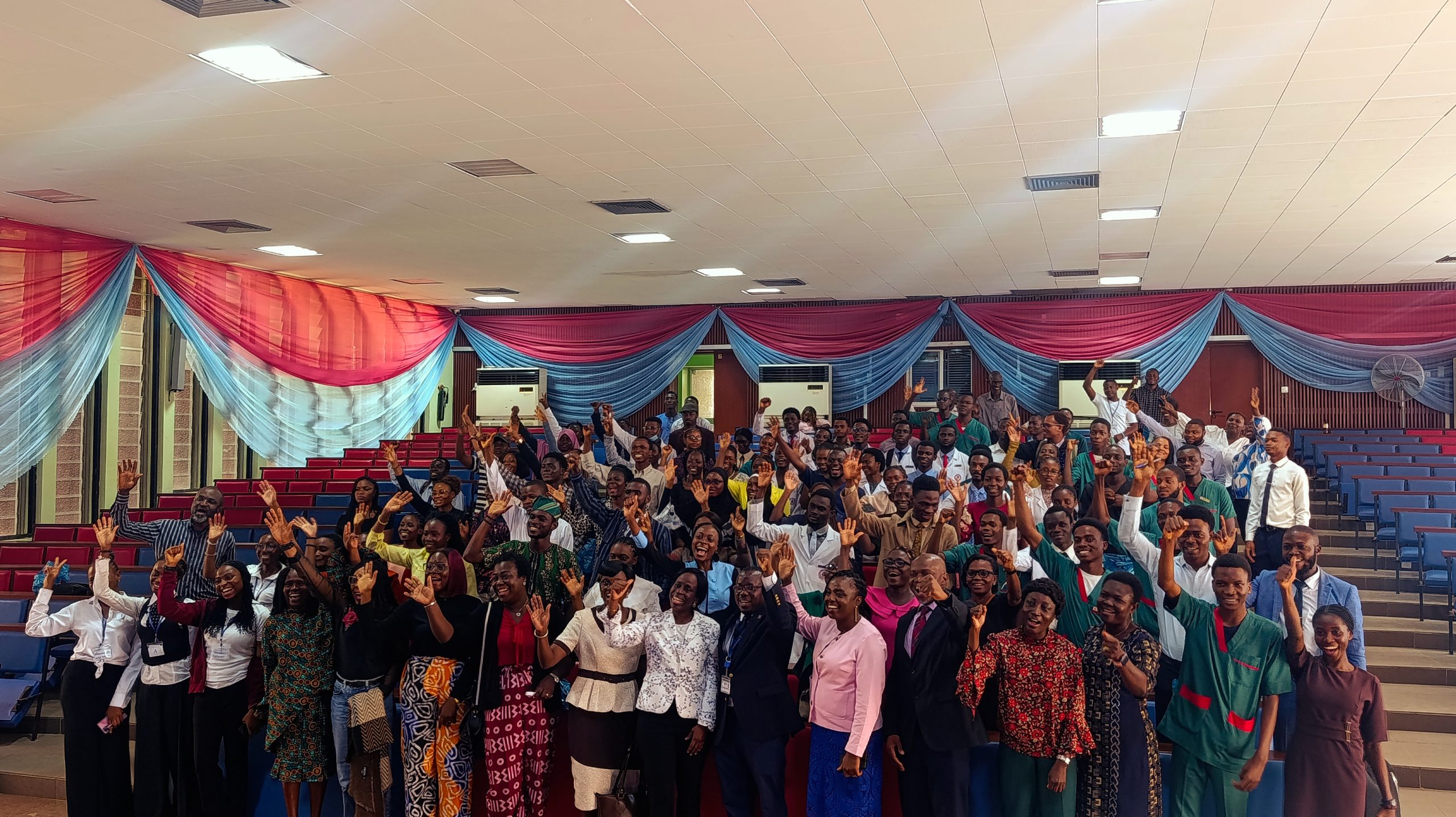
The College Research and Innovation Management, CRIM UCH, in partnership with Society of Women in Taxation, SWIT, held a two-day research event from September 22 to 23, 2026, at the Paul Hendrickse Lecture Theatre, UCH, Ibadan, under the theme “Innovative Research: In and Out of the Box.” The event brought together clinicians, students and other healthcare professionals for discussions and practical research activities, including the iResearch Innovation Workshop and Hackathon, where participants developed and pitched healthcare solutions for cash prizes and advisory support towards commercialising their research.
The second day of the programme began at 10:00 a.m. with the arrival and registration of participants. The event proceeded with the rendition of the National Anthem and the University of Ibadan Anthem, before the introduction of guests and participants.
The Deputy Provost, College of Medicine, University of Ibadan, Professor S. B. Olaleye, delivered the introductory remarks, followed by brief remarks from the Chief Medical Director of the University College Hospital, Professor Jesse Otegbayo.
The Provost of the College of Medicine, Professor T. O. Ogundiran, who chaired the event, then gave the Chairman’s welcome and opening remarks. He was followed by the Director of CRIM, Professor Adesola Olumide, who spoke on “CRIM: Supporting Research in the University of Ibadan,” highlighting the unit’s role in supporting research within the University. The citation of the guest lecturer, Professor Dike Ojji, was subsequently read ahead of his keynote address.

In his keynote address, Professor Ojji encouraged young researchers to take the first step in their research journey rather than waiting for perfect conditions. Quoting Mark Twain, “The secret of getting ahead is getting started,” he urged participants to start today, no matter how small their first effort might be. He also encouraged researchers to publish their work, stay familiar with topical issues in their fields, attend conferences and meetings, and actively look out for funding opportunities. Drawing from his experience in Zambia, Professor Ojji stressed that research and academic growth sometimes require sacrifice. He also cautioned participants against what he described as “early arrival syndrome,” urging them not to become complacent with their present achievements.
He encouraged the researchers to ask questions, remain willing to learn, stay focused and avoid distractions. He further advised them to keep pushing, acknowledge the contributions of their team members and, ultimately, “return all the glory tow God.” The keynote was followed by goodwill messages from Deans of faculties represented at the event, including Nursing, Clinical Sciences, Public Health and Dentistry.
The programme also featured a presentation by Dr S. T. Shittu, who presented a report on the maiden edition of the iWrite programme. His presentation highlighted members of the cohort, their individual research goals and achievements, with the cohort recording more than 150 publications between 2022 and 2026.


The event later moved outside the Paul Hendrickse Lecture Theatre for the chaired poster presentation, where participants presented their research work for evaluation.


For Miss Sangoniyi Olayemi Oluwadamilola, a Ph.D. student in the Department of Epidemiology and Medical Statistics, Faculty of Public Health, the experience offered a different way of looking at academic writing. Before her poster presentation, she described research as a unique “genre of poetry”, explaining that it goes beyond ordinary writing because it is backed by scientific evidence. Reflecting on the two-day programme, particularly the hackathon, she said the environment had been “filled with ideas.”
Her message to young researchers was straightforward:
“Platforms and organizations are ready to assist with research. You must leverage the shoulders of those ahead of you to move fast and far, and do mind-blowing things.”
The winners of the Innovation Hackathon held on the first day were also recognised during the programme. The team behind MP Detect emerged as the first-place winner and received ₦500,000, while Idera Pads placed second with ₦300,000. Awa Data came third and received ₦200,000.


For participants, the value of the hackathon extended beyond the competition itself, as many said the ideas generated during the exercise continued to shape their thinking on clinical practice and research.
A participant from the Faculty of Nursing, Damilola, said the keynote speaker’s emphasis on collaboration particularly resonated with her.
“Between the brainstorming in yesterday’s hackathon and today’s sessions, my mind is racing with ideas for improving bedside care. It is a relief to know that platforms exist to support our initiatives. By actively seeking out senior nursing researchers and letting them guide us, we can turn these raw ideas into funded, impactful care models.”
An attendee from the Faculty of Clinical Sciences similarly reflected on the volume of ideas generated during the hackathon, saying the comparison of research to an art form backed by evidence had changed the way they viewed clinical research.
“In medicine, we often focus purely on the rigid data, but this event showed us how to creatively bridge the gap between a hackathon concept and a concrete clinical trial by standing on the shoulders of our principal investigators.”
For Segun, a participant from the Faculty of Physiotherapy, the event also reinforced the importance of interdisciplinary collaboration. Reflecting on a presentation on pulmonary rehabilitation, he noted that effective patient care goes beyond improving movement and recovery.
“Having the knowledge to achieve great things in this space requires exactly what was discussed today: institutional support and strong mentorship. We don’t have to reinvent the wheel; we just need to build on the biomechanical and clinical research of those who have paved the way before us.”
The programme also featured the presentation of awards to Professor Ojji, former members of CRIM and other individuals recognised for their contributions to the unit. The Head of the Department of Physiotherapy, who also served as the moderator of the event, expressed satisfaction with the level of participation from students across the different faculties. She commended the attendees for their active engagement throughout the programme and noted the quality and viability of ideas generated during the hackathon.


The two-day event concluded with a vote of thanks, bringing together the research presentations, innovation activities, discussions and recognitions that had characterised the programme to an end at exactly 3:10 pm.