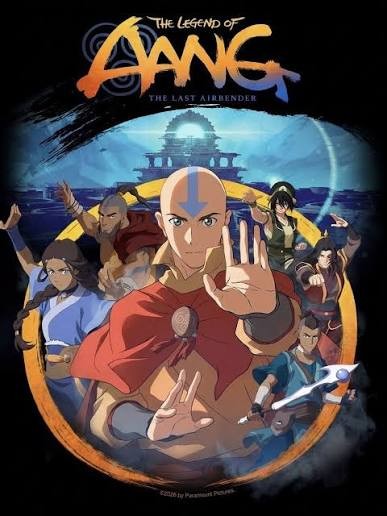
On Saturday, April 12th, 2026, the internet was taken aback when unfinished footage from the upcoming Aang: The Last Airbender film surfaced online months before its scheduled release in October, attracting more than 30 million views within hours and spreading faster than studios could remove it. Similarly, earlier this month, a popular book piracy website, Ocean of PDF, was rumoured to be taken down, causing sadness for most readers and sparking yet another piracy discourse across the internet. This isn’t the first time a scenario like this has occurred, with the takedown of Z library in 2022 and the takedown of different anime piracy sites over the past year. Music itself isn’t left out of this issue, as people who can’t afford streaming services have to source music through different means. Though these forms of piracy differ in scale and visibility, they are driven by the same tension: a growing global demand for knowledge and entertainment colliding with economic realities that make legal access unaffordable for millions. Understanding this shared dilemma is essential to examining not only why piracy persists, but also who ultimately bears its cost.
Piracy, according to Merriam-Webster, is the unauthorized use of another’s work, especially in infringement of a copyright — or in layman’s terms, illegally obtaining someone else’s work without permission. The subject has sparked considerable debate, particularly around the ethical, economic, and accessibility issues surrounding it. Piracy takes different forms depending on the medium; for movies, it shows up as leaked pirate streaming sites, Telegram channels, or even illegal physical copies sold across the country, while for books, it takes shape as leaked EPUBs, PDFs, or original manuscripts circulating through online group chats.
It can be agreed that piracy has existed since the beginning of time, but the truth is, in recent years its rate has increased significantly. For movies, this could be traced directly to the increased preference for streaming services over regular television. A couple of years ago, most shows were televised for people in the comfort of their homes without requiring them to pay a dime for each show. But recently, there are different streaming services for different shows with their respective fees for access. This results in one paying for as much as five streaming services just to enjoy their favourite shows. The economy unfortunately doesn’t favour this, as even a middle-class earner in a developed country can barely afford more than three streaming services for an extended period of time, not to mention a low-income earner.
Theatrical releases are subject to this same fate, as seeing movies in the cinema has also gotten very expensive in this present economy, especially for blockbuster films. A regular income earner cannot afford to watch five movies in the theatre all in one month. International releases are also not done at the same time, causing fans in other regions to wait for extended periods even after the movie has been officially released. Most of these streaming services are restricted to different regions, preventing people all around the world from being able to access them at all.
Books are not exempt from these circumstances either. New books in Nigeria are being sold within a range of 15,000 to 50,000 naira, if not more, due to shipping and customs fees. Unlike developed countries, there is a fundamental lack of libraries that contain fiction in third-world countries. Banned books are also unavailable in some countries, preventing readers from gaining access. Internet accessibility makes it easier to access books without any form of stress on the part of the reader. Even ordinary books are often rarely available in bookstores in places like Nigeria.
In third-world countries like Nigeria, piracy is a form of survival. The average youth can’t afford to sustain a reading habit if they had to buy books worth ₦20,000+ each time they felt like reading, or go to the cinema and spend up to or more than ₦6,000 each time they wanted to watch a movie. Streaming services are diverse, and while not all are even available to Nigerians, their prices are too expensive to pay as a minimum-wage earner. This is the main reason why piracy thrives; it could be argued that copyright laws are weaker here, which is true, but poverty is the main reason why piracy has and will continue to thrive. It has degenerated to the point where there is market competition among pirated sites for movies, music, and books. The question of ethics and how the creator will profit is often ignored whenever it comes up.
Piracy is wrong and is a form of stealing. It prevents the creator of the work from getting their deserved credit and remuneration and treats their life’s work like nothing. Value is lost as it continues being shared around, and as is human nature with free things, we easily disregard it and never come to appreciate it. Creators lose motivation to create or invest in new works. Plagiarism and unauthorized modification become the easiest thing in the world. It causes loss of money invested in a work’s creation and puts businesses like publishing houses, booksellers, theatres, and film production houses out of work. This makes it harder for new creatives to be discovered and introduced to the outside world, among other consequences.
On the other hand, piracy aids word-of-mouth advertisement, because people who enjoyed a movie or book go on to tell others to invest in that production. It helps people who cannot afford to read or watch a movie enjoy the art wherever they are in the world. It aids students and researchers in gaining access to expensive educational materials and journals. Most importantly, it reduces the knowledge gap between high- and low-income earners.
There are times we can all agree that piracy has gone too far. In April of this year, the Avatar: Aang movie was leaked on X, a public social media platform, with millions gaining access to it before its due release date in October. It could be argued that there was a lot of controversy surrounding the release of the movie, with its release being primed for streaming rather than a theatrical release, causing some ATLA fans to feel the leak was almost inevitable given the backlash. The truth remains that a select group of artists put in their hard-earned work on the film and deserved to be credited and rewarded. Attempts were made by the company to take the movie down, even though it can never truly be scrapped from the internet. One of the animators called its leakage, “A disrespectful blow to years of work.” Subsequently, the rumoured hacker has been found was sentenced to up to 7 years in prison and a $50,000 fine. A similar case also happened in February 2025, when Chimamanda’s Dream Count’s original manuscript was leaked online months before its official release – evident in the fact that some characters’ names in the manuscript differed from those in the final, published copy. This happens so often with music that it’s not even a surprise anymore. It begs the question: when do we know to stop, as a people?
How do we solve this? First, a conversation and education need to happen around the topic of ethics. We need to develop principles that help us realize that just because something is available doesn’t mean we should take it. Respect should be given to the creator of the work as much as possible. People also should know that it is a crime and there are real consequences. Yes, it is true that we often have no choice, but we should try, when we can, to appreciate these creators. Streaming services should come together and offer discounted prices for people in third-world countries, as this would encourage some to pay and reduce excessive piracy. Releases should be made globally and around the same time, to prevent delays that affect people in different countries. Copyright and plagiarism laws should be strengthened to curb piracy as much as possible.
Piracy, as stated earlier, exists because of these fundamental issues – access and affordability – and solving it will take a measure of sacrifice from publishing houses and film studios. But it’s a means of encouraging people to leave behind their deep-set beliefs about piracy and learn to support creators. It should be remembered that art is made primarily for the masses, and the main focus should be seeing people enjoy their work before the subject of profit comes up.