


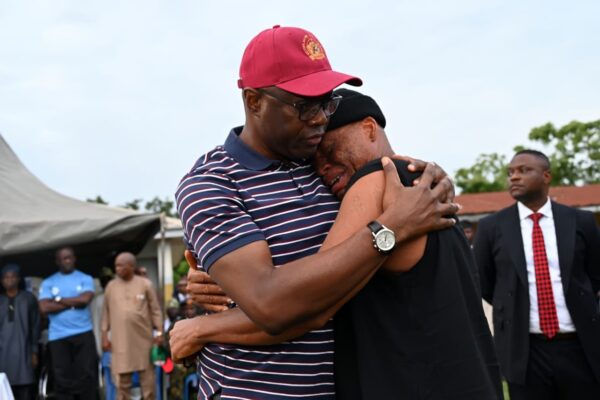
When the school children and teachers abducted from Oriire were finally freed after 56 days, the federal government wasted no time claiming a total victory. Abuja immediately drove a narrative on the victory, blasting out press statements to declare that “no ransom was paid.” It was a calculated display of state competence, meant to show an unyielding stance against terrorism.
But the celebratory mood didn’t last. Before the public could even process the news, Oyo State Governor Seyi Makinde broke rank. While accepting responsibility for the victims’ long-term care, he openly called the 56-day ordeal “grave and unusual” and demanded an independent investigation by the United Nations.
With that single move, a moment of national relief turned into a massive political showdown. The clash exposed a deeper reality: state governors simply do not trust the federal security apparatus to tell the entire truth about regional terror.
The backlash from Abuja was swift. The Senate and the Presidency immediately accused Makinde of playing politics with a sensitive rescue operation to feed his own future presidential ambitions. To the federal government, inviting the UN to investigate domestic banditry is a direct insult to the Nigerian military and a public admission of failed statehood that they will not tolerate.
Yet, inside Oyo State, the demand for international eyes was defended as basic transparency. Backers of the probe raised an uncomfortable question: the federal government regularly takes foreign funding and operational help for security, so why hide behind the banner of ‘sovereignty’ the moment local leaders ask for a clear accounting of how terrorists held over dozens of citizens hostage for nearly two months?
Strip away the political finger-pointing, and this standoff exposes the fatal flaw in Nigeria’s federal system. On paper, state governors are called the “Chief Security Officers” of their domains. In reality, they have zero actual command over the military, police, or intelligence units needed to secure their borders.
The political maneuvering didn’t stop there. In Oyo State, opposition players within the All Progressives Congress (APC) quickly weaponized the release of the kidnapping victims to launch sustained attacks on Governor Seyi Makinde and the Allied Peoples Movement (APM). To the APC establishment, Makinde’s call for a UN probe was not about seeking transparency. Rather, it was a calculated attempt to undermine President Bola Tinubu’s administration and burnish his own 2027 presidential ambitions. By publicly questioning the federal government’s account of the rescue, Makinde positioned himself as a courageous defender of local interests, while APC loyalists branded him unpatriotic for leveraging a national tragedy for partisan gain.
Meanwhile, the Tinubu administration treated the release as a high-stakes masterclass in strategic messaging. The official handover of the surviving victims was immediately transformed into a heavily orchestrated photo op. For the federal government and the APC, projecting a definitive victory anchored in the unyielding declaration that “no ransom was paid” was essential to counter the narrative of a collapsing security apparatus. The image of rescued citizens being welcomed by state officials served a distinct purpose: to signal to both the public and terrorist networks that the state remains firmly in control. Yet, this carefully curated performance glossed over the sobering human toll of the 56-day ordeal, including the deaths of teachers, local security personnel, and soldiers killed during the crisis.
Ironically, the polished nature of these government photo-ops triggered a wave of public backlash. On social media, skepticism spread rapidly, with many netizens questioning the official narrative and even framing the entire episode as a staged political ploy. Observers pointed to the neat appearance and matching attire of the freed victims, arguing that it seemed inconsistent with two months of captivity . This intense public doubt highlights a fundamental breakdown in trust: when citizens suspect that human suffering is being choreographed for political benefit, official credibility disappears entirely.
Adding a troubling new layer to the conflict was the widespread dissemination of artificial intelligence-generated media. Throughout the crisis, synthetic images purporting to show the captive children circulated heavily across digital platforms. Political actors and commentators leveraged these fabricated visuals to heighten emotional outrage and influence public perception. This development demonstrates how AI tools are actively being integrated into modern political warfare in Nigeria. Rather than serving as mere digital novelties, synthetic images are now deployed to shape narratives, generate outrage, and weaponize crises in real-time.
When political parties reduce severe security failures to mere communication strategy and public relations battles, the fundamental duty of the state to protect its people is thoroughly compromised.
When a governor feels he has to bypass Abuja and appeal to the UN just to get answers, the system is broken. The Oriire crisis proves that the fight against insecurity is no longer just happening in the forests; it is happening in the corridors of power. If federal and state leaders keep treating mass kidnappings as a public relations turf war, real national security will remain out of reach.
Temiloluwa Akinsuru