


One concept that I’ve always found interesting in medicine is the concept of eponymous names. Barely a day goes by in this reading business of ours that I don’t read/learn about a certain disease, clinical sign, surgery, or device that is named after a person. Billroth’s procedure, Ramstedt’s procedure, and DeBakey’s classification are some of the examples that readily come to mind in this respect.
Invariably, the Nigerian medical student is likely to ask the question: what exactly have Nigerians contributed to this medicine we’re practising? And because of the paucity and far-between nature of the contributions of Nigerians, we erroneously conclude that there are no contributions at all by Nigerians.
This piece challenges that perspective with a few textbook-worthy achievements that have been made by Nigerians in the practice of modern medicine.
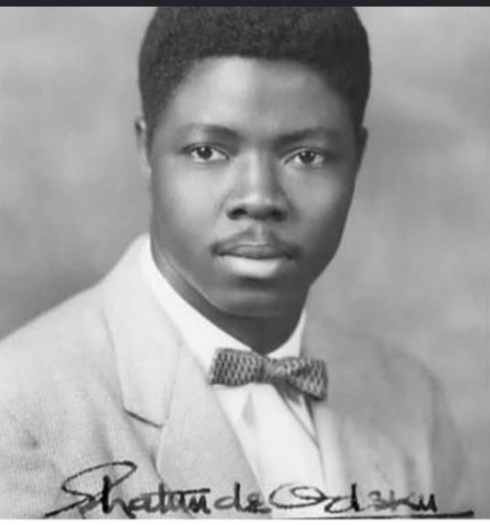
Perhaps one of the clearest answers to the question of what Nigerians have contributed to medicine lies in a name many medical students may encounter in neurosurgery: Adeloye-Odeku disease.
In 1971, Nigerian neurosurgeons Adelola Adeloye and E. Latunde Odeku published a report describing congenital subgaleal cysts occurring over the anterior fontanelle in Nigerian patients. Their paper documented 18 cases and examined the clinical, radiological, and pathological features of the condition. Most of the cysts were confirmed histologically to be dermoid cysts.
The condition would subsequently become known as Adeloye–Odeku disease, also referred to as Anterior Fontanelle Inclusion Cyst.
What makes this discovery particularly fascinating is that the observation did not remain confined to Nigeria. Similar cases were subsequently reported in different parts of the world, establishing the condition as one that could occur beyond the population in which it was first described.
Two Nigerian neurosurgeons had therefore contributed something rather fundamental to medicine: they observed, documented and characterised a clinical entity well enough for it to become part of the wider medical record and there is something deeply remarkable about that. A Nigerian patient’s presentation, investigated and published by Nigerian doctors, eventually became a name that would travel far and appear in wider medical literature.
Beyond the eponyms, let’s look at the background of these great men.
Adelola Adeloye was a Nigerian neurosurgeon and academic who became the second Nigerian doctor to qualify as a neurological surgeon in 1967. He subsequently worked at the University of Ibadan and University College Hospital, Ibadan, from1968 to 1995.
His collaborator, E. Latunde Odeku, was an even earlier pioneer. Odeku returned to Nigeria in 1962 after his training in the United States and became the first neurosurgeon in West Africa. He joined the University of Ibadan and helped establish modern neurosurgical practice there. He is also recognised as the first Black neurosurgeon trained in the United States.
But medical breakthroughs are not always diseases or anatomical discoveries. Sometimes, they are ways of thinking about how medicine could be practised.
In the mid-1950s, Nigerian psychiatrist Professor Thomas Adeoye Lambo developed the Aro Village System of community psychiatry. The system began in Nigeria in 1954 and sought to incorporate the sociocultural resources of the community into the treatment of people with mental illness.
Rather than making the psychiatric hospital essentially the only setting for care, the Aro model recognised the role that families and communities could play alongside professional psychiatrists in delivering treatment.
This was particularly significant in the context in which it developed. Mental healthcare could not simply be transferred from one setting into another without considering the social structures, beliefs and relationships surrounding the patient. Knowing the patient beyond the disease they have. Lambo’s approach therefore represented something larger than a psychiatric programme. It was a thoughtful example of adapting medical practice to the realities of the community being served.
The Aro Village System subsequently attracted international attention and became an important example in the history of community psychiatry.
Then there is Professor Augustine Njoku-Obi, whose work takes us into the field of infectious diseases and vaccine research.
Professor Njoku-Obi was associated with cholera vaccine research in Nigeria during the early 1970s. Historical records from the period documented cholera-vaccine material associated with his work being sent for testing by American health authorities. This work came at a time when cholera outbreaks posed a serious threat to public health. The development and testing of vaccines against Vibrio cholerae therefore formed part of a broader scientific effort to control a disease capable of causing large outbreaks, particularly where sanitation and access to clean water were limited.
Njoku-Obi’s story is important to this conversation because it demonstrates another form of contribution: scientific research directed at a major public-health problem. His indigenous cholera vaccine subsequently received World Health Organization recognition in 1971.
Another textbook-worthy achievement by a Nigerian Doctor is the Vazirani-Akinosi technique of closed-mouth mandibular nerve block; it describes a technique to perform a mandibular nerve block for a patient with inability to open their mouth wide enough to perform a traditional nerve block. This is especially important for patients with conditions preventing proper mouth opening, such as patients with an excessively large tongue(macroglossia), trismus(severe muscle spasm prevents mouth opening), or ankylosis.
This technique was developed by the Indian doctor Sundial Vazirani and refined and popularised by the Nigerian doctor Dr Joseph Akinosi in 1977, making it a popular technique in modern dentistry.
So, when we ask, where are the Nigerian’s contributions? The few contributions above challenge that stereotype. We have contributed.
But then another question appears. Why do most of the Nigerian contributions we can readily find belong to the 70s and 80s? Where are the modern Nigerian eponyms? Is medicine in Nigeria simply losing its substance to be owned and governed by foreign countries with better equipment?
Before we conclude that something is missing, perhaps we should pause and carefully examine what we are looking for. Medicine itself has changed.
While it is true to a large extent that Nigerian healthcare is clearly punching below its weight, leading to reduced research output and medical innovation. The great medical discoveries of previous generations could be easily attached to an individual: a disease described by a physician, medical equipment built by an innovator, a surgical technique described by a surgeon. However, modern medicine has deviated from that usual style. It has become increasingly collaborative.
A discovery may involve researchers from several institutions and several countries. It may involve artificial intelligence, genomic sequencing, molecular diagnostics, etc. Its name may describe a gene, mechanism, technology, or acronym rather than the person who discovered it.
Modern Nigerian medical innovations are also beginning to appear in clinical practice, but why doesn’t it feel like it?
Brain drain is a significant part of the answer to that question. Researchers, medical doctors, and healthcare professionals who leave Nigeria may continue to make important contributions to medicine – but their work may increasingly be associated with the institutions and countries where they work or conduct their research, and ultimately their discoveries and inventions.
Perhaps medicine today is a work in progress. It continues to evolve, becoming more complex as technology and artificial intelligence advance.
Maybe modern medical contributions are becoming less about whose name ends up in the textbook and more about whether knowledge actually solves a problem. That I daresay, is the crux of medical innovation.
Qasim Ramlah and Yusuf Akinyooye