


Blood is a vital fluid in our bodies; it carries oxygen, nutrients, and waste from one part of our body to the right destination. This is a constant: we cannot choose our blood group or genotype; we inherit them from our parents. You cannot say, for instance, that “I want to be AA” or “I want my blood group to be AB”. This uncertainty is one of the many reasons why we should know our blood group and genotype.
Let’s take a scenario of two young people, a male and a female, in courtship. They believe they are meant to be together simply because they love each other, so they proceed to marry. Soon, the lady gets pregnant and gives birth to a baby boy. After some time, the baby becomes seriously sick and dies. She then visits the hospital, and after a laboratory test, the doctor explains that the husband has an AS genotype and a blood group of A+, while the woman has an AS genotype and a blood group of O-. Therefore, they are not compatible.
What does this mean?
Genotype is the genetic makeup inherited from our parents. This is an important aspect of genetics. In blood, genotype is determined by inherits variants in the globin genes, specifically the beta-globins. There are various haemoglobin genotypes, but the most common include AA, AS, and SS. AA genotype means the person has two normal beta-globin genes. AS genotype means the person has one normal beta-globin gene and one abnormal beta-globin gene, which makes them carriers of the sickle cell trait. SS genotype means the person has two abnormal beta-globin genes, resulting in a condition called sickle cell disease.
When two people with AS genotype have children, each pregnancy has a 25% chance of producing a child with AA genotype, a 50% chance of producing a child with AS genotype, and a 25% chance of producing a child with SS genotype. This does not mean that every four children will automatically have one AA, two AS and one SS. These are the chances for each pregnancy. Since sickle cell disease is a serious health condition, it is best to know one’s haemoglobin genotype to make an informed decision about marriage and having children.
What about blood groups?
Regarding blood groups, there are two main aspects, namely the ABO blood group system and the Rhesus (Rh) factor. The ABO blood group system consists of A, B, AB and O groups. These blood groups are determined by antigens found on the surface of red blood cells and antibodies found in the plasma.
If you have blood group A, you have A antigens on your red blood cells and antibodies against B antigens in your plasma. If you have blood group B, you have B antigens on your red blood cells and antibodies against A antigens in your plasma. Blood group AB has both A and B antigens and normally does not have anti-A or anti-B antibodies in the plasma. Blood group O has neither A nor B antigens on the red blood cells but has both anti-A and anti-B antibodies in the plasma.
During blood transfusions, it is crucial to match the blood type properly to avoid agglutination, which is a dangerous reaction that can cause the death of the patient. This is one reason why knowing your blood group is important. In emergencies requiring a blood transfusion, for instance, knowing your blood group can be very useful; this is why hospitals perform compatibility testing before transfusion.
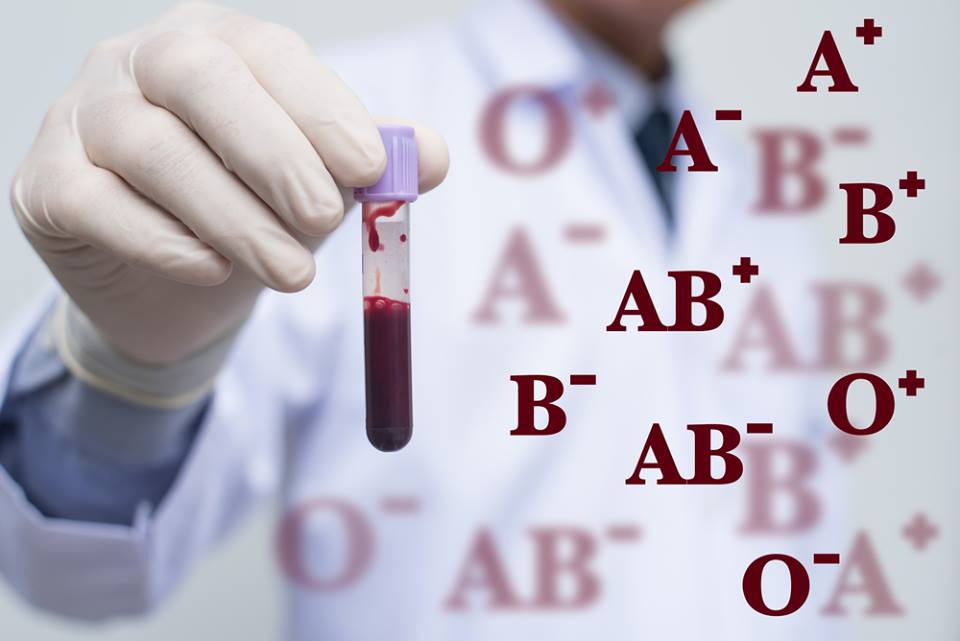
The Rhesus factor, commonly called the Rh factor, is a crucial component of blood groups. A person can be either Rh-positive (+) or Rh-negative (-), depending mainly on whether the RhD antigen is present on their red blood cells. This explains why we have blood groups such as A+, A-, B+, B-, AB+, AB-, O+ and O-.
In pregnancy and childbirth, the Rhesus factor becomes especially significant. For example, if an Rh-negative mother carries an Rh-positive baby, the mother’s immune system can become sensitised to Rh-positive blood cells. In a future pregnancy, this can cause a condition known as haemolytic disease of the fetus and newborn (HDFN). It is a condition in which red blood cells of a fetus or newborn are destroyed by antibodies from the mother, and it usually occurs when the mother and baby have incompatible Rhesus antigens.
It is, however, important to understand that being Rh-negative does not mean that a woman will automatically have a miscarriage or become infertile. Medical care, including appropriate testing and preventive treatment such as anti-D immunoglobulin when indicated, can greatly reduce the risk of Rh-related complications.
Knowledge is power…
…because it enables us to make informed decisions. Knowing your haemoglobin genotype helps you make informed decisions about your health and family. If both partners in a marital relationship carry a sickle cell trait, they should seek appropriate genetic counselling to understand the possible outcomes for their children. Likewise, the early detection of an abnormal hemoglobin allows for timely intervention and prevention of complications. Unfortunately, some children born with sickle cell disease are undiagnosed until later in life when complications arise. It is therefore advisable that haemoglobin genotype testing be done for newborns.
It is important to understand that genotype and blood group are not the same thing. Some people ask “What is your genotype?” when they actually mean “What is your blood group?”. Someone can be AA and O+, AS and A+, SS and B+, or have other combinations. The “AA, AS and SS” we have discussed are genotypes, while “A, B, AB and O” are blood groups. The plus or minus sign refers to the Rhesus factor.
So, when someone says, “I am AS,” they are talking about their genotype. When they say, “I am O+,” they are talking about their blood group and Rhesus factor. Some people make a mistake of assuming that they know their genotype or blood group without actually testing for it. Some think they know their genotype simply because of what their parents, siblings or relatives told them. Some assume they have the same blood group as someone in their family. But assumptions are inadequate when it comes to something as important as our health; a laboratory test is required.
This is not about creating fear or making people feel that their genotype or blood group should determine their worth. It is about being informed. There are many things we cannot control about our bodies. We cannot choose our haemoglobin genotype. We cannot choose whether our blood group will be A, B, AB, or O. We cannot simply decide to become Rh-positive or Rh-negative.
But there are things we can control. We can choose to know. We can choose to get tested. We can choose to seek proper medical advice. We can choose to understand what our results mean instead of depending on assumptions, hearsay, or social media. So, if you have never checked your genotype or blood group, this is a right time to do so, not until an emergency arises. Because when it comes to our health, knowledge is indeed power.