


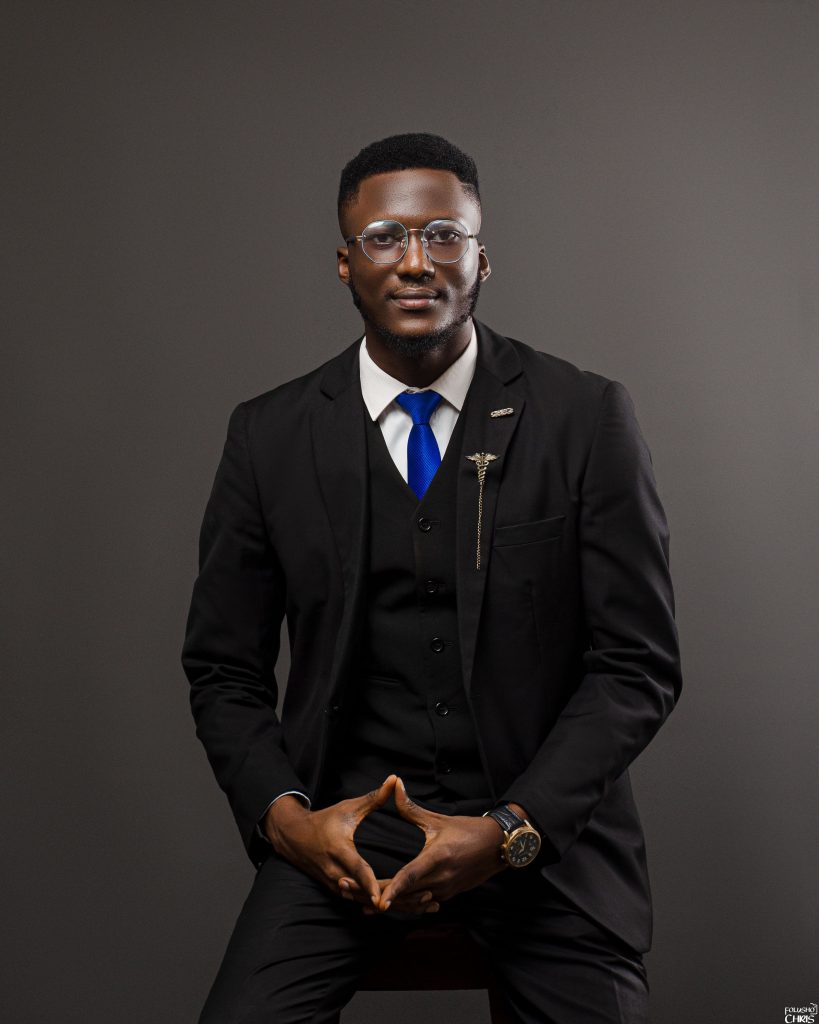
In the new medical education paradigm where research occupies a vantage position, early student exposure to research is important now more than ever before and one of the chief organizations at the forefront of this drive in CoMUI is the College Research and Innovation Hub (CRIH). Created in 2019, CRIH has been the launchpad for a lot of students as far as research is concerned making it one of the most influential student-led organisations in COMUI.
In this interview with UIMSA Press, Timilehin Oladapo, the CRIH President takes us on a drive through CRIH, student research and everything between.
Can you briefly introduce yourself and tell us what inspired your journey into research?
I’m Oluwatimilehin Oladapo, a final-year medical student at the University of Ibadan and I currently serve as the President of the College Research and Innovation Hub, Ibadan. My foray into research began when I was in 300-level. At the time, we were all mandated to work on a term paper in Anatomy and I volunteered to lead my group’s team, despite having no prior research knowledge or experience. However, I’m grateful I took that leap because it pushed me to learn fundamental research concepts and apply them in real time. Working on the project turned out to be an enjoyable experience and that sparked my interest in research.
Research can often seem intimidating to medical students. What first drew you to it and looking back, what was one defining moment that convinced you research was something worth pursuing?
Following the conclusion of our anatomy term paper project which focused on the toxic effects of heavy metals on the developing brain, I had picked up some vital research skills, but beyond that, I discovered the vast amount of knowledge that had been generated through research and that led me to a realisation that research offers a great opportunity to advance knowledge as well as solve key problems. Following this discovery, as a naturally ‘super-curious’ person, delving deeper into research was the next logical step.
For students who may be hearing about CRIH for the first time, what is its core mission?
CRIH is a student-led research organisation with a primary mission of building & training world-class graduates who are efficient in medical research and innovation. This is the key driver behind all our activities in CRIH.
How would you summarise your experience at the helm of CRIH’s affairs over the last year and half?
Serving as CRIH president for the last 18+ months has been nothing short of remarkable. At the beginning of the tenure, we set out to achieve a set of important goals, and I’m glad we’ve been able to hit these milestones. CRIH has grown tremendously into a 100+ member organization, interest in the organization’s activities has soared as well both within and outside UI, and our members’ research outputs (publications, conferences, fellowships) have increased substantially. This is a testament to the quality of the work we’ve done, and it can only get better.
Since you’ve been a part of CRIH, what achievements are you most proud of?
Firstly, I’m pleased with the significant improvement in the overall research output of CRIH members in the past year. The enabling environment we’ve created for research has helped contribute to this positive growth. Secondly, it’s pleasing to note that our projects in CRIH are now increasingly innovative and specifically targeted towards solving pressing societal challenges. This has been made possible by our carefully curated Innovation Workshop & Innovation Tanks. At CRIH, the aim is to combine both innovation and research, and we’ve really improved in that regard. Also, in the past year, we’ve been able to bolster our partnerships with research-oriented organisations both within and outside Africa and this has been tremendously beneficial. Lastly, we’ve been able to, through our targeted recruitment efforts, make CRIH multidisciplinary in nature and we hope to build on that further in the coming months.
How would you describe the research culture among medical students today compared with a few years ago?
From my observations, there has certainly been an increase in active interest in research compared to a few years ago. When I was in my first year, very few of us knew about research. We only got informed about it in the latter phase of preclinical school. However, now, we have several first and second-year students getting actively involved in research with some already publishing articles in peer-reviewed journals.
The recently concluded research conference attracted considerable attention. What were the memorable moments or conversations during the conference for you as a person?
The conference was indeed a stellar one, particularly as the co-head of the planning committee. The vision for the conference was to equip attendees with relevant knowledge and information centered around the importance of undergraduate research in strengthening healthcare systems in Africa. The four thematic areas – Digital Health, Triple Burden of Diseases, Research Financing, & Policy Writing were thoroughly addressed by the different keynote speakers and panelists. I wouldn’t really say I had any favourite session in particular, but Professor Adesegun Fatusi’s and Professor Rufus Akinyemi’s sessions were really insightful and inspiring. It’s also worth mentioning that both of their sessions, alongside the others are all available on CRIH’s YouTube channel.
How do you intend to build on the momentum generated by the summit?
My tenure will end in October, by God’s grace, and we’ll be ushering in a new set of executives to take over the reins of leadership. The handover phase is currently underway. We learnt a lot of valuable lessons from the conference, particularly regarding the planning and eventual execution. These lessons learnt will be duly shared with the next set of leaders and incorporated into the plans for their tenure. Beyond this, we plan to leverage on the robust, multi-institutional partnerships CRIH has forged in the last year, for subsequent events/projects.
Many students believe research is reserved for students pursuing academia. How true is this perception?
I understand the reasons driving this perception but I personally don’t think it’s accurate. While possessing relevant research skills is absolutely vital for students who intend to pursue academia long-term, the process of learning about and conducting research can be quite beneficial, far beyond the ‘four-walls’ of academia. Research seeks to answer questions and a part of this process involves information gathering, synthesis, and critical analysis. These skills are as relevant outside academia as they are within it. So, students who don’t intend do pursue academia need not stay away completely from research.
What’s your take on the publish or perish paradigm?
Over the last few years, I think the emphasis on having many publications has grown stronger, particularly for people who intend to apply for international graduate school opportunities and/or residency programs. Some of these programs place a high emphasis on research output. Due to this increasing competition, students are often desperate to publish as many papers as possible to stand a good chance of landing some of these opportunities. However, I think there’s a major downside to this; the excessive focus on quantity may in the long term distract students from putting out quality work that will actually make a difference during applications. Having a couple of high-quality, domain-relevant publications in which you contributed significantly to is much better than having many publications you contributed little to and lack any relevance to your long-term goals or the programs you’re applying to. It’s advisable that students prioritise quality over quantity when working on research projects. Having both is great as well.
What qualities do you think distinguish a good student researcher?
Curiosity. This is one quality I think distinguishes quality student researchers from others. Having a curious mind is quite essential to being a good researcher. This enables you to wrestle with a pressing problem until a solution is found. Second quality is a great work ethic. Research takes time and effort. Students who have great work ethic tend to finish what they start, push through challenges and keep going even when things seem unclear. Right from the proposal writing phase through peer-review & publication, there will be several hurdles to be faced. Students who have great work ethic tend to be able to pull through till the end. And finally, having a well-defined area of interest and/or pressing problem they’re passionate about solving. This is quite important as it helps students stay focused on a specific problem/field rather than being “everywhere” so to speak. Those who have an interest and pursue it consistently tend to develop robust knowledge about that field and are able to produce high quality works as a result.
At what stage in medical school should students begin getting involved in research?
As early as possible. First-year, if possible. The earlier students pick up basic research skills, the better. The efforts will surely compound over time.
What are the most common mistakes students make when trying to start research?
First mistake I think students make is having the wrong motivation. While desiring to have publications isn’t bad, making that the sole reason why they want to partake in research isn’t advisable. It often sets many up for disappointment. As I mentioned earlier, research is beyond publications; the process itself is time-consuming and requires discipline, patience and persistence. If the motivation is the end-result, then the process may seem discouraging in the long-run.Second mistake is skipping the basics of research. It is absolutely important that students master/have a good grasp of the basics of research before ‘rushing’ to publish. This is why, at CRIH, we emphasise the importance of mastering the basics of research – understanding Search Strategies, Plagiarism, Research Methods, and so on. Students can avoid this pitfall by joining research-focused organisations, or enrolling in research bootcamps. Online Courses are helpful as well in this regard. Lastly, not having a clearly defined area of interest, while this is quite understandable during the early stages, it is highly advisable for students to identify a field of interest and tailor their research efforts and activities towards that field. This doesn’t preclude the opportunity of working on other unrelated projects, but having a key area of interest helps students stay focused.
How can students with no prior experience or publications get their first opportunity/ what would be your most actionable advice that’s just about to get into research?
I started my research journey officially by enrolling for a paid, comprehensive 1-month research bootcamp and joined CRIH shortly after. Students who are interested can join and participate actively in research bootcamps. Alternatively, taking online courses such as those provided by Rising Scholars (formerly AuthorAid) is advisable. Then, finally, joining a research-focused organisation is quite important, for networking, collaboration and continuous development alongside personal learning.
What are the biggest barriers facing student researchers in Nigeria today?
Regarding barriers, I think a major one is lack of access to professional mentors. Many Nigerian universities lack a well-defined institutional program that connects student researchers to well accomplished, research-active mentors. Those who are able to build such relationships often do so personally. Having such a structure will help create opportunities for students to contribute to meaningful research, learn under the direct supervision of an established researcher and forge strong relationships. Another barrier is lack of funding support for publications, conference attendance and presentations. While some grants are available for conference participation, they’re often few and far between. Additionally, student researchers either have to self-fund or resort to publishing in APC-free journals, as a result of lack of funding support.
Funding remains a major concern. How can students navigate financial limitations while conducting meaningful research?
This is a major one. While institutional support is quite scarce here in Nigeria, students can watch out for and maximise opportunities ranging from top journals providing discounts/waivers for article publications, to organisations providing research grants, and full/partial sponsorship for local/international conferences. LinkedIn is a great place to discover such opportunities.
What emerging fields of research do you think that students should begin paying attention to?
Implementation science research. There’s been a lot of conversations recently around the need for translation of research findings into actual, real-world solutions that serves people. This cuts across various research interests. I think students will benefit greatly from learning about this type of research and getting actively involved with it. This is also one of the reasons why we’ve placed a great emphasis on innovative research projects that solve actual problems in the past 18 months in CRIH. Other emerging fields worth considering include Genomics and Artificial Intelligence research.
Where do you envision the Hub in the next five years?
I envision CRIH to be much bigger and broader in reach than it currently is. Rather than CRIH just being restricted to students in the clinical phase, I envision it encompassing students in the earlier stages of their training. I also see CRIH forging strong partnerships with major regional and global research institutes/platforms, and providing higher quality training and research opportunities for her members.
Are there any exciting projects or initiatives we should look forward to?
Yes. Definitely. However, I’d prefer not to spill the beans now. The future in CRIH is quite exciting and both current & future members stand to gain a lot from these upcoming projects.
What has been your most rewarding experience as Head of the Research and Innovation Hub?
It’s quite difficult to pinpoint one exactly as we’ve achieved quite a number of remarkable milestones, both in terms of the high-quality projects executed as well as research output recorded. However, if I’m to pick one, it would be successfully planning and organising the 3rd CRIH scientific conference. Navigating through the various challenges we faced and eventually delivering a highly impactful conference is an experience I remain grateful for and proud of.
What message would you like to leave with medical students who have never considered research as part of their career?
It’s definitely worth giving a try. There are numerous problems facing the world today, and out of these problems, there are some you may be particularly interested in addressing. Research serves as a great tool to help contribute to solving some of these challenges.
Finally, how can interested students become involved with the College Research and Innovation Hub?
Firstly, those eligible to become members (students in COMUI from 2nd year and above) should watch out for our recruitment happening later this year, post-handover. Endeavour to turn in your applications before the set deadline. Secondly, our General meetings and capacity-building sessions (both physical and virtual) are open to both members and non-members. These sessions provide opportunities to both learn and connect with the community. And finally, follow us on Twitter, Instagram and LinkedIn @Crih_ibadan for updates on projects, events, and more.