


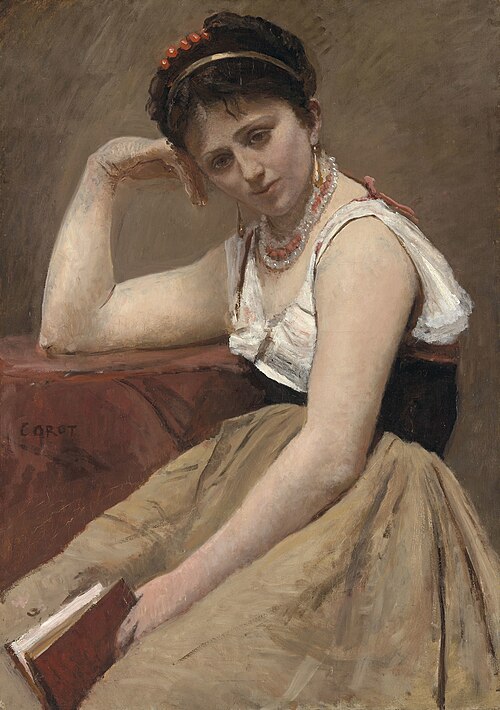
The 21st century has witnessed a dramatic decline in intelligence, ranging from a lack of basic critical thinking skills to downright cognitive frailty. This intellectual deterioration is alarming, and so it is of little surprise that measures aimed at combating this decay are being taken. People are now actively encouraged to read more, read diversely, be creative and artistic, engage in activities that foster critical thinking, and partake in other undertakings targeted at holistic improvement.
While these pursuits have yielded and are further expected to yield positive, progressive results, they may sometimes be redirected to serve a different, often insincere purpose and presented as a show of intellectual superiority, which may in actuality be shallow. Performative intelligence is therefore the display of certain behaviours or activities so as to signal high intellectual capital rather than a deep, embodied disposition.
An example is seen in the aestheticisation of reading. When the reading culture is turned into a trend, it becomes somewhat pressuring to classify books in the order of their uniqueness and relate this to their importance. If, for example, the sign of super intelligence is the consumption of classic literature, the focus shifts from actual learning to climbing up an intellectual validation ladder.
The performative human therefore proves superiority by consuming works that may not be usually engaged in by the general public, not because he may find them particularly interesting, but because he knows they might be uncommon. Such an individual might, for example, read Dostoevsky’s Crime and Punishment to attest to his so-called superiority, while he does not necessarily truly appreciate the complexities the book might possess. This produces a loss of the human’s cogitative and critical sense, thereby directly antagonising one of the reasons why reading exists in the first place.
Performativity is also seen when alternative, unusual activities or habits are cherrypicked to be presented as an entire lifestyle while disregarding whatever motivations that should originally drive this. This is usually a result of the glorification of specific alternative ways of living. Though it is human to gravitate towards certain reasoning and opinions, it is possible to refer to this predisposition as cowardice and an intentional withdrawal from intellectually challenging activities. In that sense, one’s lifestyle alone can become this social determinant of status and indeed, intelligence, while ignoring the truth that lifestyles are unique experiences and may not be relatively superior to each other.
An instance is seen in the ‘dark academia’ aesthetic, which is usually a lifestyle comprising interest in architecture, art, dark literature, and consequently, dark, sophisticated fashion. Its features, however unusual, are not at all bad, as they are forms of expression for several individuals. However, because this subculture might be uncommon, a person might decide to get involved in it so as to present some sort of uniqueness. It is possible that such a person might not even truly engage in any forms of expression the aesthetic requires, outside of a change of wardrobe. At least, the way a person dresses is the way he will be addressed.
This performativity can also be seen in the adoption of philosophies that are underexplored by the adopter. This may originate merely from a place of interest, rather than a passionate readiness to understand what is truly meant. When a person says he’s a nihilist while knowing only what nihilism means, or when he says he’s an atheist just because he’s seen a video on it, it reduces these philosophies into conclusions made out of singular thoughts and not just ideas that have been studied and built over time. Such conclusions easily fall apart with a little probing, because there is not enough education to accurately critique or debate the truth of these philosophical ideas.
The most obvious consequence of performativity is the lack of critical and intellectual depth. Because undereducation is already glorified, it takes so little to impress an ignorant person into thinking that the knowledge a performative person presents is peak level, when in truth it is not. Details now tend to be skipped, and only the key, flattering points are learnt.
Another effect is unnecessary classism, which may lead to an inferiority complex. When individuals are classified based on what kind of books they read, what forms of art they consume, what they wear, or what beliefs they hold, and some lifestyles are held above others as superior, it disregards other forms of expression. This might lead individuals of the general opinion to a craze of being a part of the new best, even if they don’t entirely see the point or understand it, therefore leading back to performativity.
There is a need for deliberate, sincere education. Learning should be for the purpose of learning, purely, and not to beat a superiority standard. This way, individuals inculcate the readiness to truly learn and understand concepts, philosophies, ideas and absorb them into their lives, rather than skimming the surface and forcing themselves into acquiring underexamined aesthetics.
It is also important to cultivate the habit of open-mindedness, such that one is always ready to accommodate other opinions and tolerate differences, as long as they do not in any way cause harm or negatively affect the general public, while being honest enough to admit lack of knowledge on topics one is not well-informed about. This way, other ideas are welcomed, and there will be no need to really put one above the other.
Although performative intelligence may seem innocuous on the surface, it is dangerous to reduce knowledge and understanding into a hierarchical struggle. A thoroughly earnest way of life is therefore majorly beneficial to every responsible learner, rather than one made up of hypocrisy.
Fadekemi Adesina