


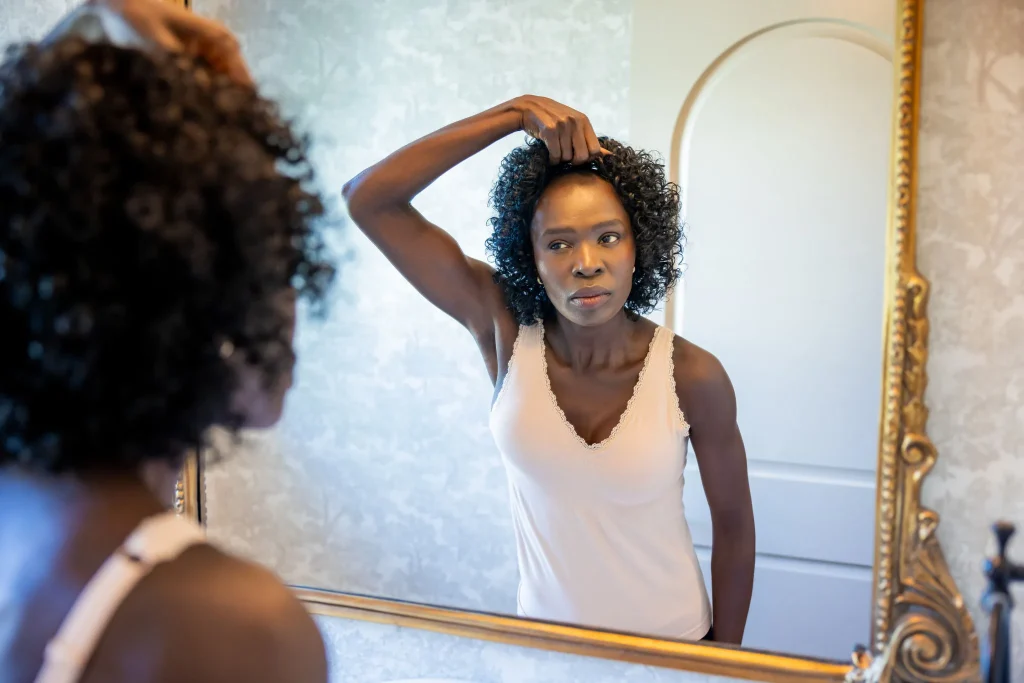
A decade ago, wigs were mostly for special events, hair loss, or a quick change of style. Today, wigs have become part of everyday life for many women. On university campuses, in offices, at weddings, at parties, and across social media, they have become almost as ordinary as any other part of getting dressed. A woman can wear her natural hair today, put on a closure wig tomorrow, switch to a long, straight wig for an event, and then return to an all-back hairstyle when she wants something simpler.
A major reason wigs have become this popular is convenience. Natural hair can require a lot of time, money, and effort to maintain. A wig offers an alternative. Instead of spending hours styling your natural hair before an event, you can simply put on a wig and go. This convenience is particularly attractive to women who have busy schedules. You can keep your natural hair in a simple style, such as an all-back, and wear a wig whenever you want a different appearance.
Teniola Rokibat Oduola, a student of the University of Ibadan, who has been wearing wigs for about two to three years, says this is one of the things she likes about them. “I think wigs have become so common among women today because they’re convenient, versatile, and instantly make you look more put together, especially high-quality ones,” she says.
She personally prefers closure wigs (which cover the top of the head) because she finds them comfortable enough to wear casually, even to class. She has also kept her hair in an all-back style for over a year because of how convenient she finds it. Lereen, also a student at the university, who has been wearing wigs for about five years, agrees that convenience is a major attraction. “Easy to wear and most times economical,” she explains.
However, convenience is only part of the story. Wigs have also become a major part of beauty culture. Celebrities, models, and influencers regularly show off different wigs online, talk about where they bought them, and demonstrate how they install them. Instagram and TikTok have made wig installation feel less like a specialized beauty practice and more like an ordinary part of grooming.
The LGBTQIA+ community has also contributed to the wider visibility of wigs. Transgender women may use wigs as part of expressing their appearance, while wigs have long been an important part of drag culture and performance. There is also something psychological about changing your hair. A wig allows someone to experiment with appearance without permanently changing who they are. You can have short hair today and waist-length hair tomorrow. You can change the color, texture, or style depending on your mood or the occasion.
But underneath all that glitz and dazzle is a basic question that does not get nearly as much attention: What is happening to the hair and scalp underneath the wig?
The scalp is not just an invisible surface underneath a wig. It is living skin, with hair follicles, sweat glands, and oil glands that still have to function while the wig is being worn. A wig can create a warm and enclosed environment around the scalp. Depending on how it is worn and maintained, this can contribute to discomfort, sweating, and itching. Poor scalp hygiene can also encourage fungal infections.
For Lereen, who wears wigs almost every time she is away from home, some of these problems are familiar. She says she has experienced both itching and sweating while wearing wigs, although she has not experienced hair breakage or negative effects to her hair. Then there is the issue of what the wig is attached to. Before some wigs are installed, the natural hair may be braided tightly to create a flat base. The wig itself may then be secured with adhesives, tapes, stitching, or other methods. Repeated pulling on the hair can damage the follicles, and in comes traction alopecia.
Traction alopecia is hair loss caused by repeated or prolonged tension on the hair. Tight braiding, extensions, and hairstyles that constantly pull on the hairline can contribute to it. If the tension continues for a long time, the damage can become permanent. This is particularly concerning around the edges, where the hair can be more vulnerable to repeated tension. See examples below.

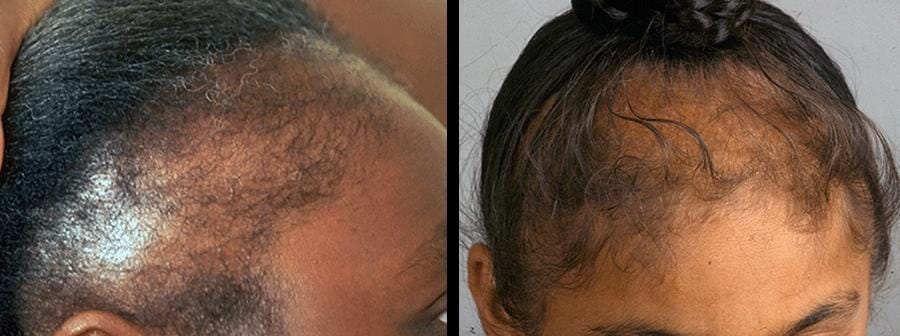
Dermatologist Danita Peoples-Peterson says one-third of women of African descent who wear “traumatic hairstyles” develop traction alopecia, with tight weaves, extensions, and styles that pull at the edges among the contributors.
Teniola has seen this among people around her. She says she has not personally experienced major problems because she does not wear installed frontals very often. However, she has friends who wear them frequently and have noticed their hairlines receding. “When you install a frontal, headaches, itching, thinning edges, and hair loss are non-negotiables,” she says, indicating that all these symptoms apply to most women.
She has not personally seen many cases of bumps, but headaches, itching, thinning edges, and hair loss are problems she associates with frequent frontal wig (a wig that covers the entire hairline from ear to ear) installation. Lereen, however, prefers closure wigs for a different reason. According to her, “Frontals are not easy to fix yourself most times; you might need a stylist. They are time consuming and require extra charges too.”
“Beauty is pain.”
There is a tendency to treat discomfort as simply part of looking good. A tight hairstyle is dismissed as something that will stop hurting eventually. An itchy scalp is ignored. A receding hairline is covered with another hairstyle. A headache after an installation becomes something to tolerate, but discomfort is still a sign that something is wrong. The environment created under a wig can either support a healthy scalp or slowly work against it. Poor hygiene, prolonged wear, tight braids, excessive heat, and improper installation can all make things worse, and this is not only about physical discomfort.
Beauty practices do not exist separately from how people feel about themselves. For some women, wigs can be empowering. They provide confidence and make it easier to experiment with appearance. But the pressure to always look perfectly styled up can also work in the opposite direction. Teniola believes this is one of the biggest problems surrounding wigs today. She says there are unrealistic beauty standards around them, particularly the idea that every woman must constantly have a perfectly installed frontal to look presentable or classy. That pressure can affect how women see themselves.
If a person begins to feel that her natural hair is not good enough or that she cannot leave the house without a perfectly laid wig, the wig stops being simply a beauty choice but becomes something she feels she needs. Constantly worrying about whether a wig is falling off, shifting, or looking unnatural can also create anxiety. Concerns about hairline damage, itching, burning, and discomfort may further affect body image and self-esteem.
Let’s talk about the social pressure to keep up. A high-quality wig can be expensive. It may require regular washing, styling, maintenance, and professional installation. Social media makes this look effortless while hiding the money and work required to maintain it. Teniola points out that high-quality raw donor hair, for example, can be expensive and time-consuming to maintain.
Another part of the conversation that is easy to overlook is what the wig itself is made of. In 2024, a study examining 10 synthetic hair brands commonly worn in Nigeria found different levels of contaminants, including heavy metals such as lead, cadmium, chromium, nickel, and vanadium, as well as several pesticides. The samples included brands bought from Ariaria International Market in Aba, with products originating from Nigeria, China, Ghana, and the United States. Cadmium, linked to kidney and liver damage — turned up in every single wig tested, all above the safe limit. Lead, which can damage the kidneys and nervous system, was nearly double the safe threshold in the worst sample. Zinc, which at high levels can cause nausea and anemia, was up to nine times higher than recommended in most brands! The researchers also found 11 pesticide compounds in the samples, some at levels far above what’s considered safe, along with nitrate levels that were more than double the acceptable limit. They suggested that some of the chemicals may have been used as preservatives during manufacturing.
This does not mean that every wig is poisoning its wearer. It does, however, raise questions about the safety standards surrounding synthetic hair and the chemicals used to manufacture and preserve it. The study found that some synthetic hair products are made from plastics such as PVC and that metals used in stabilizing these materials may potentially leach out over time or when exposed to light. The researchers associated heavy-metal exposure with risks affecting organs and systems, including the kidneys, liver, lungs, reproductive system, and nervous system.
There is an even more unusual reason to pay attention to the scalp beneath a wig. In a 2013 case report, doctors described an 84-year-old woman who had worn a wig for about 30 years because of hair loss. She was eventually found to have squamous cell carcinoma on her scalp. The cancer was discovered only after a wound on her scalp was noticed.
The doctors did not establish that the wig caused the cancer, but they suggested that repeated local irritation, microtrauma, and exposure to cleaning or adhesive chemicals associated with the wig might have contributed to the development of the lesion. They also emphasized that conditions on the scalp can remain hidden beneath a wig, meaning that prolonged wig wear can make it easier for problems to go unnoticed.
The saddest thing about all of this is how rarely we talk about it. We talk about the beauty of wigs constantly. We discuss new hair vendors, lace quality, colors, textures, density, and installation techniques, but conversations about the possible damage associated with wigs are much quieter. No, the headaches are not normal. The thinning edges aren’t things you should simply accept. A beautiful wig is not worth losing your hairline over.
Teniola believes there should be more appreciation for natural hair and less pressure to constantly maintain a perfect installation. It does not mean rejecting wigs. It means giving women the freedom to choose them because they want to wear them, rather than because they feel they have to. It means being able to attend class in an all-back hairstyle without feeling less attractive. It means being able to wear a closure because it is comfortable. It means not having to tolerate pain simply because a hairstyle looks good.
Manufacturers have a responsibility to make safer products. Regulators have a responsibility to properly evaluate the materials and chemicals used in synthetic hair. Hairdressers have a responsibility to avoid unnecessarily tight installations and educate clients about proper scalp and hair care. Lereen believes wearing wigs should not come at the expense of caring for the hair underneath. She adds, “Wearing wigs should not make your natural hair rough or unkempt.” She recommends washing it regularly with shampoo and plaiting it when it is due for a new hairstyle.
And wearers have a role too — give your scalp a break, pay attention to persistent itching or pain, maintain proper hygiene, avoid excessively tight styles, and do not ignore changes in the hairline. Women should not have to choose between looking beautiful and taking care of themselves. Whether a woman chooses a wig, keeps her natural hair, or wears a simple hairstyle, what matters is that her choices are made with awareness rather than pressure. Beauty should be expressive and enjoyable, not exhausting or performative.
Ayomide Bello.