


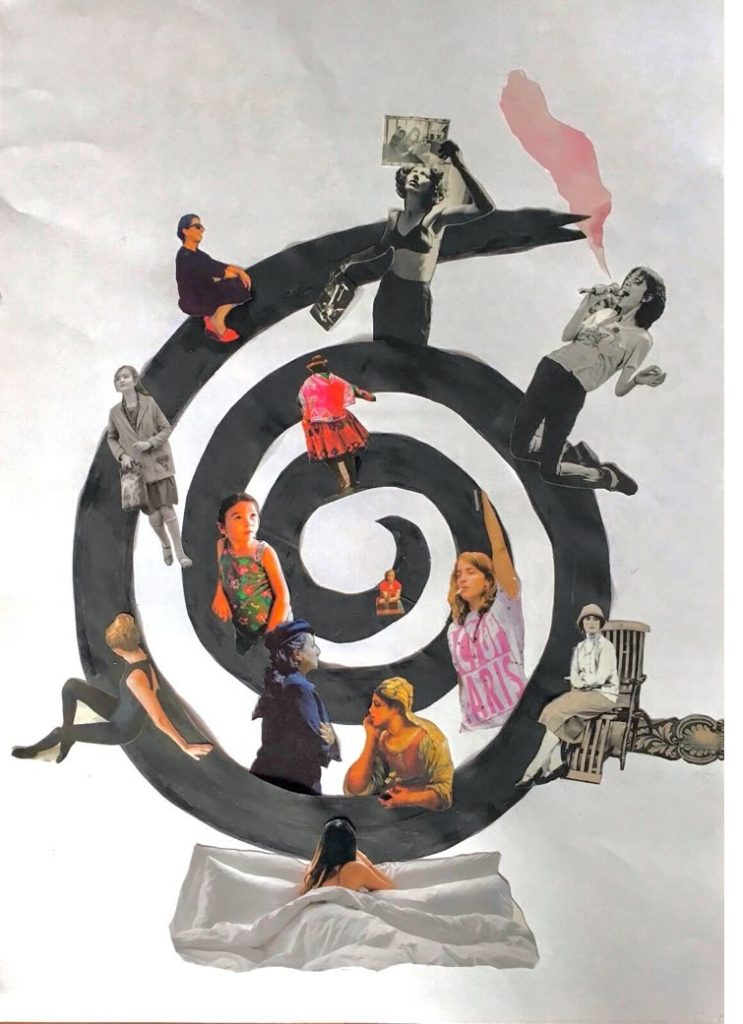
We’ve all commonly heard the phrase, “there is nothing new under the sun.” Never has this statement been so profound than in recent times, where everything around us has a callback of one form or another to the past. Take a look at movies this year, for example: Michael, Scream 7, The Devil Wears Prada 2, and Spider-Man: Brand New Day – with most of these movies recording raging success at the box office compared to newer films. This isn’t limited to movies alone, as music relies heavily on sampling and interpolation of old songs to make new ones, as seen in the repeated sampling of “Seville” by Luiz Bonfá to give us hits like “Somebody That I Used to Know” and “Anxiety.” Fashion in itself isn’t spared from this cycle of repetition, as we’ve gone from wearing low-rise jeans in the early 2000s, to high-waist jeans, and back to Capris and low-rise jeans in 2026. Have we run out of new ideas, or do we just prefer what we’re familiar with?
2026 has been a good year for film, but it’s also important to note that most of the movies this year aren’t necessarily new. The Devil Wears Prada 2 was a sequel to the 2006 film of the same name, which performed so well that it has a fandom and is considered a classic 20 years later. Michael, a biopic of Michael Jackson released earlier this year, was also a core promoter of nostalgia, reminding people of their childhood as far back as the 1980s, when his songs were all they heard on the radio, while also introducing his music to a much younger audience. The Hunger Games prequel, Sunrise on the Reaping, and Avengers: Doomsday prove the same point. We are continually recycling things from the past, and newer stories are seldom made. Why?
Has the movie industry gotten lazier? Aren’t people creating newer media for us to work with? Or have we, as an audience, gotten too comfortable to develop interest in newer stuff?
From the studios’ point of view, it’s much easier to market media built on older franchises than to build interest from scratch. We live in a world that is very nostalgia-prone. We listen to older music, watch series from the 2000s, dress in styles similar to that era, and long for a version of it we’ve imagined more than lived. Reality is different from what we imagine, and the era we currently live in is arguably the best one yet, when you weigh factors like technology and living standards against it. This isn’t to say nostalgia is a bad thing, but for studios who spend enormous sums promoting films, building something new has become a hassle. Newer media is rarely given the chance to be appreciated, because between short-form content and shrinking attention spans, we rarely have the patience to develop interest in something we haven’t already pre-approved through nostalgia. This saves studios money and makes them lazier by default, as seen in 2026, where most of the year’s biggest releases were remakes, like the upcoming Harry Potter series, or sequels to much older films. It’s likely that in the coming years, most of what we consume will follow this pattern, because we keep rewarding familiarity.
Fashion on the other hand is much more receptive to and more accepting of its cyclic nature. Designers are celebrated when they reference older designs along with the usage of dresses worn by icons of the past by newer celebrities. Even in our day to day living, there is the 20 year rule, where styles or eras considered obsolete make a return 20 years later. This is seen in the resurgence of the Y2K trend where women wear capris, low rise jeans, colourful clothing and makeup alongside really baggy clothing for men. This shows how predictable fashion’s cycle is compared to the rest and how most of it is rooted in generational rejection, parents love an era, their kids reject it and their grandkids yearn and go back to the initial era. Fashion cycling is already so normalised, so why do we treat it a bit differently in music or film?
Music, meanwhile, isn’t exempt from this either, if Hollywood is resurrecting old stories, the music industry has been resurrecting old sounds for as long as we can remember, through interpolation and sampling. Sampling is the use of a portion of an existing recording in a new song, while interpolation is when a musical element — a melody or lyric — is recreated rather than directly lifted. This isn’t altogether bad; it helps introduce older songs to a younger audience. Major examples include Beyoncé’s “Break My Soul,” built on Robin S.’s “Show Me Love,” and Drake’s “Way 2 Sexy,” sampling Right Said Fred’s “I’m Too Sexy.” It’s not just full songs that get recycled, beats, melodies, and rhythms are brought back over and over to make what we call “new music.” This could be less a lack of creativity than a system that simply works, as proven by the success of Doja Cat’s “Say So” in 2020, which pulled from 1970s funk and a retro vibe — an approach later echoed in Sabrina Carpenter’s “Espresso.” Both were massive hits. TikTok has also aided this nostalgia appeal, resurfacing older songs and their newer samples to audiences who never heard the originals. Newer songs, in truth, have a lower chance of success than ones that follow a pattern people have already proven to like.
This doesn’t mean all we do is copy the past outright. Sequels are written and reimagined in new ways; music carries each artist’s individual touch; fashion, too, isn’t worn today exactly as it was 20 years ago. Each generation adds something to the cultural material it borrows. Artistic creation has always involved borrowing — filmmakers build on old stories, lyricists rework old melodies, and designers revisit old eras. The real question becomes: what do we do with the sheer volume of cultural information we’ve inherited from the past?
This author doesn’t believe the audience has gotten lazy. Familiarity is cognitively easier to process rather than novelty according to the mere exposure effect, also known as the familiarity principle, which occurs when repeated exposure to a stimulus – such as a face, song, word, or brand – leads individuals to like it more, even without any reward or conscious recognition of the exposure. Our now fast-paced world(in comparison to the past), along with its uncertainty has increased the stress levels of everyone living in this particular era. This makes comfort a safer alternative rather than more uncertainty, as they already face enough in their daily lives. Familiar franchises, songs and styles are much easier to settle back into and embrace unlike newer stuff. This is more of self protection than laziness and companies have learnt to feed into this rather than making newer media.
It cannot be concluded that we’ve simply run out of ideas. The entertainment industry is more concerned with profit than art, and since it’s been proven repeatedly that audiences prefer an existing franchise to an unproven one – so studios avoid the financial risk of building something new. The same logic applies to music and fashion. Why build a new aesthetic or beat from scratch when one already has a proven track record? Social media, like TikTok, also plays a part in reintroducing old media, culture, and themes to people who’ve never encountered them before, a key trend right now being the resurgence of digital cameras, chasing the grainy, retro image associated with the past. Trends shape who we become, and this fuels a nostalgia in people for eras they never actually lived through and the truth is that nostalgia sells all the time, over and over again.
And maybe that’s the real story here: nostalgia today isn’t just a preference, it’s an industry unto itself, with its own supply chains, algorithms, and profit margins. Every generation has borrowed from the one before it, but never before has that borrowing been so instant, so global, and so easy to monetize. Streaming catalogs put fifty years of music a click away. Studios have entire back catalogs of intellectual property sitting dormant, waiting to be revived the moment the math works out. Fashion doesn’t even need a designer to spark a revival anymore — a single viral video can do it. In a world where the entire past is always available and competing directly with whatever’s new, is it any surprise the past keeps winning?
Maybe the point isn’t to ask when we’ll start making new art again, because we may never fully leave this loop. Perhaps the more honest question is what we choose to do with everything we’ve inherited – whether we let it flatten our culture into an endless remix reel, or whether we use it as raw material for something that, even if it’s built from familiar pieces, still manages to say something we haven’t heard before. Maybe there is no point at which humans started creating new art. Maybe what we call “new” is only a heavily remixed version of the old.