Hepatitis B remains one of the world’s most significant infectious diseases and continues to pose a major public health challenge. Caused by the Hepatitis B virus (HBV), the disease primarily attacks the liver and can lead to serious long-term complications, including chronic hepatitis, liver cirrhosis, and liver cancer. According to the World Health Organisation (WHO), Hepatitis B is responsible for an estimated 1.1 million deaths every year, with approximately 1.2 million new infections occurring annually. Despite the availability of a safe and effective vaccine, millions of people remain unvaccinated, leaving them vulnerable to a largely preventable disease. The virus is transmitted through contact with infected blood and body fluids, including needle-stick injuries, exposure to contaminated blood, unprotected sexual contact, and mother-to-child transmission during childbirth. Because healthcare workers and medical students routinely encounter these risks during clinical practice, vaccination is regarded as one of the most important preventive measures and is especially pertinent in the occupational health setting.
For students undergoing clinical training, the risk of occupational exposure becomes a reality from the moment they begin interacting with patients. Every injection administered, every blood sample collected, and every emergency attended carries the possibility of accidental exposure. This makes vaccination not merely a recommendation but a professional responsibility. As former UIMSA Vice President, Dr Olamide Jayeoba, explained, “As a medical student and healthcare worker, in the process of applying yourself, you’re exposed to many health hazards, one of which is Hepatitis B. The vaccine protects you from that.” Her statement captures the very essence of why the Hepatitis B Vaccination Drive became a priority within the University of Ibadan Medical Students’ Association (UIMSA).
Although the vaccination campaign gained momentum in recent years, its foundation was laid by an earlier initiative. Speaking on the origin of the project, Dr Olamide Jayeoba recalled that the concept was inspired by a similar programme organised years before by Dr Jesufemi Adeyeye during his tenure as Health and Sanitation Minister of Alexander Brown Hall. “I can’t quite exactly remember the details, but it was done by the previous ABH Hall Chair during his tenure as HSM, Dr Jesufemi Adeyeye. So during my tenure as VP, I reached out to him to organise something similar for UIMSAites, in commemoration of World Hepatitis Day, and that was how the Hepatitis B Vaccination Drive was birthed.” Rather than allowing the earlier effort to remain a one-time event, future Executive Councils recognised its value and transformed it into an organised intervention that could benefit hundreds of students.
The urgency of the project becomes even more evident during clinical postings. Collins Ijezie, the current UIMSA Vice President and Director of the Community Health and Advocacy Project (CHAP), explained that the motivation extended beyond simply organising another outreach programme; rather, it was informed by firsthand observations in the hospital. “Rotating through IDU Paediatrics posting revealed the high rate of HepB infections in our locality and the corresponding liver cirrhosis sequelae,” he said. “We discovered that students weren’t educated on the need to get vaccinated, as HepB virus has a particularly high virulence. This prompted the need to massively educate our members on HepB vaccination and also partner with the organisation to get a more cost-effective option.” These observations highlighted an alarming gap between the occupational risks medical students faced and their level of protection against one of the most infectious blood-borne diseases.
Another concern was the vaccination status of students themselves. Meliat Abu-Idris, former Vice President, also observed that a significant number of clinical students, particularly members of the 2k24 and 2k25 classes, had not received the Hepatitis B vaccine. Even among student leaders, vaccination coverage was far from complete. This revealed that the issue was not merely a lack of awareness but also one of accessibility and affordability. Recognising this, she sought partnerships with the University of Ilorin after noticing the vaccine was available there, since they couldn’t find a vendor in Ibadan that would make vaccination financially accessible to students while ensuring that the exercise maintained high standards of safety and professionalism. The objective was straightforward: encourage as many students as possible to become vaccinated before their clinical exposure placed them at greater risk.
The organisers also understood that cost was a major barrier preventing many students from receiving the vaccine. At private healthcare facilities, completing the three-dose vaccination schedule can be expensive for undergraduates already managing tuition fees and living expenses. Through strategic partnerships, UIMSA was able to reduce the cost to ₦7,000 per dose, making vaccination significantly more affordable. According to Dr Olamide Jayeoba, “Just for UIMSAites to make use of the opportunity to get vaccinated at a significantly discounted price.” By removing the financial barrier, the campaign encouraged students to prioritise preventive healthcare without placing an overwhelming burden on their finances.
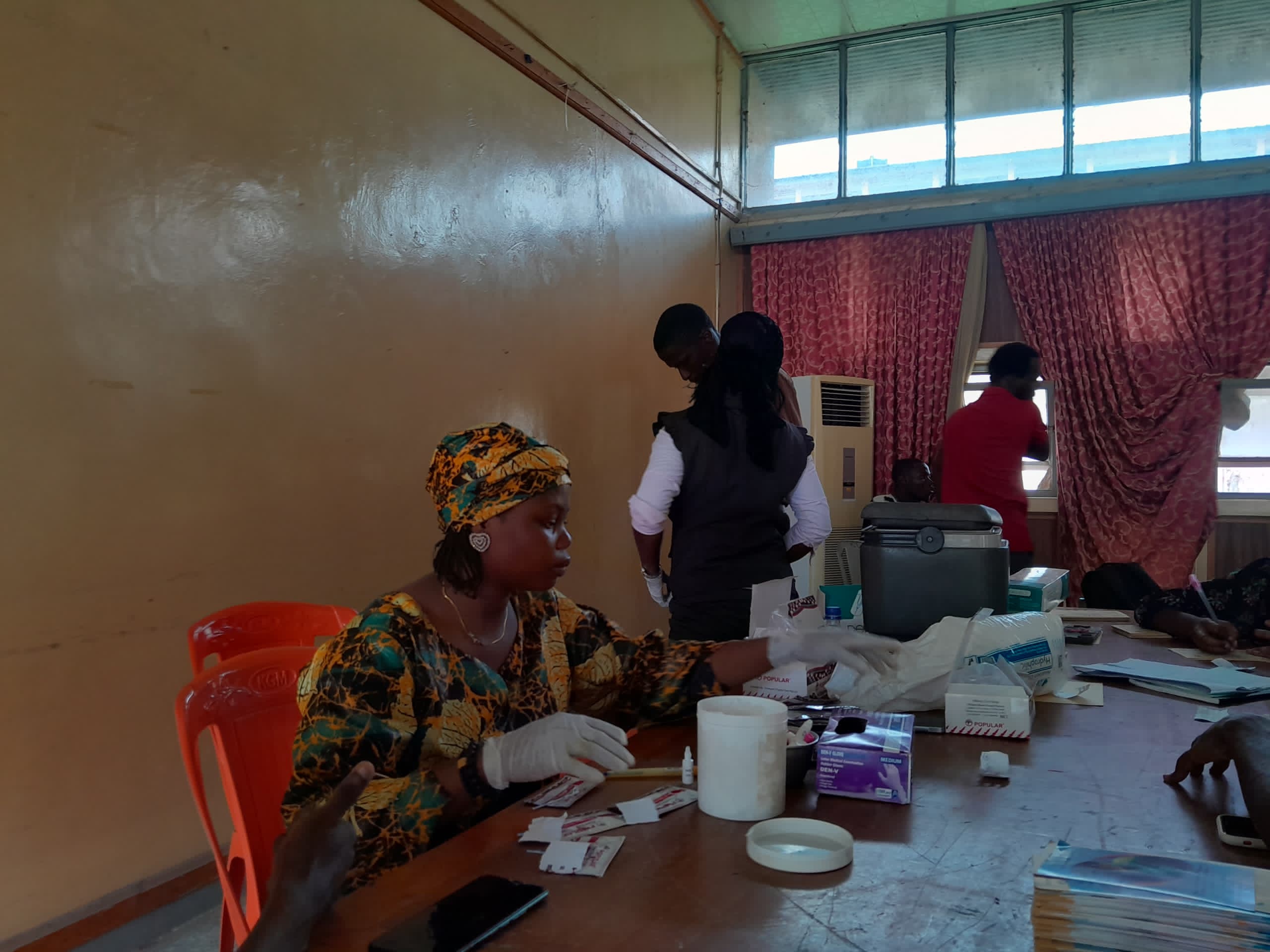
The response from students demonstrated the importance of the initiative. The first vaccination exercise recorded approximately 301 participants, while the second batch vaccinated fewer than 50 additional students, bringing the total number of beneficiaries to about 350. For a student-led public health intervention, this represented a remarkable achievement. Beyond administering vaccines, the organisers carefully monitored participants to ensure they returned for their subsequent doses, recognising that complete vaccination requires three doses given at recommended intervals of one month to provide optimal protection.
Executing a large-scale health initiative on campus came with substantial hurdles, one of which was sourcing and logistics. Sourcing affordable vaccines proved difficult after the initial vendor became unavailable. To resolve this, UIMSA partnered with a specialised vaccination team from the University of Ilorin. This required the team to travel long distances, creating demanding logistics and extended working hours, during which the executive members missed classes. Another issue was coordinating registration, payments, and record-keeping for hundreds of participants, which placed a heavy burden on organisers. Holding the drive on a regular school day also limited the availability of student volunteers.
A major obstacle was expanding participation beyond UIMSA members. While the campaign successfully reached medical students, organisers believed its impact could be even greater if students from other faculties also participated. This sentiment would have also informed this year’s partnership with Alexander Brown Hall to ensure the vaccine was offered to not just members of UIMSA, but all students in healthcare disciplines. As Collins Ijezie explained regarding challenges faced, “…insufficient reach to other student associations. We hope that subsequent editions will bring a lot more students from other faculties.” Expanding participation remains one of the key goals for future editions of the programme.
Another recurring challenge involved participant commitment. Despite paying for vaccination, some students failed to appear on the scheduled vaccination day, creating logistical difficulties and disrupting planning. Dr Olamide Jayeoba noted, “There were people who did not come for the vaccination on the first day, and came for their first dose during the second dose. That disrupted the timeline for me, and I had to start tracking their own vaccination timeline separately to ensure they get their vaccines at the right time.” Missing a carefully timed schedule and appointments can delay protection and increase the administrative burden on organisers, who must reschedule participants and monitor follow-up doses. Ensuring that students complete the full vaccination series remains one of the programme’s ongoing priorities.
The experiences of recipients further reflected the value of the project. Kanjo Tamaraetinah, a second-year Nursing student who has received two doses, described her experience positively, saying, “The vaccination went well; it was not that painful. Understanding the one-month interval between doses is crucial to building protection against such an easily transmissible disease.” Another recipient, Akiode Oluwadamilola, acknowledged that reactions may differ among individuals but emphasised the importance of receiving the vaccine. “Reaction levels vary—for me, it was painful for two days before stopping. But getting vaccinated was essential because we interact daily with diverse patients in the wards.” Their testimonies reinforce the message that temporary discomfort is a small price to pay for long-term protection.
Beyond the numbers, the Hepatitis B Vaccination Drive represents the power of student leadership to solve real health challenges within their community. What began as an observation during clinical postings evolved into a coordinated intervention that educated students, improved vaccine accessibility, and protected hundreds of future healthcare professionals from a preventable disease. More importantly, it demonstrated that advocacy goes beyond raising awareness—it also means creating practical solutions that remove barriers to healthcare. As UIMSA looks toward future editions with hopes of reaching more faculties and student associations, the initiative continues to embody a simple but enduring truth: prevention remains far better than cure.
Bukola Olabintan